
News List
Global Metals and Mining Meet 2026 — Powering India’s Growth and Energy Transition Journey

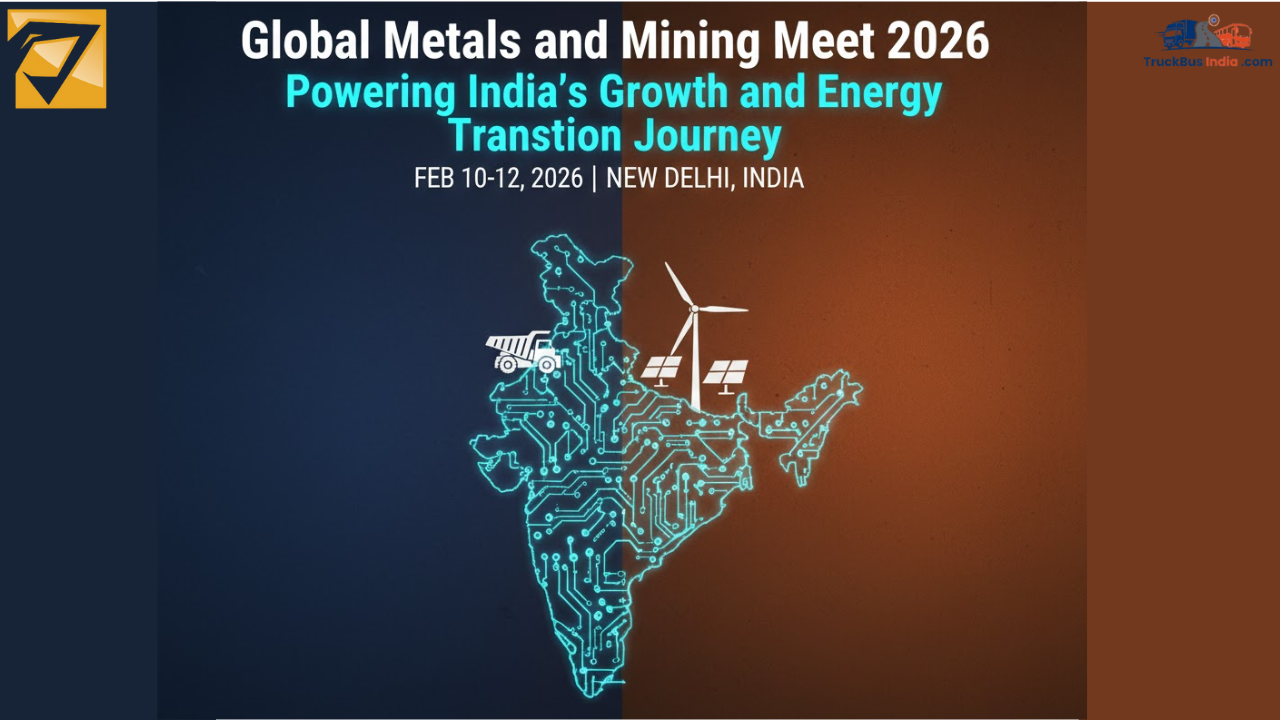
The Global Metals and Mining Meet 2026 — scheduled for 18 February 2026 at The Lalit, Kolkata — underscores the strategic importance of the metals and mining sector in India’s economic growth and its transition to a greener energy future. With government reforms, industry participation, and a focus on critical minerals, the event highlights how this sector is evolving to meet rising demand and global sustainability commitments.
India’s Metals & Mining: A Cornerstone of Growth
India’s metals and mining industry sits at the heart of key growth drivers such as infrastructure development, manufacturing expansion, and energy transition. With the nation accelerating toward its $5 trillion GDP goal and broader visions like Viksit Bharat 2047, demand for essential minerals — including iron ore, aluminium, copper, and critical minerals — continues to rise. Government initiatives such as the Critical Minerals Policy and reforms in the Mines & Minerals Act are designed to foster investment and enhance the sector’s competitiveness.
The mining sector’s contributions extend beyond raw extraction; metals like aluminium and copper are crucial for electric power infrastructure, renewable energy technologies, electric vehicles (EVs), and modern manufacturing, marking the industry as integral to India’s industrial roadmap.
Meet Highlights: Collaboration, Technology & Sustainability
The Global Metals and Mining Meet 2026 brings together over 30 speakers and more than 300 attendees, including mine developers, mineral producers, equipment manufacturers, and technology providers. The agenda prioritises key areas such as:
- Regulatory and policy changes to unlock mining potential
- Digital transformation and smart mining technologies
- ESG (Environmental, Social & Governance) standards and sustainable practices
- Improving safety and productivity through innovation
- Strengthening supply chains for critical minerals
These discussions are crucial at a time when energy transition efforts worldwide hinge on reliable access to metals that are foundational to clean energy systems.
Critical Minerals: From Import Reliance to Strategic Growth
A central theme of energy transition is the rising importance of critical minerals like lithium, nickel, cobalt, rare earth elements, and graphite. These minerals are essential for batteries, EVs, solar panels, wind turbines, and other clean technologies. While India’s domestic reserves are limited, the country is actively building strategic frameworks to secure reliable sources, strengthen value chains, and reduce dependency on imports.
For instance, the National Critical Mineral Mission (NCMM) — with a budget exceeding ₹34,000 crore — aims to build sustainable exploration, processing, and recycling infrastructures to support clean tech growth and economic resilience.
Industry Focus: From Traditional Metals to Future Technologies
India is already a major player in traditional mining sectors. The country has seen strong growth in the production of minerals such as iron ore, bauxite, manganese, zinc, and aluminium, which fuel industries like steel, cement, and construction. Expansion of production not only bolsters domestic capacity but also strengthens export performance.
At the same time, global corporations such as Vedanta Group are realigning business strategies to prioritise transition metals and critical minerals which support energy transition. Vedanta’s initiatives to expand aluminium capacity from 2.4 MTPA to 3.1 MTPA by FY28, secure blocks of rare earth elements and other technologies, and mitigate carbon emissions illustrate this shift toward sustainable metal production.
Sustainable Practices and “Green Mining”
While production growth is essential, environmental stewardship remains a priority. Initiatives such as India’s first “green mine” at the Surjagarh Iron Ore Mine focus on reducing environmental impacts and minimising the carbon footprint of mining operations. Such sustainability efforts align with broader global and national priorities for low-carbon development.
Furthermore, international collaborations — like green metals partnerships between Indian and Japanese companies to develop low-carbon aluminium — reinforce the industry’s commitment to sustainability and energy transition goals.
Outlook: Turning Resources into Resilience
The Global Metals and Mining Meet 2026 emphasizes that India’s mining sector is not simply an extractive industry — it is evolving into a strategic enabler of economic growth, infrastructure transformation, and clean energy transition. Through regulatory reforms, investment in critical mineral value chains, adoption of advanced technologies, and sustainability commitments, India is positioning itself as both a major consumer and an emerging global contributor to metals and mining.
In this dynamic era, effective policy, innovation, and industry collaboration will be key to ensuring that the sector continues to power India’s growth and energy transition journey well into the future.