
News List
Why Trucking In Northeast India Remains Challenging

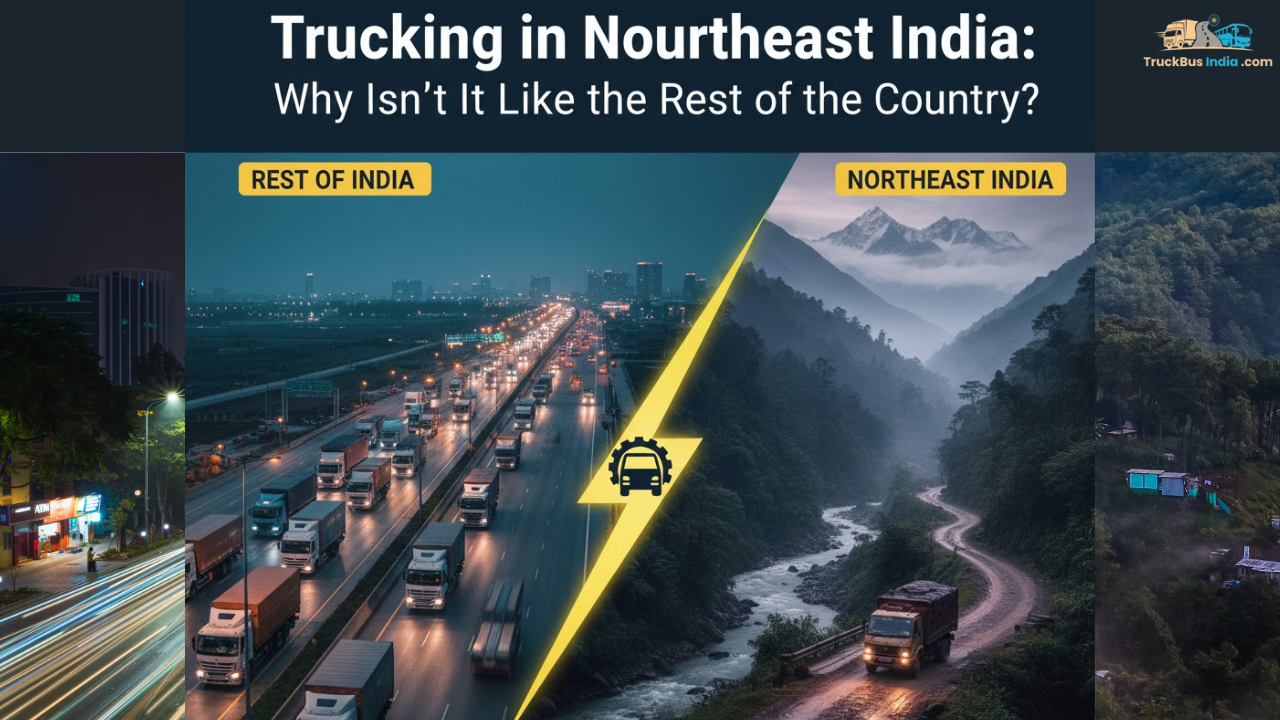
Freight movement in Northeast India continues to follow a very different rhythm compared to the rest of the country. Despite gradual infrastructure upgrades, trucking in the region remains slower, more tactical and heavily dependent on driver skill and local knowledge. The unique combination of mountainous terrain, volatile weather and sensitive border zones shapes how logistics operates across the eight northeastern states.
Challenging Terrain Dictates Vehicle Choice And Speed
The geography of Northeast India sets immediate limitations on trucking operations. Roads in hill regions often cling to steep slopes, remain narrow and include sharp bends that demand constant attention from drivers. Unlike highway driving in the plains, trucks here must frequently shift gears while managing steep climbs and sudden descents.
Heavy loads place additional stress on engines and braking systems, encouraging operators to rely on lighter vehicles and limit cargo weight. The lack of alternative routes adds to the risk. A single landslide on major corridors such as NH-6 or NH-37 can halt traffic for hours, sometimes longer. With no parallel highways available, freight movement becomes highly vulnerable to natural disruptions.
Weather Conditions Add To Operational Uncertainty
Weather remains one of the most unpredictable elements affecting trucking in the Northeast. Monsoon rains frequently trigger landslides and wash away road sections, while dense fog in higher altitudes significantly reduces visibility. During winters, ice formation in states like Arunachal Pradesh and Sikkim further slows truck movement and raises safety concerns.
Although new tunnels, bridges and widening projects are underway, infrastructure development across the region remains uneven. A damaged culvert or delayed construction can temporarily cut off an entire logistics corridor, making delivery timelines difficult to forecast and increasing planning complexity for fleet operators.
Border Regulations Influence Freight Flow
The Northeast’s shared borders with Bhutan, Bangladesh, Myanmar and China introduce another layer of complexity. Security checks, permits and border controls often slow movement even between neighbouring Indian states. For cross-border freight, customs inspections and long queues become routine.
Freight patterns also affect efficiency. Essential goods such as fuel, cement, food supplies and consumer products flow steadily into the region, while outbound cargo including tea, bamboo and horticultural produce remains limited in volume. This imbalance creates a persistent return-load challenge for truck owners.
Adaptation Remains Key For Operators
To manage these constraints, operators rely on smaller trucks, closely monitor route conditions and carry additional spare parts due to the distance between service facilities. Local knowledge plays a critical role in navigating road conditions, weather shifts and regulatory requirements.
Outlook For Northeast India’s Trucking Sector
While ongoing infrastructure projects will improve connectivity over time, trucking in Northeast India is expected to remain shaped by terrain, climate and border realities. Freight movement here will continue to be slower and more strategic, reinforcing the region’s distinct logistics model within India’s broader transport ecosystem.