
News List
Ashok Leyland Saathi vs Mahindra Supro Profit Truck Compared

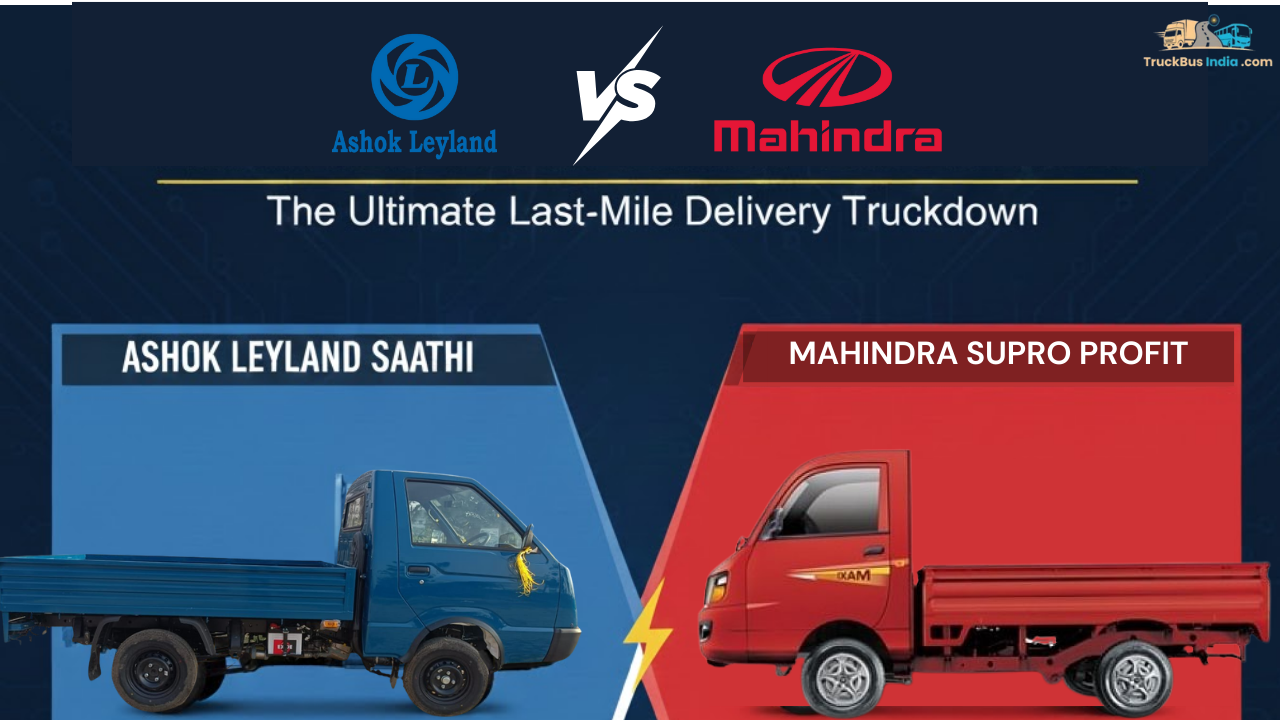
India’s last-mile and small cargo transportation segment continues to witness strong demand, driven by e-commerce, retail logistics and MSME expansion. Among the popular choices in this category are the Ashok Leyland Saathi and the Mahindra Supro Profit Truck Excel. Both diesel-powered mini trucks are engineered to improve business profitability through reliable performance, durable construction and competitive ownership costs.
Total Cost Of Ownership: Annual Expense Comparison
The Ashok Leyland Saathi, priced at approximately Rs 6.54 lakh (ex-showroom), is assumed to operate for 300 days a year with an average daily run of 125 km. This results in an annual distance of about 37,500 km. Based on this usage, the truck incurs fixed costs of nearly Rs 2.93 lakh annually, which include depreciation, loan interest, insurance, RTO charges and a driver salary of Rs 15,000 per month. Variable costs, covering fuel, servicing and tyre wear, are estimated at Rs 2.04 lakh per year. The combined annual ownership cost stands at roughly Rs 4.98 lakh, translating to a running cost of around Rs 13.29 per km.
The Mahindra Supro Profit Truck Excel enters the market with a lower ex-showroom price of Rs 6.18 lakh. Under similar operating conditions, its fixed costs are estimated at Rs 2.88 lakh annually, while variable costs come in at about Rs 1.86 lakh. Thanks to a higher fuel efficiency of 21.8 kmpl, fuel expenses remain lower than the Saathi. The total annual cost of ownership works out to approximately Rs 4.74 lakh, with a cost per kilometre of around Rs 12.66.
Engine And Performance Comparison
Performance-wise, the Ashok Leyland Saathi holds a clear advantage. It is powered by a 1.5-litre, three-cylinder turbocharged diesel engine producing 45 hp and 110 Nm of torque. The turbocharger and intercooler setup enables stronger low-end torque, making it better suited for heavier loads.
In contrast, the Mahindra Supro Profit Truck Excel features a smaller 1.0-litre, two-cylinder naturally aspirated diesel engine delivering 26 hp and 55 Nm of torque. While it falls short in power, the simpler engine design contributes to improved fuel efficiency and lower running costs.
Suspension, Braking And Ride Characteristics
Both trucks are equipped with leaf spring suspension setups at the front and rear. However, the Saathi uses parabolic leaf springs, which offer improved load handling and relatively better ride comfort under varying load conditions. Braking duties on both models are handled by disc brakes at the front and drum brakes at the rear, ensuring dependable stopping performance in urban and highway operations.
Dimensions And Payload Capability
The Ashok Leyland Saathi offers a higher gross vehicle weight of 2,288 kg and a payload capacity of 1,120 kg, compared to the Supro Profit Truck Excel’s 1,980 kg GVW and 900 kg payload. The Saathi also features a wider and taller cargo deck, making it more suitable for transporting voluminous goods. The Supro, however, remains a practical option for dense cargo in tighter city environments.
Verdict: Which One Makes More Business Sense?
The Mahindra Supro Profit Truck Excel emerges as the more cost-effective choice for new businesses due to its lower acquisition price and reduced running cost. On the other hand, the Ashok Leyland Saathi offers higher payload capacity, stronger performance and a longer warranty of 5 years or 2 lakh km, compared to Mahindra’s 3-year or 80,000 km coverage. The final choice depends on whether priority lies in lower operating costs or higher load-carrying capability.