
News List
BS6 Phase 2 Trucks India: Key Comparison Insights

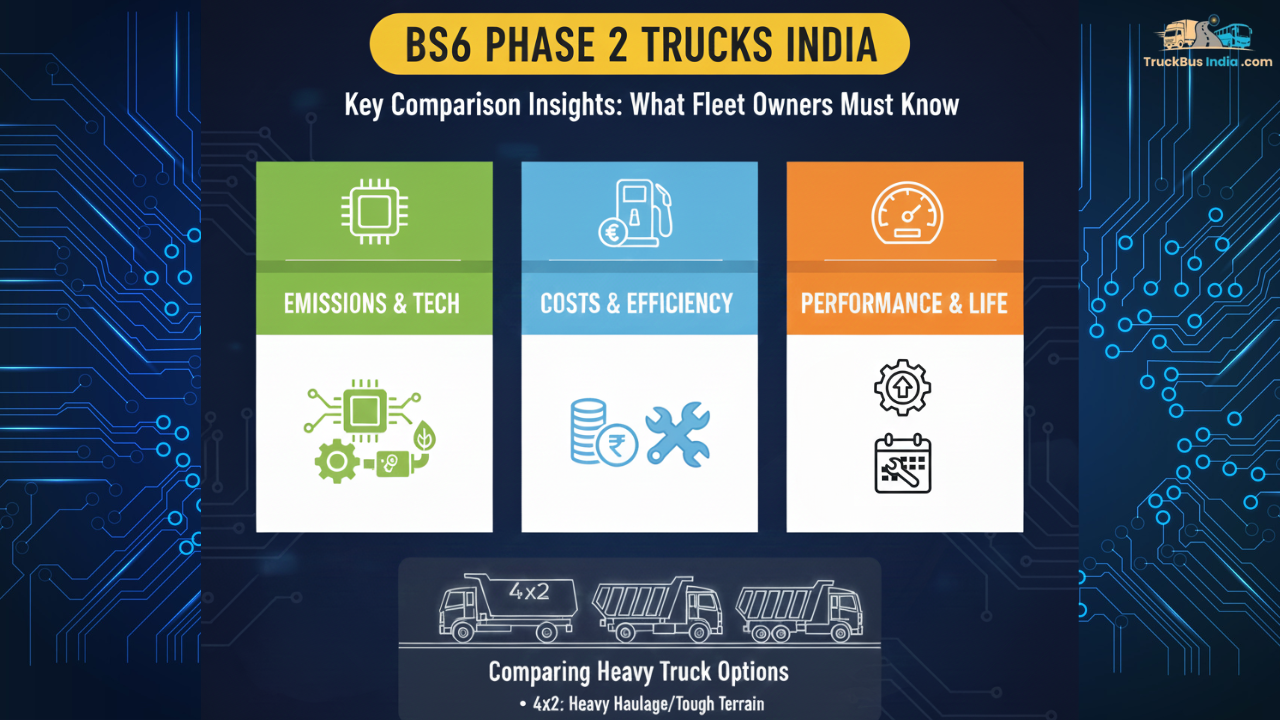
As India moves toward cleaner and more efficient commercial transportation, BS6 Phase 2 emission norms are reshaping the truck market. Fleet operators now face crucial decisions regarding vehicle selection, compliance, and operational efficiency under the updated standards.
Understanding BS6 Phase 2 Emission Norms
BS6 Phase 2, implemented across India, is the next step in curbing pollutants from diesel-powered trucks. These norms further tighten limits on particulate matter (PM) and nitrogen oxide (NOx) emissions compared to Phase 1 standards. For fleet owners, adopting BS6 Phase 2 trucks is no longer optional—compliance is mandatory for new vehicle registrations and for operating in many urban and industrial zones.
Impact on Fleet Operations and Compliance
The new emission standards affect not just environmental performance but also operational planning. Trucks adhering to BS6 Phase 2 consume cleaner fuel, reducing the carbon footprint of logistics operations. While the initial cost of upgrading to BS6 Phase 2 trucks may be higher, fleet operators benefit from lower long-term regulatory risks, reduced fines, and enhanced acceptance in urban fleets. Fleet managers must ensure that servicing schedules, after-treatment systems, and fuel quality meet the stringent requirements to maintain peak performance.
Comparing Heavy Truck Options Under BS6 Phase 2
Heavy trucks in the BS6 Phase 2 segment come with diverse engine setups, including 4×2, 6×4, and multi-axle variants. Each configuration offers specific advantages in terms of load-carrying capacity, fuel efficiency, and terrain suitability. For instance, 4×2 trucks are ideal for lighter urban deliveries, while 6×4 setups suit long-haul routes and heavier cargo. Additionally, manufacturers are equipping trucks with advanced exhaust after-treatment systems like Selective Catalytic Reduction (SCR) and Diesel Particulate Filters (DPF), ensuring compliance without compromising performance.
Future Outlook for Indian Fleet Operators
With BS6 Phase 2 adoption gaining momentum, truck manufacturers are introducing feature-rich models that combine emission compliance with operational efficiency. Operators can expect benefits such as lower maintenance costs, longer engine life, and enhanced resale value. Importantly, embracing BS6 Phase 2 trucks positions fleets to handle evolving regulations and sustainability targets, including potential integration with electric or hybrid technologies in the near future.
Conclusion
BS6 Phase 2 trucks represent a critical upgrade for fleet operators in India, offering cleaner emissions, regulatory compliance, and efficient operations. Careful evaluation of truck emission standards, axle configurations, and long-term maintenance requirements will help businesses maximize productivity while staying ahead in India’s evolving commercial vehicle landscape.