
News List
Why Scania Trucks Are Rare on Indian Roads Despite Global Success

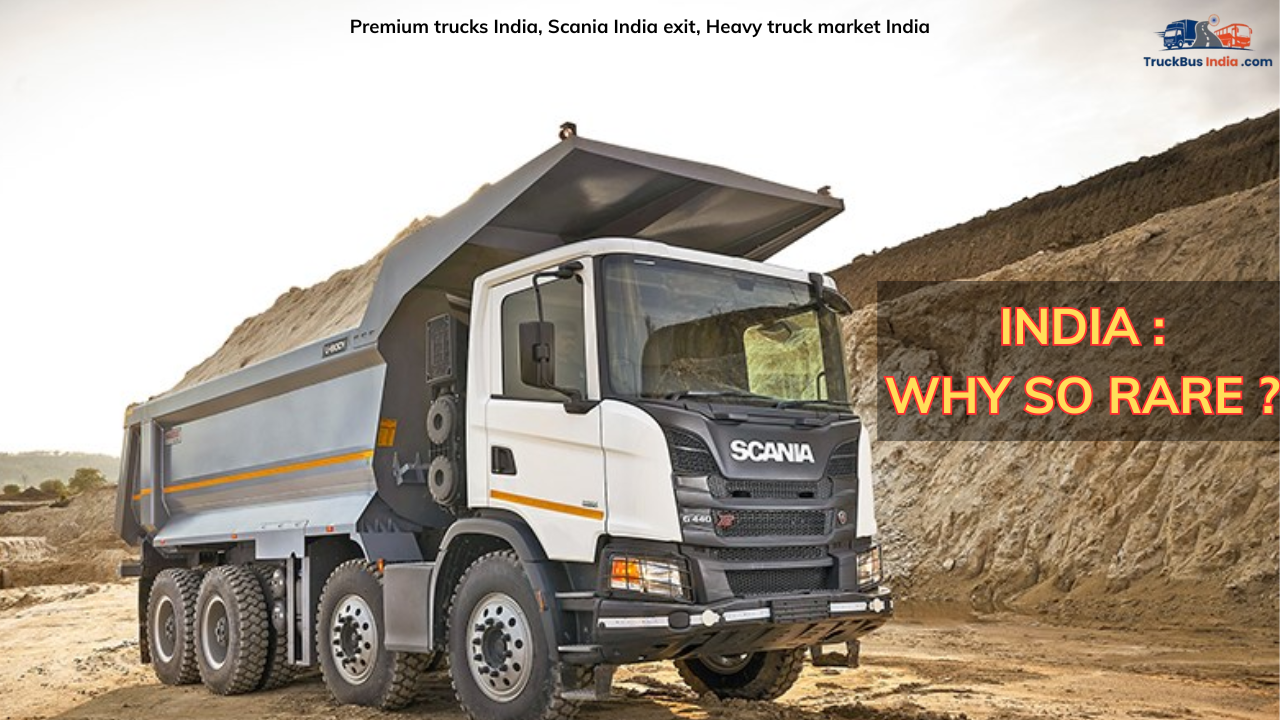
Scania trucks are synonymous with premium performance, durability, and advanced technology. Globally, they dominate the commercial vehicle market with millions of units operating in Europe, North America, and Asia. Yet, in India, spotting a Scania on the road is a rare treat. Despite their engineering excellence, several factors have limited Scania’s presence in the Indian trucking landscape.
High Acquisition and Maintenance Costs
One of the primary reasons is cost. Scania trucks are premium vehicles, and their price point in India starts at around ₹90–₹1.2 crore depending on the model and specifications. For many fleet operators, especially small-to-medium logistics companies, this investment is prohibitive.
- Maintenance Costs: Advanced components and European standards mean servicing is more expensive than locally manufactured trucks.
- Spare Parts Availability: While Tata, Ashok Leyland, and Mahindra trucks have a vast service network, Scania’s network is limited, making parts harder to source.
For businesses focusing on cost efficiency and quick turnaround, the total cost of ownership (TCO) often outweighs the benefits of a premium truck.
Fuel Efficiency and Road Conditions
Scania trucks are optimized for long-haul European highways, where roads are smooth and speed limits are higher. India’s diverse road conditions, ranging from congested city streets to uneven rural roads, impact the fuel efficiency and performance of these trucks.
- Operators running routes with frequent stops or uneven terrain may find locally manufactured trucks more adaptable and economical.
- High maintenance and fuel costs on challenging Indian roads further deter fleet owners from adopting Scania.
Market and Customer Segmentation
The Indian trucking market is highly price-sensitive, with a large proportion of operators preferring reliable and affordable trucks like Tata Signa, Ashok Leyland, and Mahindra. Scania targets a premium segment, which is small but growing.
- Some large corporates and logistics companies do invest in Scania for their long-haul efficiency and driver comfort, but these cases are limited.
- Niche operators, such as those transporting perishable goods or high-value cargo, are more likely to choose Scania.
Regulatory and Import Challenges
Scania trucks are mostly imported as completely built units (CBUs) or assembled locally in limited numbers. This creates challenges:
- Custom Duties: High import duties increase upfront costs.
- Compliance Requirements: Meeting Indian transport regulations, including axle load norms and emission standards, adds complexity.
These regulatory factors have historically made fleet adoption slower compared to Indian-made trucks.
The Future of Scania in India
Despite challenges, Scania has not given up on India. The company has introduced models like the Scania SUPER truck, focusing on fuel efficiency, durability, and driver comfort. With urbanization, infrastructure improvement, and growing logistics demand, premium trucks may see a gradual uptick in adoption, especially for specialized long-haul operations.
Conclusion
Scania trucks are rare on Indian roads because of high costs, maintenance challenges, fuel efficiency concerns on local roads, and a price-sensitive market. However, for logistics companies that prioritize premium performance, driver comfort, and long-haul efficiency, Scania remains an attractive, albeit niche, choice. As India’s infrastructure improves and logistics requirements become more sophisticated, Scania trucks could slowly carve out a more significant presence in the market.