
News List
Why Top Electric Bus and Truck Makers Want Another Relief for Rare Earth Magnets as China Plays Hardball

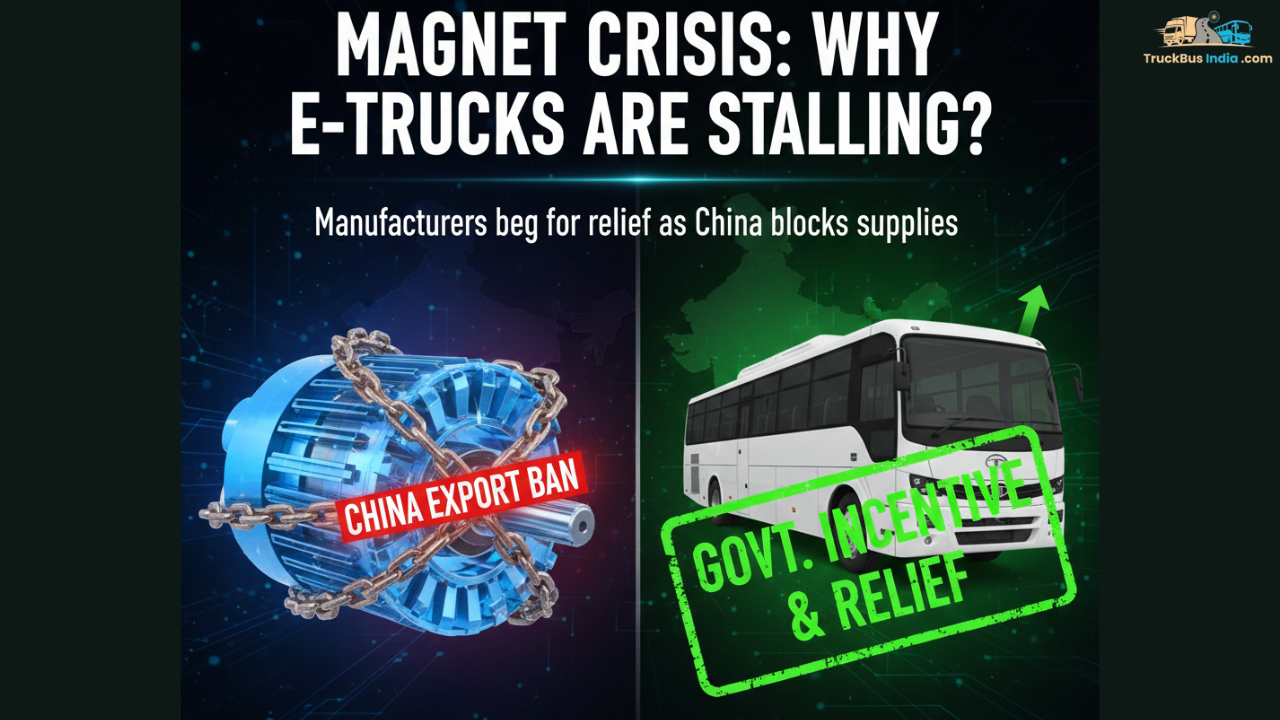
The global electric vehicle (EV) sector is grappling with a critical challenge: rare earth magnets. These magnets, essential for high-efficiency electric motors used in buses and trucks, are largely controlled by China, which dominates the global supply chain. With rising demand for electric buses and trucks, manufacturers in India and worldwide are pressing for renewed policy relief to secure their supply.
Rare Earth Magnets: The Heart of EV Motors
Rare earth magnets, typically made from neodymium, dysprosium, and praseodymium, are indispensable in electric motors, providing high torque and efficiency. Without a steady supply of these magnets, production of electric buses and trucks can face delays, cost escalations, and reduced performance.
China’s Strategic Edge
China’s rare earth policy has increasingly focused on controlling exports and leveraging its global dominance. For EV manufacturers outside China, this creates uncertainty. Any sudden export restrictions or price hikes can disrupt the entire EV supply chain, including India’s emerging electric bus and truck market.
Why Manufacturers Seek Relief
Top electric bus and truck makers are lobbying their governments for relief in the form of incentives, subsidies, or alternative sourcing support. This is crucial for:
- Maintaining affordability: Without relief, the cost of EVs could rise sharply.
- Ensuring production continuity: Delays in magnet supply can halt assembly lines.
- Promoting local EV manufacturing: Government support can encourage domestic production of rare earth components.
Impact on India’s EV Supply Chain
India is aiming to expand its electric bus and truck segment as part of the nation’s sustainable mobility push. However, dependence on China for rare earth magnets poses a strategic risk. Strengthening domestic manufacturing or securing alternative suppliers is critical for the growth of electric vehicles in India.
The Way Forward
Policymakers and industry stakeholders are exploring multiple solutions:
- Domestic production initiatives: Boosting local mining and processing of rare earth elements.
- Strategic imports: Diversifying sources to reduce dependence on China.
- R&D support: Encouraging innovation in magnet-free or reduced-magnet motor designs.
As China continues to play hardball with rare earth exports, securing reliable magnet supply is no longer optional—it is vital for the future of electric buses and trucks in India. Industry experts believe timely government intervention could stabilize costs, boost production, and maintain India’s competitiveness in the EV revolution.
Conclusion
The battle over rare earth magnets highlights the global stakes of EV production. For India’s electric bus and truck makers, securing another round of relief is critical—not just for business continuity, but also for the nation’s clean mobility ambitions. Without strategic support, the electric vehicle manufacturing ecosystem risks facing significant bottlenecks in the years to come.