
News List
India’s First Female Backhoe Operator Kajal Khari: Story Review and Case Study of the 770 EX

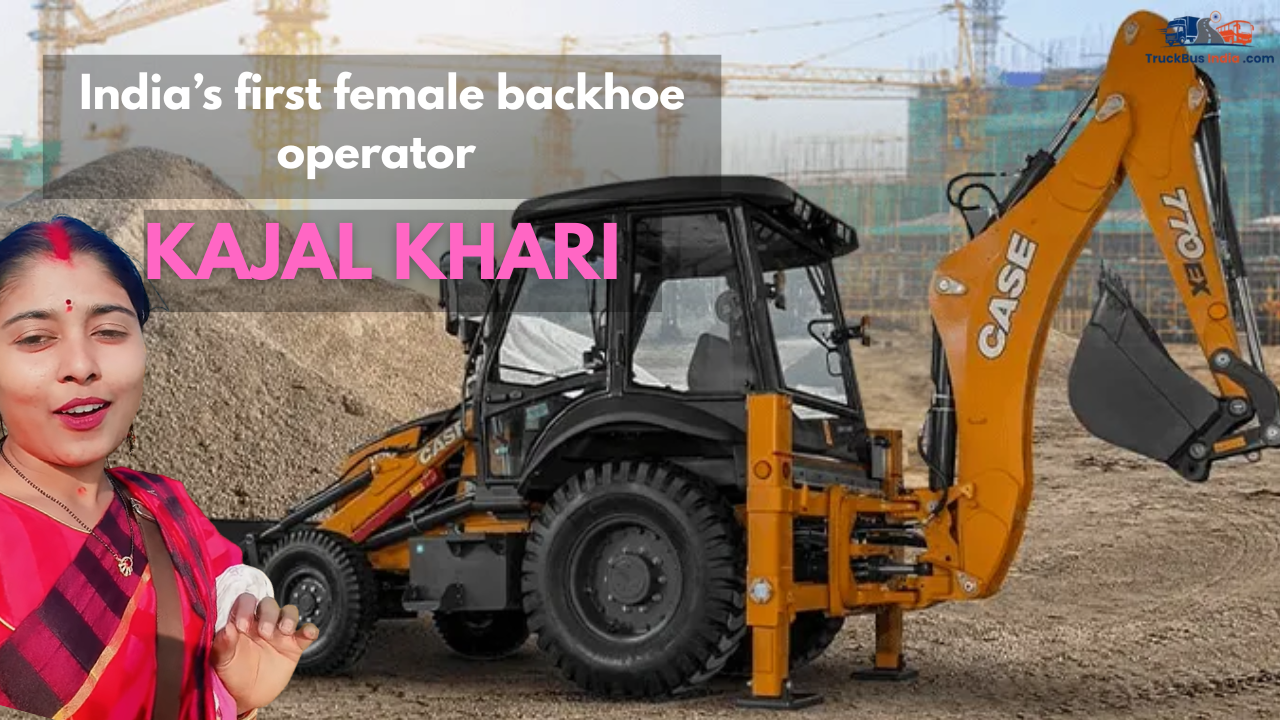
India’s construction sector has long been seen as a male-dominated space, especially when it comes to operating heavy machinery. That perception began to shift when Kajal Khari emerged as India’s first female backhoe operator, proving that skill, focus, and training matter far more than gender on a construction site.
Her journey is both inspiring and practical—offering a real-world example of how women can step into equipment operation roles with confidence.
Who Is Kajal Khari?
Kajal Khari’s entry into construction machinery was driven by curiosity and determination rather than convention. With no predefined roadmap, she chose to learn and master backhoe operations through structured training and on-ground experience.
Today, she is often described as a strong and confident lady Kajal Khari, not just because she operates heavy equipment, but because she does so with precision, safety awareness, and consistency—qualities that define a good operator anywhere in the world.
Her story has gained wider attention through digital platforms, including a detailed video feature that shows her operating skills and on-site confidence (you can watch it here: https://youtu.be/Q-AMeaTOeJA?si=AOK0KSuJw4qFNuaq).
Breaking Stereotypes in Construction Equipment
Operating a backhoe loader involves far more than physical effort. It demands technical understanding, hand-eye coordination, spatial judgement, and a strong focus on safety. Kajal’s success as a backhoe operator in India challenges the outdated belief that construction equipment requires brute strength over skill.
Her presence on job sites has helped normalise the idea of women in construction equipment, encouraging more inclusive thinking within training institutes, OEMs, and contractor networks. It also highlights how modern machinery design has made equipment operation more accessible to a wider range of operators.
Case Study: Operating the 770 EX Backhoe
A key part of Kajal Khari’s professional journey involves the 770 EX backhoe, a machine widely used across Indian infrastructure and construction projects.
The 770 EX is known for its versatility—handling excavation, trenching, loading, and material movement across urban and rural sites. For operators, features such as responsive hydraulics, balanced weight distribution, and a well-designed cabin contribute to smoother operation and reduced fatigue during long working hours.
From an operator’s point of view, the machine’s visibility, control layout, and stability are especially important. Kajal’s real-world usage of the 770 EX backhoe shows how proper ergonomics and machine reliability play a crucial role in enabling consistent performance, regardless of who is behind the controls.
This makes her experience a practical case study of how equipment capability and operator skill go hand in hand.
Why Women Operators Matter for the Industry
India’s construction boom has created rising demand for skilled construction machinery operators, yet the sector continues to face talent shortages. Expanding opportunities for women can help address this gap while also improving workforce stability and safety culture on sites.
Globally, greater gender diversity has been linked to better adherence to operating protocols and longer workforce retention. Kajal Khari’s journey adds an Indian context to this conversation, showing that inclusion is not just aspirational—it is achievable.
Inspiring the Next Generation
Kajal’s achievement is not limited to being “the first.” It lies in what her visibility enables—more awareness, more aspiration, and more confidence among young women who may never have considered careers in heavy equipment operation.
As India continues to invest heavily in infrastructure, stories like Kajal Khari’s will play a vital role in reshaping perceptions around who can be part of the construction machinery workforce.