
News List
Toyota Kirloskar Motor Commits to Wildlife Conservation in Bandipur

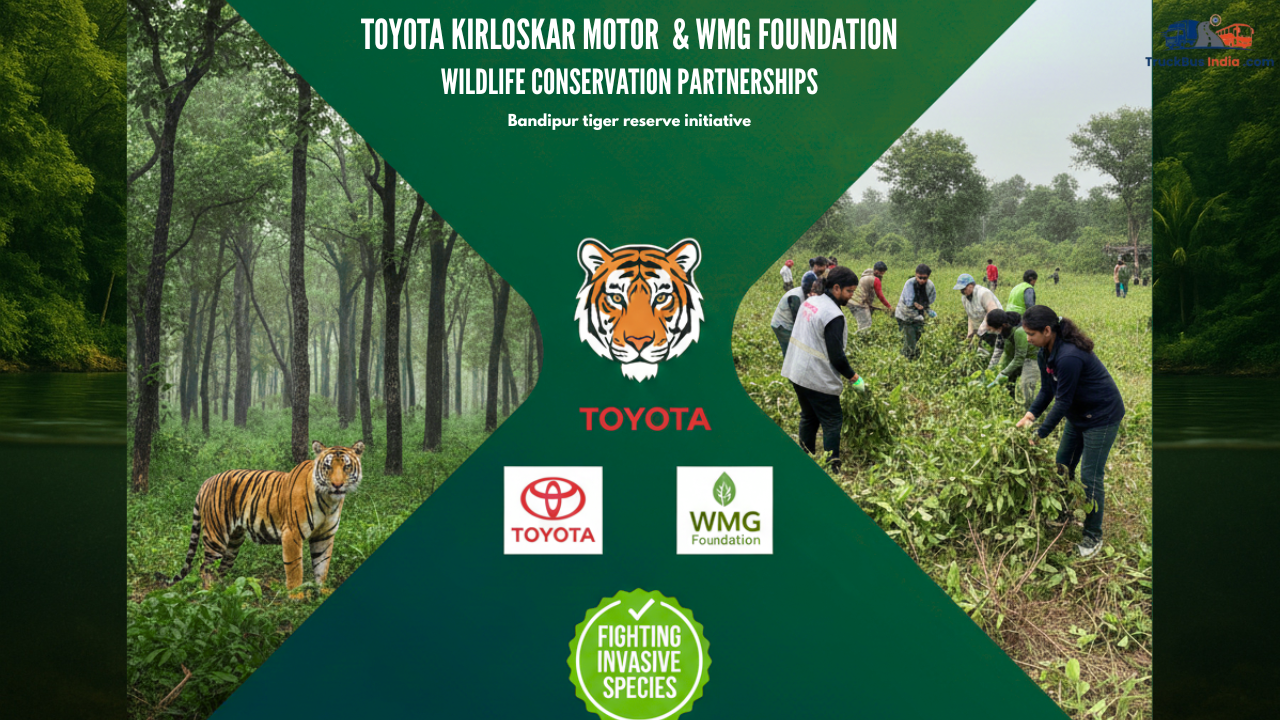
Toyota Kirloskar Motor (TKM) has taken a significant step in environmental conservation by partnering with the WMG Foundation to remove invasive plants from Bandipur Tiger Reserve in Karnataka. This collaborative effort focuses on restoring the reserve’s natural habitat, improving biodiversity, and addressing human-wildlife conflict through targeted ecological interventions.
The initiative — named the Namma Vana Project — aims to clear invasive Lantana camara from approximately five hectares of forest land within the Bandipur Tiger Reserve. This action marks an important milestone in Toyota’s broader sustainability and corporate social responsibility (CSR) strategy focused on environmental stewardship and community engagement.
The Threat of Invasive Species in Bandipur
Bandipur Tiger Reserve — one of India’s premier tiger habitats — faces ecological challenges due to the spread of Lantana camara, an aggressive invasive shrub. Originally native to the Americas, this plant has proliferated across nearly 50–60% of certain buffer and core areas of the reserve, outcompeting native vegetation and degrading habitat quality.
The dense thickets formed by Lantana camara suppress native grasses and shrubs, which serve as essential forage for herbivores such as deer, gaur, and elephants. This reduction in native vegetation affects prey availability, fragments wildlife corridors, and can push large animals closer to human settlements — increasing instances of human-animal conflict.
Removing these invasive plants is not only a conservation priority but also a strategic ecological intervention to restore the natural balance and resilience of forest ecosystems in Bandipur.
Namma Vana Project: Habitat Restoration and Long-Term Impact
Under the Namma Vana Project, Toyota Kirloskar Motor and the WMG Foundation are executing a multi-step habitat restoration plan:
• Clearing Invasive Lantana
The first phase involves the physical removal of Lantana camara from designated areas within the reserve to reduce its dominance and allow sunlight and nutrients to reach native plants.
• Supporting Native Vegetation Regeneration
Following removal, the project facilitates the regeneration of native grasses, shrubs, and tree seedlings. Restoring this vegetation base improves food resources for herbivores, strengthening the prey base and supporting a healthier ecological food chain.
• Reducing Human-Wildlife Conflict
By enhancing habitat quality within forest interiors, the initiative helps stabilize wildlife territories. This, in turn, reduces the movement of tigers and other animals toward human settlements, lowering potential conflict scenarios.
• Sustained Maintenance Support
TKM has committed to ongoing maintenance support for two years, which includes scheduled weeding cycles, patch planting in areas with low survival rates, reinforcement of fire lines before summers, and continuous monitoring of wildlife usage in restored areas.
Toyota’s Broader CSR and Sustainability Commitment
The Bandipur project aligns with Toyota Kirloskar Motor’s long-standing CSR ethos, which focuses on creating environmental and social value beyond business goals. TKM’s environmental initiatives are part of a larger sustainability framework that integrates biodiversity conservation, community empowerment, resource stewardship, and climate action.
Over the years, Toyota Kirloskar Motor has implemented various CSR programs across education, health, environment, skill development, road safety, and disaster management. Its environment-focused efforts — including afforestation, water stewardship, and renewable energy use — demonstrate corporate leadership in advancing sustainability goals in India.
In 2025, Toyota’s environmental commitment also extended to public awareness and eco-learning initiatives, such as Toyota’s Green Wave Project and CSR integration with global frameworks like the Toyota Environmental Challenge 2050.
What This Means for Biodiversity and Local Communities
The Bandipur Tiger Reserve project is expected to deliver tangible ecological benefits by:
- Enhancing forage availability and habitat quality for wildlife.
- Strengthening the ecological integrity of wildlife corridors.
- Lowering the frequency of wildlife straying into human areas.
- Supporting long-term forest health through continued maintenance and monitoring.
For local communities around Bandipur, healthier forests mean reduced crop damage, fewer conflict incidents, and increased potential for community participation in conservation efforts. Continued CSR support from Toyota Kirloskar Motor and partners further reinforces the importance of private sector involvement in environmental preservation.
A Model for Corporate Conservation Action
Toyota Kirloskar Motor’s partnership with the WMG Foundation at Bandipur showcases how corporate resources can be mobilized toward meaningful biodiversity outcomes. By addressing invasive species and advancing habitat restoration, the initiative contributes to a sustainable and balanced ecosystem — setting a precedent for future corporate-supported conservation projects across India.