
News List
Winter readiness: How fleets prepare vehicles for extreme cold and low-visibility operations

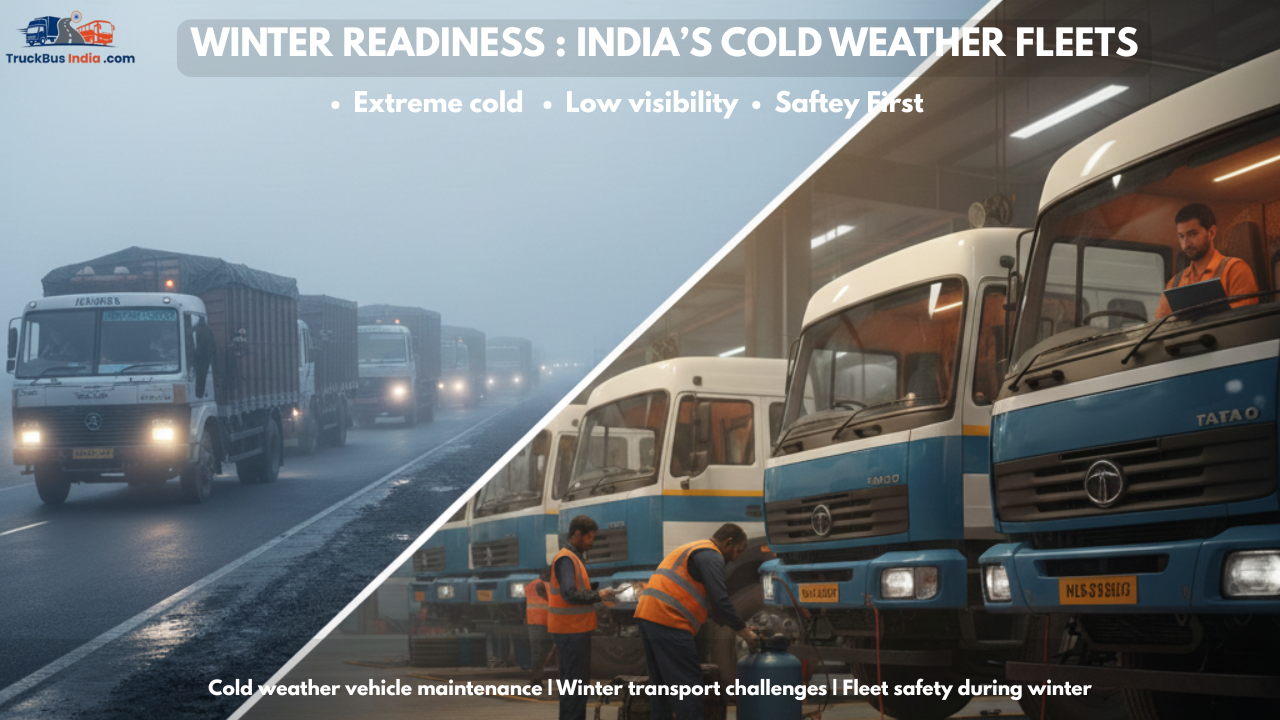
As winter sets in across several parts of India and global freight corridors, fleet operators face a familiar set of challenges—reduced visibility, cold-induced vehicle issues, and higher safety risks. From fog-prone highways in North India to cold-storage logistics operating in sub-zero zones, winter readiness has become a critical part of fleet safety and operational planning.
Effective winter preparation goes beyond basic vehicle checks. It requires a structured approach to maintenance, driver preparedness, and real-time risk management.
Understanding winter transport challenges for fleets
Cold weather affects both vehicles and drivers. Lower temperatures can reduce battery efficiency, thicken engine fluids, and impact tyre grip. Dense fog and shorter daylight hours significantly increase accident risk, particularly for long-haul and overnight operations.
According to road safety studies, visibility-related incidents rise sharply during winter months, with fog contributing to multi-vehicle pile-ups on major freight corridors. These conditions make winter readiness fleets planning essential rather than optional.
Vehicle winter preparation and preventive maintenance
Cold weather vehicle maintenance is the foundation of winter readiness. Fleets typically begin preparations weeks before peak winter conditions arrive.
Key focus areas include:
- Engine oil and coolant checks to ensure fluids remain effective at low temperatures
- Battery testing, as cold weather reduces starting power
- Tyre inspections, with emphasis on tread depth and correct pressure
- Brake system checks to prevent moisture-related failures
- Ensuring defoggers, heaters, and wipers are fully functional
For diesel fleets, fuel gelling prevention is also critical in colder regions, as wax formation can block fuel filters and lines.
Managing low visibility and fog driving safety
Fog driving safety remains one of the biggest winter transport challenges. Reduced visibility can make even familiar routes unpredictable.
Fleet operators are increasingly focusing on:
- Mandatory use of fog lamps and reflective vehicle markings
- Speed governance in fog-prone zones
- Staggered dispatch schedules to avoid early-morning fog peaks
- Clear protocols for halting operations during extreme visibility loss
Driver training plays a key role here, reinforcing defensive driving techniques, safe following distances, and the importance of not relying solely on hazard lights, which can sometimes worsen visibility confusion.
Cold weather fleet management through technology
Technology is playing a growing role in cold weather fleet management. Telematics systems help fleet managers monitor vehicle health and driving behaviour in real time, which is especially valuable during winter.
Connected systems enable:
- Alerts for battery voltage drops and engine temperature anomalies
- Real-time vehicle tracking during low-visibility conditions
- Monitoring harsh braking or sudden speed changes
- Faster response during breakdowns or weather-related disruptions
Some fleets also integrate weather data into route planning to proactively reroute vehicles away from high-risk zones.
Driver preparedness and operational discipline
Winter readiness is incomplete without focusing on drivers. Long hours in cold conditions can lead to fatigue, slower reaction times, and reduced comfort.
Best practices include:
- Providing winter gear and cabin comfort essentials
- Educating drivers on symptoms of cold stress and fatigue
- Clear communication protocols during fog or cold waves
- Regular rest breaks, especially during night operations
Operational discipline—such as strict adherence to speed limits and stop-go decisions—often determines whether fleets operate safely during winter.
Building resilience for seasonal operations
As climate variability increases, winter readiness is becoming a long-term operational capability rather than a seasonal checklist. Fleets that invest in preventive maintenance, driver training, and technology-driven monitoring are better positioned to maintain uptime while protecting lives.
Ultimately, winter readiness fleets planning is about balancing safety with continuity. By addressing cold weather vehicle maintenance, fog driving safety, and cold weather fleet management together, fleet operators can reduce disruptions and operate with greater confidence during the most challenging months of the year.