
News List
Electric trucks move from pilot to purchase as fleet confidence grows

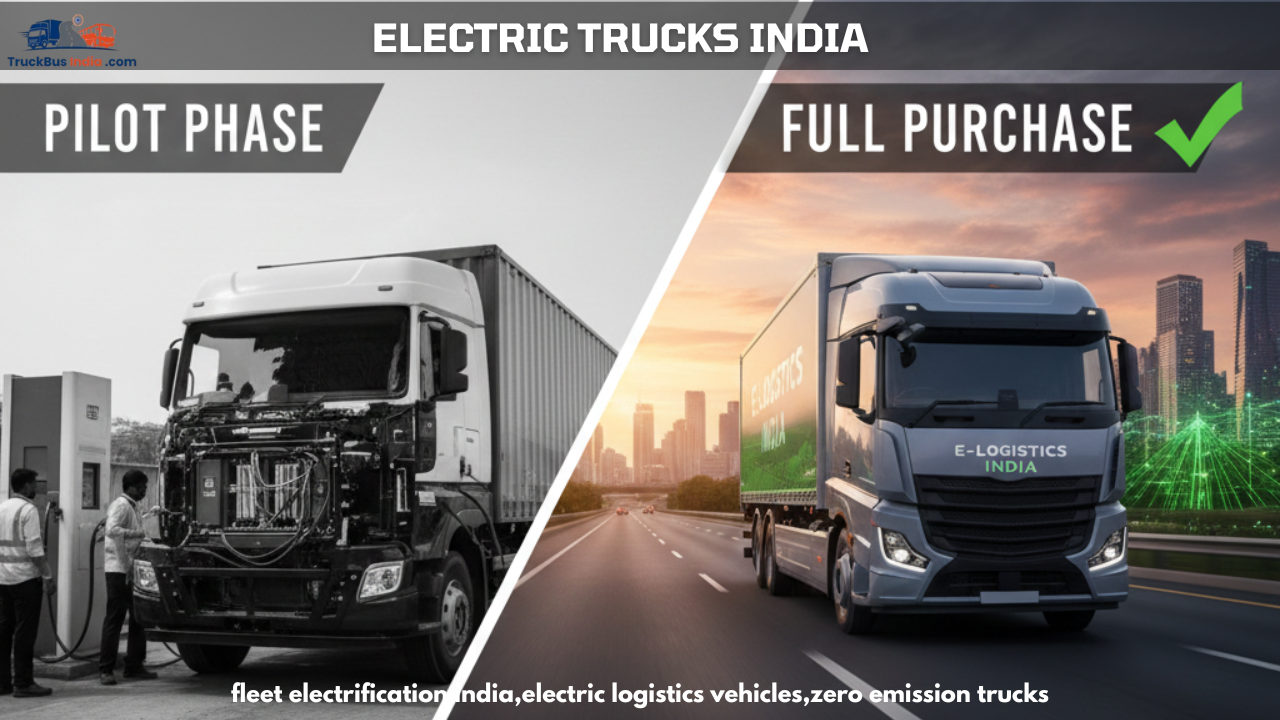
For several years, electric trucks in India were largely confined to pilot programmes and proof-of-concept trials. Fleet operators tested limited vehicles on short routes, closely monitoring range, uptime, and operating costs. In 2025, that cautious phase is giving way to early-scale purchases, signalling a shift in how commercial fleets view electric freight vehicles.
Rising fuel costs, tightening emission norms, and pressure from large shippers to cut carbon footprints are pushing fleets to move faster. What was once an experimental investment is now increasingly seen as a viable operational choice for specific use cases.
Why fleet confidence in EV trucks is growing
One of the biggest drivers of EV trucks adoption is greater clarity around total cost of ownership (TCO). While upfront prices for electric freight vehicles remain higher than diesel trucks, fleets are seeing savings through lower fuel and maintenance costs. Electricity costs are more predictable than diesel prices, and electric drivetrains require fewer moving parts, reducing service downtime.
Real-world pilot data has also played a role. Operators running electric logistics vehicles in urban and intra-city routes report stable performance, especially in applications such as hub-to-hub transport, port operations, and last-mile distribution. These controlled routes suit the current range capabilities of zero emission trucks.
OEM readiness and expanding product options
Another factor accelerating fleet electrification in India is improved OEM readiness. Domestic manufacturers have expanded their EV commercial vehicle portfolios, offering electric trucks across light and medium-duty segments. Better battery warranties, telematics integration, and after-sales support are reducing the perceived risk for buyers.
Public sector initiatives and demand aggregation programmes have also helped. Large-volume tenders and state-backed procurement models have given manufacturers confidence to invest in production capacity, which in turn supports more reliable delivery timelines for fleet operators.
Charging infrastructure moves closer to fleet needs
Charging availability remains a concern, but progress is visible. Many fleets investing in EV commercial vehicles are pairing vehicle purchases with captive charging infrastructure at depots and warehouses. This approach allows predictable overnight charging and reduces dependence on public networks.
Logistics hubs along major freight corridors are also beginning to see dedicated charging solutions for electric logistics vehicles. While long-haul electrification is still limited, the ecosystem for short- and mid-range operations is maturing steadily.
Where electric trucks make business sense today
Electric trucks are not yet a universal replacement for diesel, but their use cases are becoming clearer. Urban freight, e-commerce deliveries, FMCG distribution, and municipal services are leading adoption. These segments benefit from stop-start driving, shorter routes, and fixed schedules that maximise EV efficiency.
For fleet operators, the decision is increasingly data-driven. Route analysis, load profiles, and energy costs now guide purchase decisions rather than broad experimentation.
What comes next for EV trucks adoption
The move from pilot to purchase marks an important milestone for electric trucks in India. As battery prices gradually decline and charging infrastructure expands, adoption is expected to widen into heavier segments over the next few years.
For now, the trend is clear: fleet operators are no longer asking whether electric freight vehicles work, but where they work best. That shift in mindset is laying the foundation for a more scalable, zero emission commercial transport ecosystem.