
News List
Mahindra Disrupts India’s Heavy Truck Market, Recording Over 6‑Fold Sales Growth

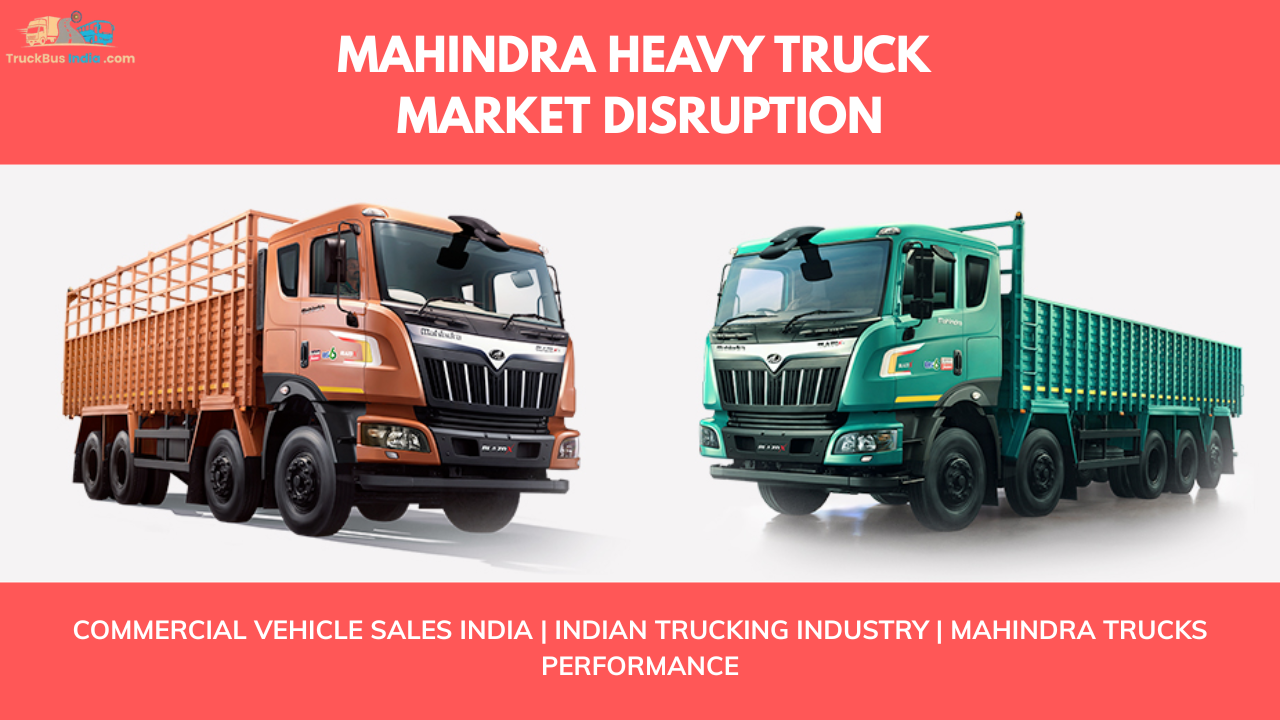
Mahindra & Mahindra (M&M), traditionally known for its strong presence in tractors, SUVs, and light commercial vehicles, has made an impressive breakthrough in the heavy truck market in India. Between 2021 and 2024, Mahindra saw its rigid truck sales surge from just 4,580 units to 30,240 units, marking a striking 6.6‑fold increase in sales and lifting its share in the medium and heavy‑duty vehicle (MHDV) segment from around 2% to 10%.
This remarkable performance signifies a major disruption in a market long dominated by established players like Tata Motors, Ashok Leyland, and Eicher Motors—and highlights Mahindra’s expanding footprint in one of India’s most competitive automotive segments.
Understanding India’s Heavy Truck Market
The heavy truck segment—which includes rigid trucks and tractor‑trailers—is a backbone of India’s freight and logistics network. These vehicles support long‑haul freight movement, construction logistics, and industrial goods transport across diverse terrains, making the segment crucial to the broader Indian trucking industry.
For years, legacy manufacturers maintained over 80% combined market share in this category. Mahindra’s entry and rapid growth signal changing dynamics, driven by customer demand for competitively priced, reliable trucks backed by a strong dealer network.
What’s Driving Mahindra’s Sales Growth?
Several factors have contributed to Mahindra’s rapid ascent in the heavy truck category:
Strategic Product Expansion
Mahindra diversified its heavy truck lineup with models that address multiple haulage needs—from construction material transport to regional logistics. This broader product portfolio has helped attract fleet operators looking for cost‑effective alternatives.
Improving Commercial Vehicle Sales in India
While the broader commercial vehicle sales in India have shown resilience, Mahindra has capitalised on emerging opportunities, including a growing demand for cargo transport across expanding industrial corridors. Festive demand, infrastructure spending, and policy tailwinds like GST reforms have also supported commercial vehicle uptake, indirectly benefiting Mahindra’s truck sales.
Strengthening via Strategic Acquisitions
To fortify its position in the commercial vehicle space, Mahindra acquired a controlling stake in SML Isuzu—a move expected to double its presence in the truck and bus segment—enabling better coverage across intermediate and heavy truck categories.
Mahindra vs. Legacy Competitors
While Tata Motors remains India’s largest commercial vehicle seller, its share in rigid truck sales declined over the same period that Mahindra’s grew dramatically. Competitors such as Ashok Leyland and Eicher Motors maintained stable positions, but none experienced the same growth trajectory.
Mahindra’s entry has reshaped competitive dynamics, particularly in niches where fleet operators prioritise total cost of ownership and after‑sales service access.
What This Means for the Indian Trucking Industry
The rise of Mahindra in the heavy truck market has broader implications for the Indian trucking industry:
- More choices for fleet operators: Increased competition tends to improve pricing, financing options, and service quality across the industry.
- Market diversification: A stronger second player challenges incumbents to innovate and improves market responsiveness to evolving freight demands.
- Supply chain enhancements: As Mahindra expands its dealer and service network, maintenance and parts availability improve, reducing downtime for operators.
Future Outlook
Looking ahead, Mahindra’s continued focus on product refinement, strategic partnerships, and market penetration could sustain its momentum in the heavy truck market in India. With infrastructure investments ongoing and freight volumes projected to grow, Mahindra is well‑positioned to further elevate its presence in the commercial vehicle sales in India ecosystem.