
News List
GRAP‑4 in Delhi‑NCR: 50% WFH, Truck Bans, and Severe Pollution Alerts—What You Need to Know

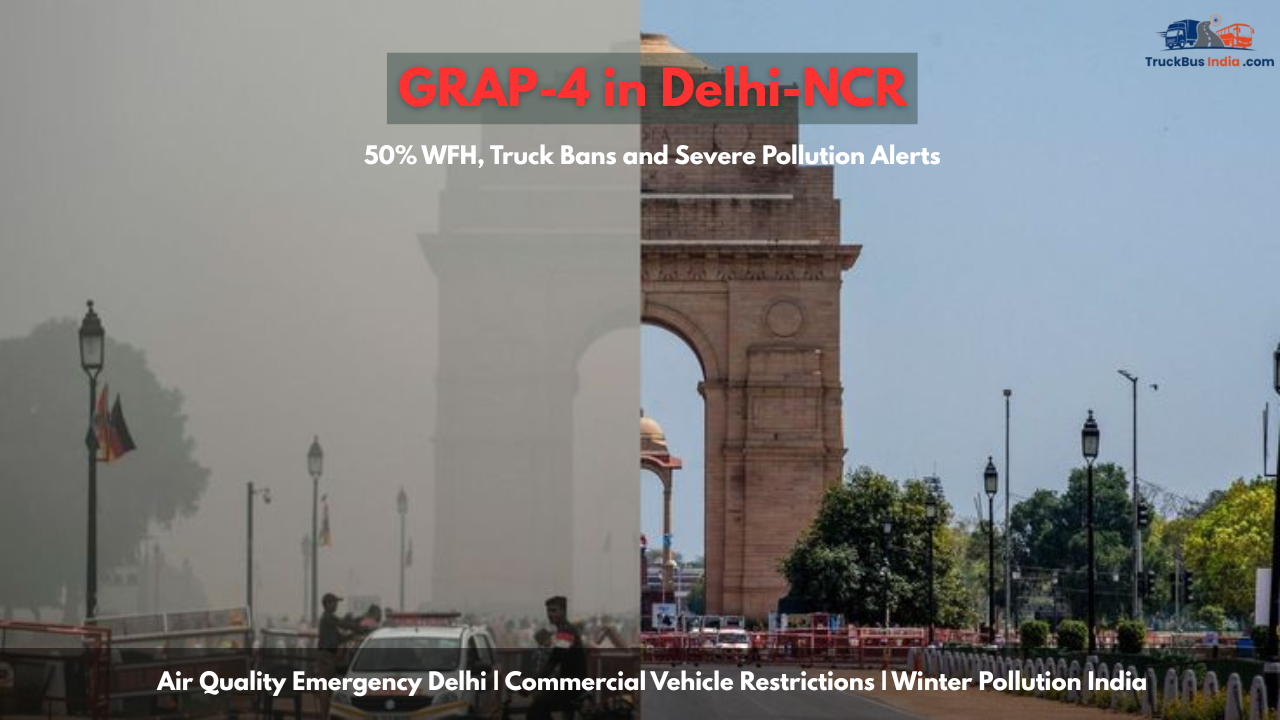
Every winter, Delhi‑NCR’s air quality deteriorates due to a mix of weather and pollution sources, prompting authorities to activate emergency response measures. The Graded Response Action Plan (GRAP) is a structured set of anti‑pollution actions that kick in at different air quality thresholds. The most stringent category, GRAP‑4, is invoked when the Air Quality Index (AQI) reaches severe‑plus levels, signaling a public health emergency and triggering sweeping restrictions across the region.
What Is GRAP and When Is GRAP‑4 Activated?
GRAP is overseen by the Commission for Air Quality Management (CAQM) and consists of four stages, each corresponding to increasing levels of air pollution and associated emergency measures. Stage IV—the highest level—is implemented when AQI surpasses the severe‑plus threshold (above 450). When this happens, authorities impose comprehensive curbs to limit emissions and protect public health until air quality improves.
Key Restrictions Under GRAP‑4
1. Truck Entry Ban and Vehicle Movement Controls
Under GRAP‑4, trucks and commercial vehicles are heavily regulated:
- Entry of most trucks into Delhi is banned, except those carrying essential goods or providing essential services.
- Vehicles powered by cleaner fuels—such as electric, CNG, LNG, and BS‑VI diesel trucks—are permitted entry if they meet emission norms.
- Diesel‑run medium and heavy goods vehicles (BS‑IV & older) registered in Delhi are prohibited from operating unless engaged in essential services.
- Light commercial vehicles from outside Delhi that do not meet pollution norms are also barred unless transporting necessities.
These steps aim to reduce vehicle emissions—one of the largest contributors to severe smog in winter.
2. Work‑From‑Home (WFH) and Office Restrictions
To lower commuter traffic and associated emissions, authorities may order a 50% work‑from‑home arrangement for government, municipal, and private offices. While this is advisory and depends on implementation by local employers, the intent is to reduce peak‑hour congestion and exposure during pollution spikes.
3. School and Educational Adjustments
In past GRAP‑4 implementations, schools have been instructed to shift classes to hybrid or online modes—especially for vulnerable age groups—aiming to protect children from hazardous outdoor air. Usually, schools decide on adjustments based on age groups, local conditions, and decisions by district authorities.
4. Construction, Demolition, and Public Activity Bans
Construction and demolition work, especially activities that generate dust and particulate matter (like road work and flyover construction), are halted under GRAP‑4. These actions often accompany vehicle movement restrictions to further curb pollution sources.
5. “No PUC, No Fuel” Enforcement
A supplemental enforcement step linked to severe pollution is the “No PUC, No Fuel” rule. Vehicles without a valid Pollution Under Control (PUC) certificate are denied fuel at petrol and diesel stations, tightening emissions control by ensuring only certified vehicles operate in the NCR.
Why These Measures Matter
During severe pollution episodes, AQI levels can significantly endanger health—especially for children, the elderly, and people with respiratory conditions. Restricting high‑emission vehicles and reducing commuter traffic are emergency steps designed to quickly lower pollutant loads in the air and mitigate health risks.
Impact on Daily Life and Road Transport
The truck bans Delhi NCR under GRAP‑4 impact logistics and transportation schedules. Except for essential consignments and compliant vehicles (electric/CNG/LNG/BS‑VI), freight movement slows or reroutes. Individuals commuting by vehicle must plan around restrictions on older diesel vehicles and compliance requirements like valid PUC certificates.
Offices and educational institutions also adapt operations—sometimes rapidly—through hybrid attendance or remote working. While enforcement strength varies in practice, the intent is to cut emissions and protect public health during the worst air quality periods.
When Do GRAP‑4 Measures End?
GRAP‑4 is temporary and calibrated daily based on the AQI. Once air quality improves below the critical threshold, authorities scale measures down to Stage III or Stage II actions, allowing more normal vehicle movement and economic activities to resume.