
News List
New-Age Players Driving Early Momentum in India’s Electric Heavy Trucks Market

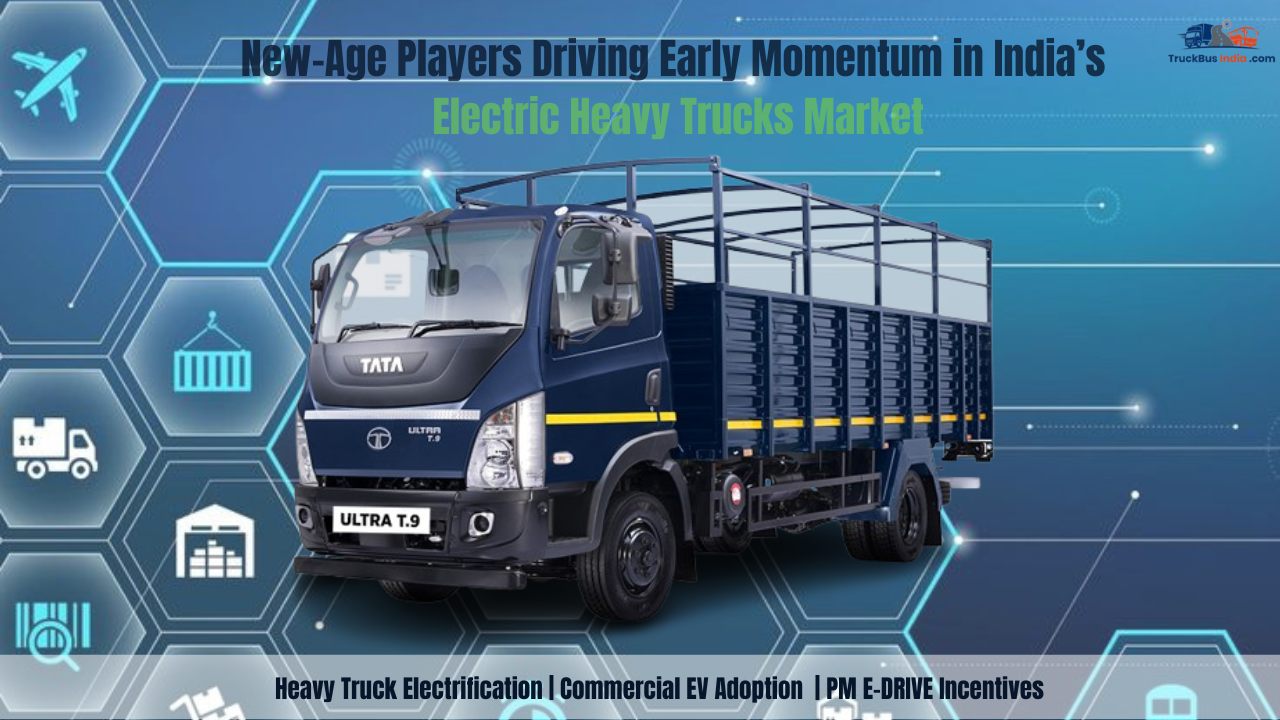
India’s electric heavy trucks segment is beginning to show early traction, led largely by new-age EV manufacturers rather than established commercial vehicle OEMs. While traditional players remain cautious, startups and emerging EV-focused companies are pushing ahead with pilot deployments, fleet tie-ups, and technology-led differentiation. This shift is shaping the early phase of the India EV truck market, particularly in medium- and heavy-duty freight applications.
A Nascent but Strategic Market Segment
The electric heavy trucks segment is still at a formative stage in India, primarily due to high upfront costs, range limitations, and infrastructure gaps. However, rising fuel prices, emission regulations, and sustainability targets are accelerating interest in heavy truck electrification, especially among fleet operators focused on predictable routes and captive logistics.
New-age EV manufacturers are positioning themselves to address these challenges early, targeting use cases such as port logistics, mining, cement transport, and intra-city freight where operational predictability supports electrification.
Why New-Age EV Manufacturers Are Moving Faster
Unlike legacy OEMs with large ICE portfolios to protect, new-age EV manufacturers are EV-first by design. This allows them to:
- Build platforms optimised for electric powertrains
- Experiment with flexible vehicle configurations
- Collaborate closely with fleet operators for pilot deployments
- Iterate quickly based on real-world usage data
These players are reporting increased enquiry levels, pilot-to-order conversions, and growing interest from logistics companies evaluating long-term electrification strategies.
Commercial EV Adoption Driven by Fleet Economics
A key factor behind early momentum is the growing awareness of total cost of ownership (TCO) for EV trucks. While acquisition costs remain higher than diesel trucks, operating costs—particularly fuel and maintenance—are significantly lower.
Fleet operators are increasingly analysing:
- Fuel savings over long operating cycles
- Reduced maintenance due to fewer moving parts
- Lower downtime in controlled operating environments
For high-utilisation fleets, this TCO advantage is becoming a strong driver of commercial EV adoption, even in the heavy truck segment.
PM E-DRIVE Incentives and Policy Support
Government support is playing a crucial role in building confidence. Under PM E-DRIVE incentives, electric commercial vehicles are receiving targeted policy backing, including demand incentives and ecosystem development support.
While incentives alone are not enough to trigger mass adoption, they help de-risk early investments for fleet operators and manufacturers alike. New-age EV manufacturers are leveraging these schemes more aggressively, aligning their go-to-market strategies around incentive-supported deployments.
Fleet Electrification Through Pilot-Led Scaling
Instead of large-scale rollouts, the current trend in the India EV truck market is pilot-led scaling. New-age players are working closely with logistics firms to deploy small fleets, gather operational data, and refine vehicle performance.
This approach supports:
- Gradual fleet electrification without operational disruption
- Real-world validation of vehicle range and payload efficiency
- Better charging and route planning strategies
Such pilots are helping build trust and long-term purchase intent among fleet owners.
Why Established OEMs Are Proceeding Cautiously
In contrast, established OEMs are taking a measured approach. Their caution stems from:
- The need to balance ICE and EV investments
- Uncertainty around charging infrastructure for heavy trucks
- Concerns over long-term battery performance and resale value
While many legacy manufacturers are developing electric heavy trucks, most are limiting exposure to controlled trials rather than aggressive market entry.
The Road Ahead for Electric Heavy Trucks
The early momentum created by new-age EV manufacturers is setting the foundation for broader market participation. As charging infrastructure improves and fleet confidence grows, established OEMs are expected to scale up their presence.
In the near term, innovation, flexibility, and fleet partnerships will continue to define leadership in the electric heavy trucks space.