
News List
Maruti mini bus shocks at ₹4.99 lakh, small fleet operators rush

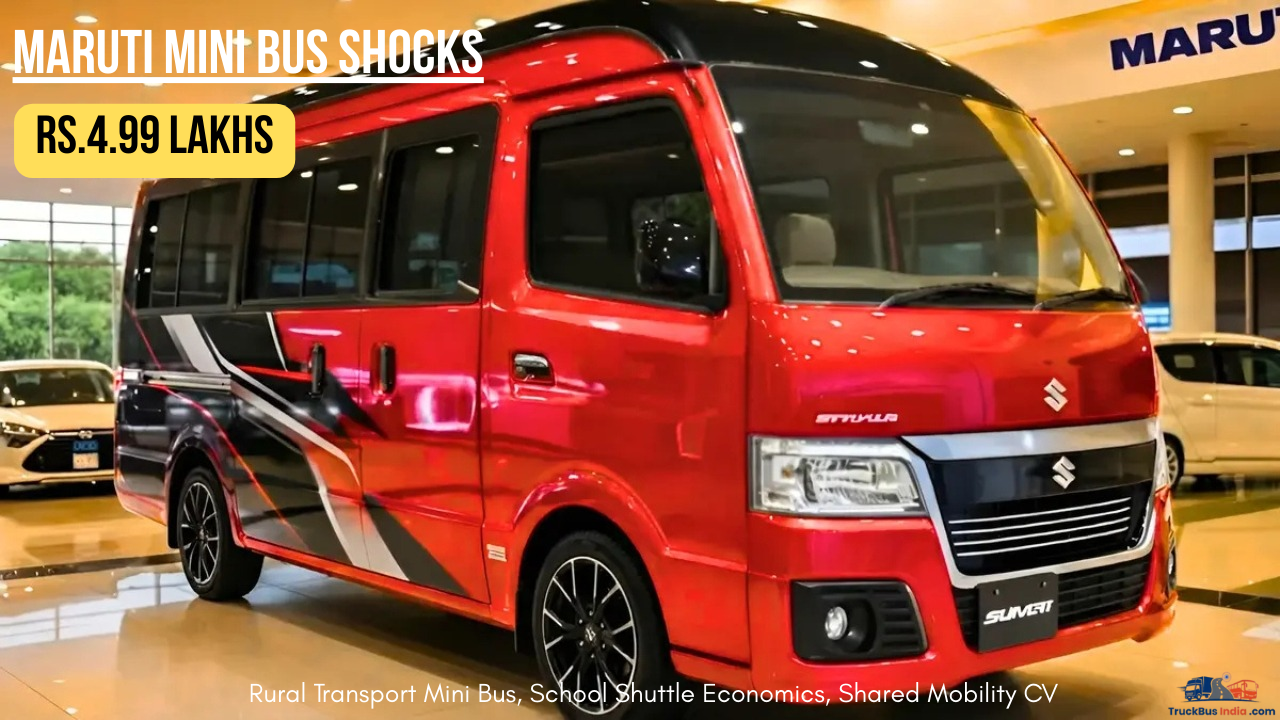
Maruti Suzuki’s entry into the mini bus segment at a starting price of ₹4.99 lakh has drawn immediate attention from small fleet operators, rural transporters and shared mobility providers. Positioned as a compact people mover, the vehicle aims to address a long-standing gap between three-wheelers and full-sized buses, where affordability and operating economics matter more than capacity.
The aggressive pricing has triggered strong interest, particularly from operators focused on high-frequency, short-distance routes.
A new price benchmark in people mobility
At under ₹5 lakh, the mini bus sets a new affordability benchmark in the commercial people-mover space. For many first-time operators and small fleet owners, the entry price significantly lowers the barrier to formalising or expanding operations.
The vehicle is positioned to serve:
- Rural and semi-urban passenger routes
- School transport and staff shuttles
- Shared mobility in low-density corridors
This pricing strategy directly challenges older vans and informal transport solutions that dominate these segments.
Designed for rural and semi-urban routes
Rural transport demand is driven by short, repetitive trips with limited fare potential. The mini bus targets this use case with a compact footprint that suits narrow roads while offering higher safety and comfort than three-wheelers.
Key suitability factors include:
- Easy manoeuvrability in village and small-town roads
- Seating capacity aligned with local route demand
- Lower acquisition and operating costs
For operators, the ability to match vehicle size to passenger volume is critical for maintaining margins.
Focus on running costs and mileage
Operating economics are central to the mini bus value proposition. Maruti Suzuki is positioning the vehicle around low cost per kilometre, making it attractive for high-usage applications.
Lower running costs are driven by:
- Lightweight construction
- Efficient small-displacement engine
- Lower maintenance and service expenses
For school and shared mobility operators, predictable daily costs are often more important than top-end performance.
Appeal to school and shuttle operators
School transport remains a highly fragmented market, with many operators running ageing vans or improvised vehicles. A factory-built mini bus at this price point offers a more compliant and standardised alternative.
Benefits for school shuttle operators include:
- Improved passenger safety compared to informal options
- Easier financing due to lower ticket size
- Better brand perception with parents and institutions
This could gradually push fleet modernisation in a segment that has traditionally been slow to upgrade.
Small fleet operators move quickly
Early interest indicates that small fleet operators are moving fast to evaluate bookings, particularly in regions where rural mobility demand is strong. For single-vehicle owners, the mini bus offers diversification beyond goods transport or auto-rickshaw operations.
Lower upfront cost also reduces financial risk, encouraging experimentation with new routes and business models.
Competitive pressure on existing players
The ₹4.99 lakh price point is likely to increase pressure on competing compact vans and entry-level people movers. Operators will compare not just purchase price, but lifetime operating economics and resale value.
If Maruti delivers on reliability and service support, the mini bus could redefine expectations in the entry-level commercial passenger segment.
What this launch signals for shared mobility
The mini bus launch reflects a broader shift toward right-sized vehicles for local transport. As shared mobility expands beyond metros into smaller towns and rural areas, demand is growing for affordable, efficient people movers.
For small fleet operators, the message is clear: lower-cost, purpose-built vehicles are finally entering the market—reshaping how local passenger transport is delivered, route by route.