
News List
Gadkari backs 10-year scrappage as old trucks emit 3x modern emissions

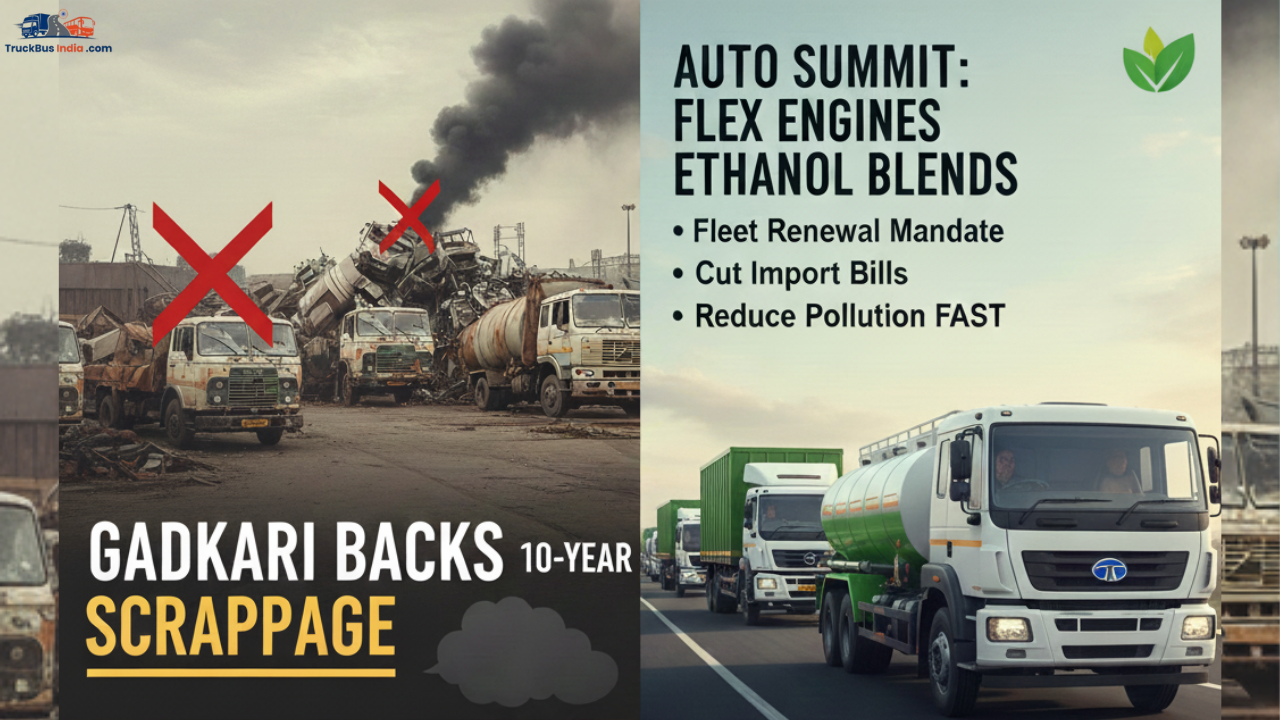
India’s commercial vehicle policy debate is shifting from incremental upgrades to structural change. Union Road Transport and Highways Minister Nitin Gadkari has renewed his backing for a 10-year scrappage framework for older trucks, arguing that ageing fleets are a disproportionate source of pollution and fuel inefficiency. The push aligns emission reduction goals with domestic fuel strategy, particularly through flex engines and ethanol blending.
The message is clear: cleaning up road transport will require retiring old trucks, not just tightening norms for new ones.
Why older trucks are under scrutiny
A large share of India’s trucking fleet consists of vehicles that predate current emission standards. These trucks typically lack modern combustion controls, efficient after-treatment systems and electronic fuel management.
According to Gadkari’s remarks at industry forums, older trucks can emit multiple times more pollutants than modern vehicles, despite forming a smaller portion of the total fleet. Their continued operation undermines gains achieved through BS-VI standards on new vehicles.
Beyond emissions, ageing trucks also suffer from:
- Poor fuel efficiency
- Higher breakdown frequency
- Rising maintenance and downtime costs
This combination makes them both environmentally and economically inefficient.
The 10-year scrappage proposal
The proposed approach focuses on encouraging—or mandating—the retirement of trucks beyond a defined age threshold, with 10 years emerging as a key reference point for heavy commercial vehicles.
The policy intent includes:
- Accelerating fleet renewal
- Removing the most polluting vehicles from roads
- Creating demand for cleaner, newer trucks
Rather than relying solely on penalties, the framework is expected to combine regulatory pressure with financial incentives.
Fleet renewal tied to flex engines and ethanol blends
Scrappage is being positioned not as a standalone measure, but as part of a broader transition in fuel and engine technology. Gadkari has consistently advocated for flex engines capable of running on higher ethanol blends.
For the trucking sector, this signals:
- Reduced dependence on imported fossil fuels
- Lower lifecycle emissions compared to legacy diesel engines
- Alignment with India’s ethanol production and blending targets
Flex-fuel capable commercial vehicles could allow fleets to transition gradually, depending on fuel availability, without abrupt technology shifts.
Economic implications for truck operators
For operators, scrappage raises immediate concerns around capital costs. Replacing a working asset—even an inefficient one—requires financing, downtime and operational planning.
However, newer trucks typically offer:
- Better fuel economy
- Lower maintenance spend
- Higher uptime and reliability
When combined with scrappage incentives, tax benefits or registration concessions, the long-term economics can tilt in favour of replacement rather than prolonged use of ageing vehicles.
Environmental gains beyond tailpipe emissions
Phasing out older trucks delivers benefits beyond direct exhaust reduction. Newer vehicles improve overall traffic flow due to fewer breakdowns, reduce roadside repairs and lower secondary pollution from oil leaks and inefficient combustion.
At a system level, fleet renewal supports:
- Cleaner urban air
- Lower health costs linked to transport pollution
- Faster adoption of future-ready technologies
This makes scrappage a multiplier policy rather than a single-issue intervention.
What to watch as policy takes shape
While the direction is clear, execution will determine outcomes. Key factors to monitor include:
- Incentive structure and funding support
- Clear timelines and enforcement mechanisms
- Availability of compliant replacement vehicles
If implemented with industry alignment, the 10-year scrappage push could reshape India’s trucking landscape—cutting emissions, improving efficiency and accelerating the shift toward cleaner fuels without disrupting freight movement.
For policymakers, the challenge lies in balancing environmental urgency with operator viability. For fleets, the message is equally clear: the era of indefinitely running old trucks is nearing its end.