
News List
Fog slashes e-way speeds: buses 50 km/h, trucks 40 km/h on northern corridor

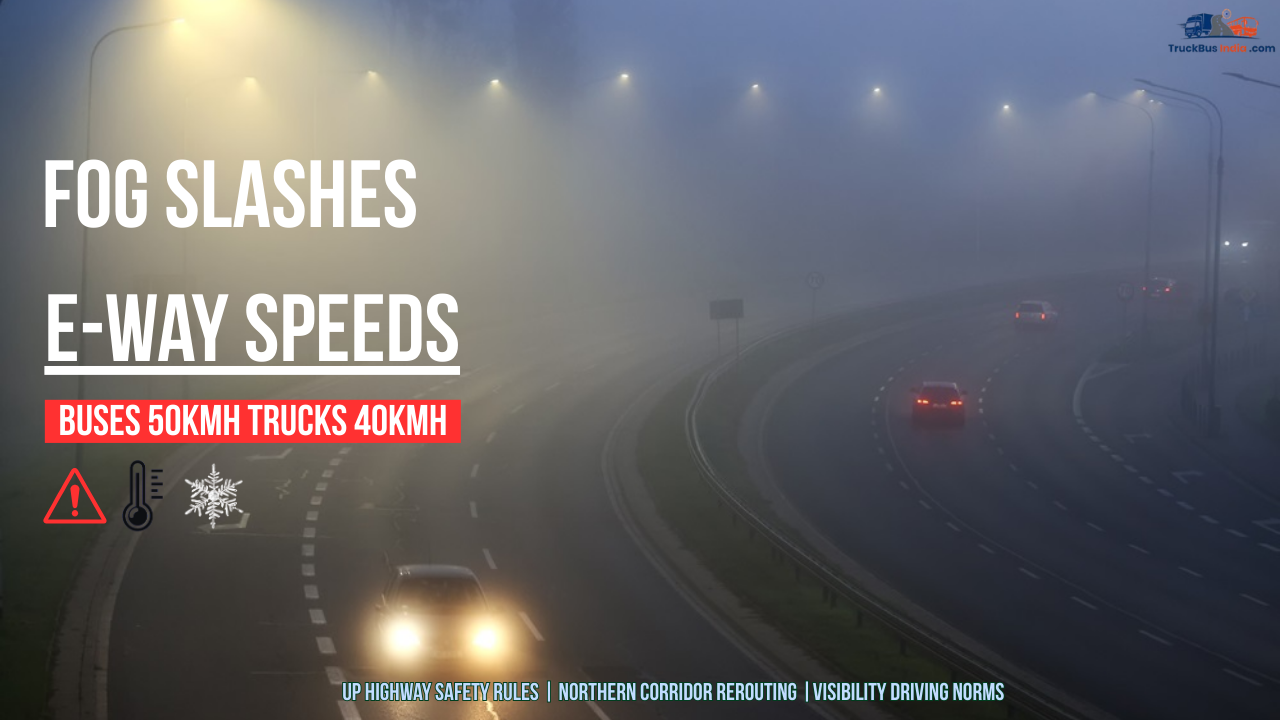
Dense winter fog across North India has once again reshaped highway movement, with authorities enforcing reduced speed limits on key expressways and arterial routes. On the northern corridor, buses are capped at 50 km/h and trucks at 40 km/h during low-visibility conditions, significantly slowing freight and passenger movement but aiming to cut collision risks.
The measures reflect a seasonal safety strategy that prioritises accident prevention over transit speed during peak fog months.
Why speed limits tighten during fog season
Winter fog sharply reduces visibility, often to under 50–100 metres in parts of Uttar Pradesh and neighbouring states. Under such conditions, high-speed movement dramatically increases the risk of pile-ups, especially involving heavy vehicles.
Authorities point to recurring factors behind winter accidents:
- Limited reaction time for heavy vehicles
- Poor visibility of stalled or slow-moving traffic
- Reduced braking efficiency on cold, damp road surfaces
Lower speed limits are seen as the most immediate and enforceable control measure.
Different limits for buses and trucks
The enforcement framework applies differentiated speed caps based on vehicle type and stopping distance.
- Buses: Maximum 50 km/h
- Trucks and heavy goods vehicles: Maximum 40 km/h
Heavier vehicles require longer braking distances, making stricter limits necessary. Speed compliance is monitored through patrol vehicles, fixed cameras and expressway control rooms.
Impact on northern freight corridors
The restrictions have a direct effect on logistics moving through northern corridors that connect Delhi-NCR with Uttar Pradesh, Rajasthan and central India. Transit times increase, especially during early morning and late-night hours when fog is densest.
For transporters, the operational impact includes:
- Longer delivery schedules
- Higher fuel consumption due to low-speed driving
- Increased driver hours and scheduling pressure
Time-sensitive cargo, such as perishables and e-commerce shipments, is particularly affected.
Rerouting through secondary highways
To manage delays and reduce risk, many operators are rerouting trucks through secondary highways or adjusting departure timings to avoid peak fog windows. While these routes may be slower under normal conditions, they often see lighter traffic and fewer multi-vehicle pile-up risks during fog.
However, rerouting also brings challenges:
- Narrower roads and local traffic interference
- Higher toll or distance costs in some cases
- Limited amenities compared to expressways
Operators are forced to balance safety against cost and reliability.
Enforcement and compliance measures
UP Police and expressway authorities have stepped up winter enforcement through:
- Increased highway patrolling
- Real-time speed monitoring
- Temporary movement restrictions during extreme fog
Drivers found violating speed limits face penalties, adding compliance risk to already strained operations.
Safety gains versus economic cost
While transporters feel the economic pinch, enforcement agencies argue that the measures have significantly reduced the severity of fog-related accidents compared to earlier years. Fewer high-speed crashes translate into lower fatalities, less cargo loss and reduced highway closures due to major accidents.
From a system perspective, slower but safer movement is seen as preferable to prolonged shutdowns caused by pile-ups.
What operators need to prepare for
As fog conditions are expected to persist through winter, fleet operators are increasingly focusing on:
- Driver training for low-visibility driving
- Strict adherence to speed and headlight norms
- Flexible delivery commitments during fog-prone periods
The seasonal slowdown highlights a recurring reality of northern logistics: winter safety protocols are now a core operational constraint, not a temporary disruption. For buses and trucks alike, compliance with fog-related speed limits has become essential to keeping goods and passengers moving—safely, if more slowly—across the northern corridor.