
News List
Dense fog triggers truck, bus convoys at UP expressway food plazas

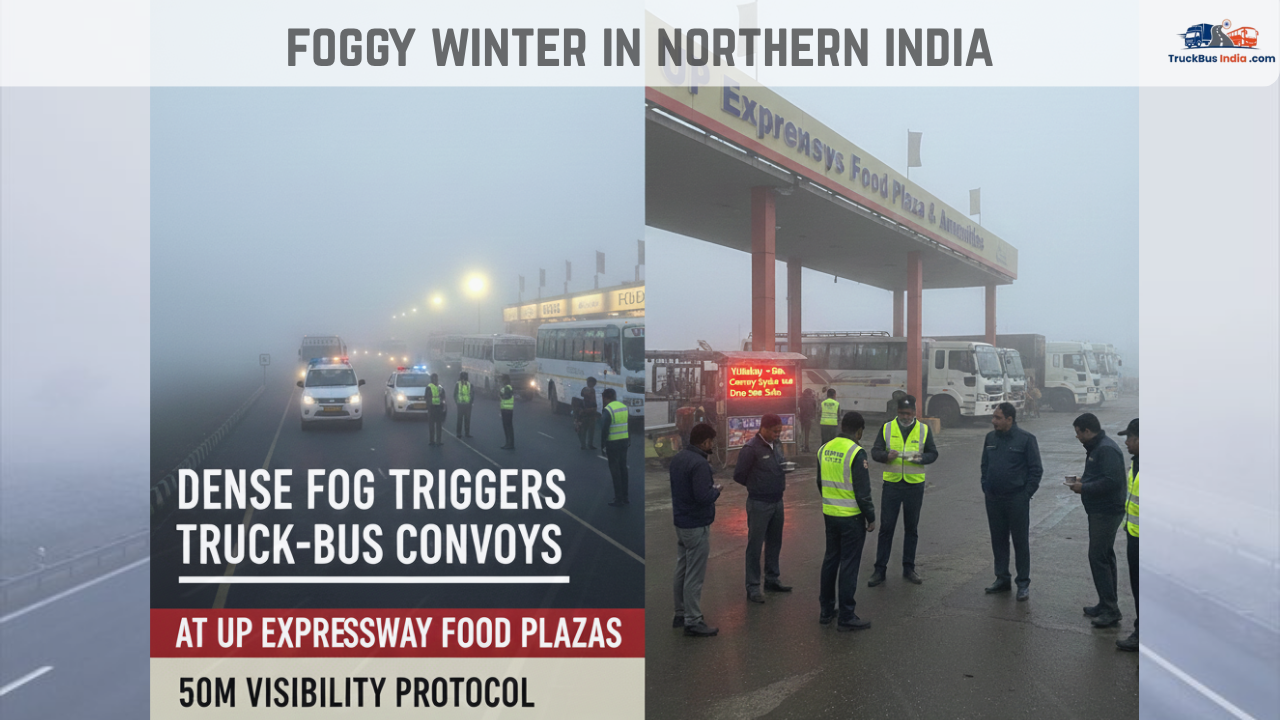
Severe winter fog across Uttar Pradesh has led to the activation of convoy-based vehicle movement on key expressways, with trucks and buses being grouped at designated food plazas before proceeding together. The protocol is triggered when visibility drops below 50 metres, a condition that significantly raises the risk of high-speed collisions involving heavy vehicles.
This convoy system has become a core winter safety response on major routes managed by expressway authorities.
Why fog convoys are being enforced
Dense fog is a recurring hazard across UP’s expressway network during winter, particularly in early mornings and late nights. In such conditions, isolated movement of heavy vehicles increases the likelihood of rear-end crashes and multi-vehicle pile-ups.
Authorities cite three main risks during extreme fog:
- Severely reduced reaction time
- Difficulty spotting stationary or slow-moving vehicles
- High impact severity involving trucks and buses
Convoy movement helps regulate speed, maintain spacing and ensure coordinated driving under low-visibility conditions.
Role of food plazas as holding points
Food plazas along expressways are being used as temporary holding and grouping zones for trucks and buses. When visibility falls below the defined threshold, patrolling teams direct heavy vehicles to halt at these points until conditions improve or convoy movement is initiated.
Food plazas offer practical advantages:
- Adequate parking space for large vehicles
- Access to basic amenities for drivers
- Strategic placement along long expressway stretches
Using these locations reduces roadside stoppages, which themselves can become accident risks during fog.
How convoy movement works
Once a sufficient number of vehicles are assembled, patrolling units lead the convoy through fog-prone stretches at controlled speeds. Vehicles are instructed to maintain safe following distances and avoid overtaking.
Key features of the system include:
- Police or authority vehicles guiding the lead
- Uniform speed maintained across the batch
- Continuous monitoring via control rooms
Convoys are dissolved once visibility improves or the fog-prone zone is cleared.
Focus on Bundelkhand and Ganga Expressway routes
The protocol has been actively deployed on Bundelkhand Expressway and Ganga Expressway-linked routes, which pass through open plains prone to sudden fog formation. These corridors carry a high volume of long-haul trucks and intercity buses, increasing the stakes during winter conditions.
By batching heavy vehicles, authorities aim to reduce random braking and erratic lane changes—common triggers for fog-related accidents.
Impact on freight and passenger movement
While convoys improve safety, they also slow down overall movement. Trucks and buses may face waiting times at food plazas, leading to delayed deliveries and extended journey durations.
For transporters, the operational impact includes:
- Longer transit times during fog hours
- Increased driver duty hours
- Rescheduling of time-sensitive loads
However, most operators acknowledge that controlled delays are preferable to extended closures caused by major accidents.
Enforcement and compliance measures
Expressway authorities and UP Police are enforcing strict compliance with fog protocols. Vehicles attempting to bypass convoy rules or exceeding advised speeds face penalties.
Additional measures include:
- Continuous visibility monitoring
- Public address announcements at plazas
- Emergency response teams positioned along routes
These steps aim to ensure smooth convoy formation and prevent panic braking or congestion.
Safety gains outweigh inconvenience
Officials report that convoy-based movement has significantly reduced the number and severity of fog-related accidents compared to earlier winters. Fewer high-speed crashes mean less cargo damage, lower fatality risk and minimal expressway shutdowns.
For drivers, the system also reduces stress by providing clear guidance in otherwise disorienting conditions.
A winter norm for expressway travel
As fog patterns become more intense and predictable each winter, convoy movement is increasingly treated as a standard operating procedure rather than an emergency response. For truckers and bus operators using UP expressways, planning around fog convoys is now essential.
The message from authorities is clear: during dense fog, disciplined, grouped movement saves lives—even if it slows the journey.