
News List
GRAP vehicle curbs ignite Delhi STU EV bus tenders frenzy

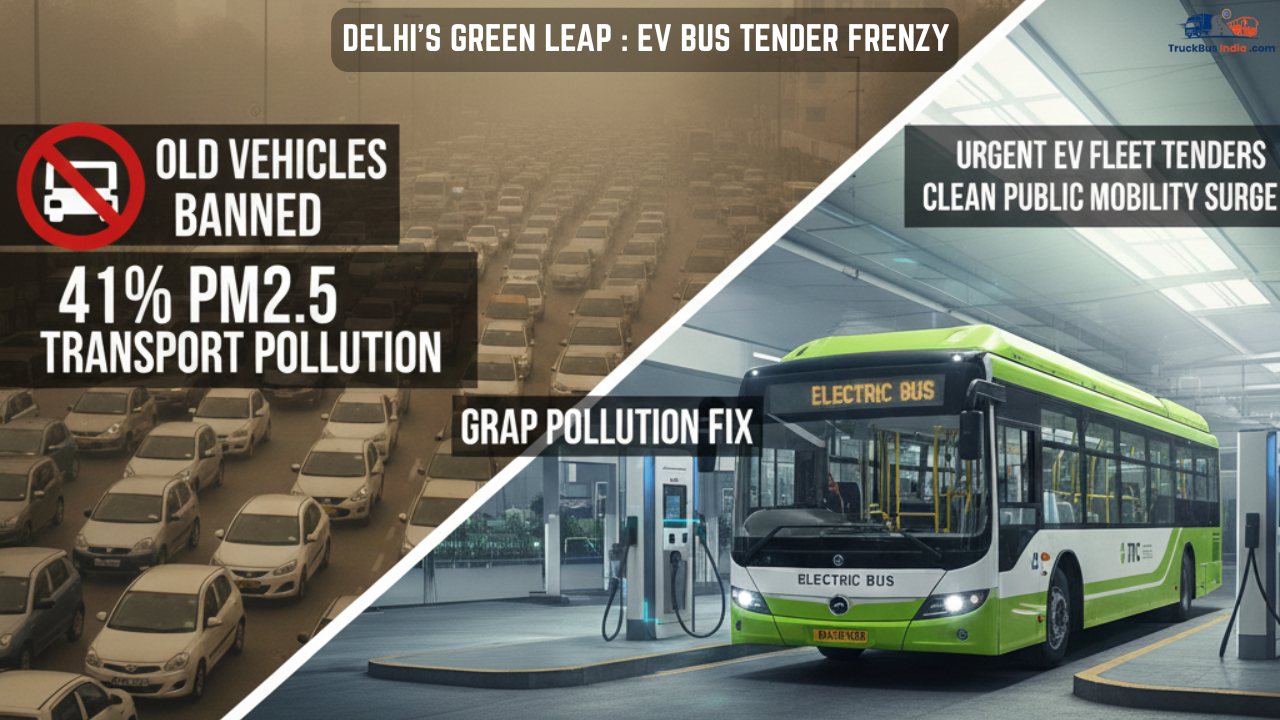
With Delhi’s air quality plunging into severe pollution levels under GRAP‑IV, authorities have tightened vehicular restrictions that are now reshaping public transport procurement — particularly electric bus tenders by state transport undertakings (STUs) like the Delhi Transport Corporation (DTC). Experts and policymakers are increasingly looking to EV fleets to cut emissions and reduce the city’s transport sector contribution to particulate pollution.
Stringent GRAP curbs trigger transport overhaul
The Graded Response Action Plan (GRAP) is a calibrated anti‑pollution framework applied across the Delhi‑NCR when air quality deteriorates. Under the Stage IV (Severe+) phase recently invoked, several strict measures have been put in place:
- Ban on non‑BS VI vehicles and vehicles without valid Pollution Under Control (PUC) certificates from entering the city.
- A temporary clampdown on high‑polluting commercial vehicles, especially older diesel models.
- Restrictions aimed at reducing road traffic and emissions quickly.
Because electric and CNG vehicles are exempt from many of these curbs, city planners and transport officials view accelerated electrification of buses as a key strategy to sustain mobility while meeting pollution control norms.
Why electric buses are suddenly in demand
Traditionally, Delhi’s bus fleet has relied on a mix of CNG and diesel vehicles, with electric buses accounting for a smaller share. But the intersecting pressures of public health, regulatory action, and escalating scrutiny on vehicular emissions have shifted that dynamic rapidly:
- Climate and air quality goals: Transport sector emissions — including PM₂.₅ — are a major contributor to Delhi’s pollution burden, making clean public transit a priority. Experts have urged the government to pivot towards EV adoption and robust public transport to counteract private vehicle restrictions.
- Policy advantage: Electric buses face fewer operational restrictions under emergency pollution actions like GRAP since they produce zero tailpipe emissions. This operational flexibility strengthens the business case for EVs in fleet expansion.
- Public demand for reliable transit: With private vehicle use curtailed during pollution alerts, commuters increasingly depend on buses and metros, pressuring STUs to expand and upgrade fleets rapidly.
Tender boom: DTC and other STUs respond
Amid these conditions, tenders for electric buses — especially under central schemes and state targets — have surged:
- Delhi has already floated tenders for adding thousands of electric buses as part of a long‑term fleet electrification plan. Plans floated earlier in the year outlined the induction of 2,800 e‑buses (including 2,500 12‑m and 300 9‑m units) under the PM e‑Drive scheme, alongside a charging infrastructure network.
- DTC’s ongoing procurement processes are being closely watched by industry players and suppliers, with anticipation of large orders for electric public buses to match pollution policy needs and commuter demand.
Analysts note that STUs are now evaluating financing, depot charging infrastructure, and lifecycle costs more aggressively. Battery costs are falling, and central subsidies under the Faster Adoption and Manufacturing of Electric Vehicles (FAME) scheme — along with state incentives — make electric buses financially competitive with CNG buses in the medium term.
Broader impacts on transport and pollution goals
Beyond procurement, the shift to EV buses is expected to bring ancillary benefits:
- Reduced tailpipe emissions during high pollution episodes, since electric buses don’t emit PM or NOx.
- Improved public transport reliability, encouraging commuters who might otherwise rely on private vehicles — a key objective under Delhi’s pollution mitigation strategies.
- Synergies with charging infrastructure growth, which also supports electrification of last‑mile and feeder transport.
In summary, the GRAP‑induced vehicle restrictions have catalysed a rush toward electric bus tenders by Delhi STUs. Once seen as long‑term climate investments, electric public fleets are now central to pollution control compliance, commuter mobility planning, and the future of urban transport in the capital.