
News List
Delhi bans old vehicles, experts push EV buses public transport upgrade

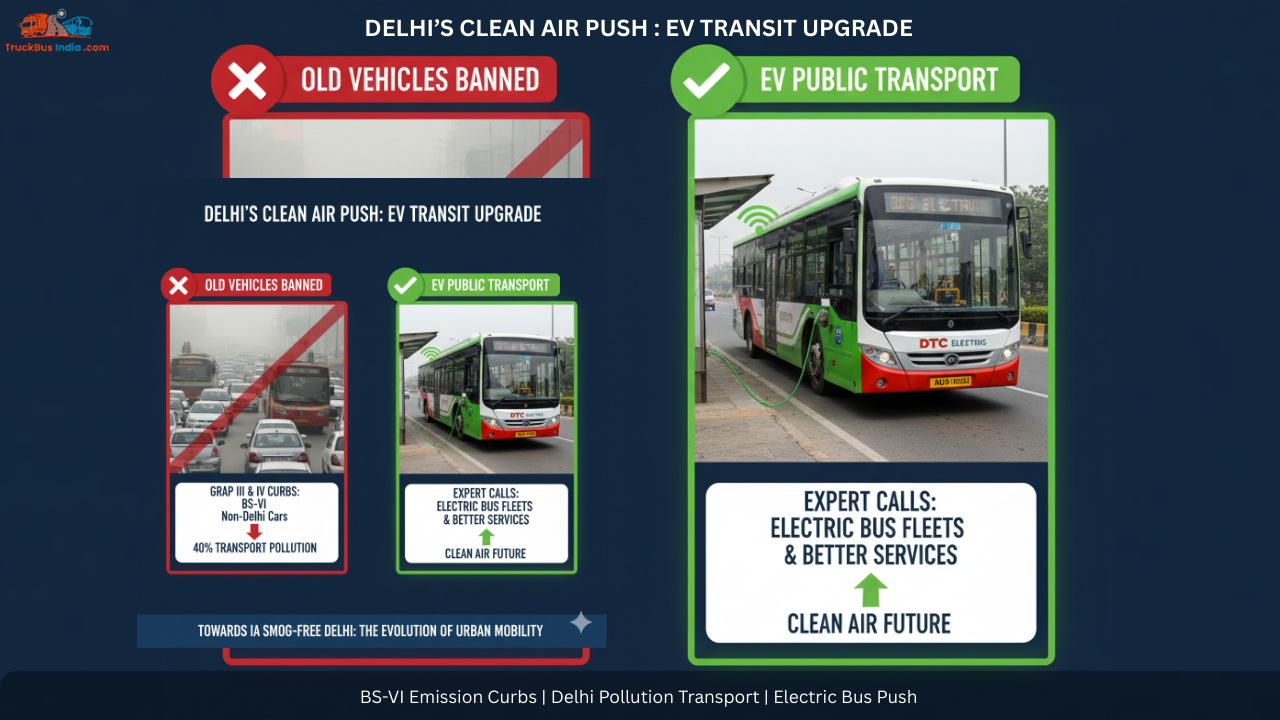
In late 2025, Delhi’s transport and environment authorities have ramped up efforts to curb debilitating air pollution by restricting older, high‑emission vehicles under Stages III and IV of the Graded Response Action Plan (GRAP) and provoking fresh calls from experts to strengthen electric public transport systems. The measures aim to reduce vehicular emissions — one of the largest contributors to Delhi’s toxic smog — while accelerating shifts toward zero‑emission and EV‑enabled public transport solutions.
Stricter Emission Curbs Under GRAP III/IV
The Commission for Air Quality Management (CAQM) has activated advanced stages of the emergency pollution control framework in response to worsening air quality. Under GRAP III, the city and adjoining National Capital Region (NCR) have banned the entry and plying of BS‑III petrol and BS‑IV diesel vehicles, including light motor vehicles and older commercial vehicles — measures designed to cut emissions from older, more polluting internal combustion engine (ICE) vehicles.
Under GRAP IV, the restrictions tighten further, extending prohibitions to include a wider range of diesel‑run commercial vehicles and inter‑state buses that don’t meet BS‑VI or cleaner fuel standards. During these stages, only vehicles compliant with BS‑VI norms, CNG, LNG, or electric propulsion are permitted entry — a direct regulatory nudge toward cleaner mobility.
Authorities are enforcing these curbs with heavy fines and rigorous monitoring at city borders, while transport police also check for valid Pollution Under Control Certificates (PUCC) to ensure compliance.
Pollution Reality and Transport’s Role
Delhi’s smog problem is not a seasonal anomaly but a structural one. Recent expert analysis underscores that transport emissions contribute a significant share — in some studies up to around 40% — of PM2.5 particulate pollution in the capital, with diesel vehicles and aging public transport fleets among the largest single sources.
This stark contribution of road transport to air quality degradation has led environmentalists, transport planners and climate researchers to stress that vehicle bans alone will not solve the problem. Instead, they argue for comprehensive public transport upgrades and robust support for electric mobility as central pillars of any effective long‑term strategy.
Experts Urge Public Transport Electrification
Environmental and transport specialists have welcomed the GRAP vehicle restrictions as a necessary first step but insist that strengthening the public transport system is equally crucial. According to experts, unless commuters and commercial operators have clean, efficient alternatives to private vehicles, pollution levels will remain stubbornly high.
Among the most emphasized solutions is the rapid deployment of electric buses and modernisation of fleets operated by the Delhi Transport Corporation (DTC) and allied cluster operators. Electric buses produce zero tailpipe emissions and can dramatically reduce local air pollution levels when deployed at scale. Regular buses — even BS‑VI diesel ones — still contribute emissions, making electric alternatives more sustainable in the long run.
Experts also advocate for infrastructural improvements, such as better charging networks, priority bus lanes, and integrated ticketing — measures that make public transport more reliable and attractive than private vehicles. They highlight that without such systemic improvements, vehicle bans during high pollution episodes risk merely suppressing symptoms without shifting the underlying transport demand patterns.
Immediate Public Transport Measures
Responding to pollution concerns, the Delhi government has already rolled out several interim measures to encourage cleaner public transport usage. These include:
- Introduction of additional buses and Metro services to reduce dependency on personal vehicles.
- Enhanced enforcement of entry bans on old diesel buses to push operators toward cleaner fleets.
- Increased fines and surveillance to ensure compliance with emission norms.
While data on the total number of EV buses in revenue service for Delhi in 2025 is evolving, national transport policies and local fleet procurement programs across metro regions signal a wider push toward electric public transport fleets — including plans to phase in thousands of electric buses over the next few years.
Challenges and Road Ahead
Despite incentives, transitioning to cleaner transport modes is not without challenges. Funding constraints, infrastructural gaps, and operational readiness — especially for EV charging and maintenance — remain barriers. Moreover, private vehicle owners affected by bans often face socio‑economic stress, leading to debates about fairness and enforcement effectiveness.
However, Delhi’s multi‑layered approach — combining regulatory bans under GRAP, public transport expansion, and electric mobility adoption — represents one of the most ambitious urban clean‑air initiatives in India. As the capital pushes toward a future with fewer emissions, implementing long‑term, people‑centric solutions alongside emergency pollution measures will be crucial to achieving tangible health and environmental benefits.