
News List
Blue Energy Motors LNG trucks bridge gap to electric heavy haul future

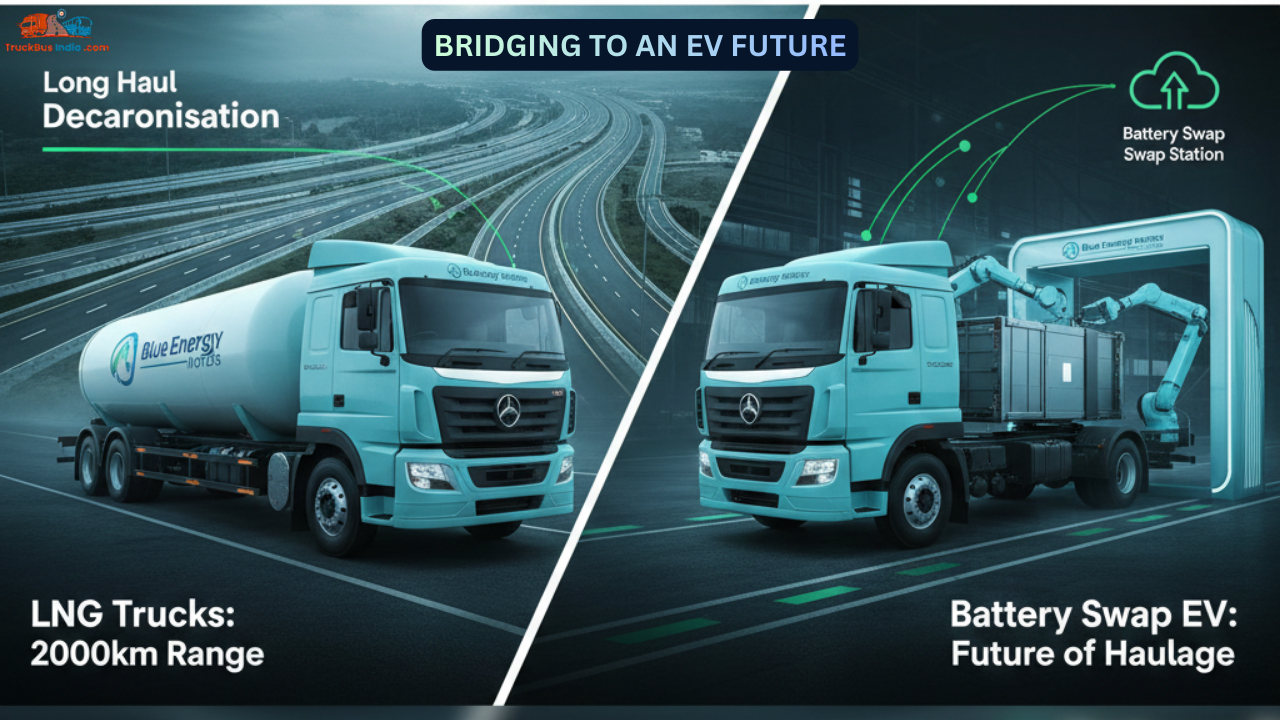
As decarbonisation gains urgency in India’s freight sector, Blue Energy Motors (BEM) is carving a niche with a dual‑pronged strategy — promoting LNG‑powered trucks today while pioneering battery‑swapping electric heavy‑duty trucks for tomorrow’s long‑haul logistics. By tackling both near‑term emissions and the challenges of full electrification, the startup is accelerating the industry’s transition away from conventional diesel‑fuelled freight movement.
LNG Trucks: Cleaner Fuel for Long Haul Today
Founded in 2022, Blue Energy Motors initially focused on liquefied natural gas (LNG) trucks as an immediate, lower‑carbon alternative to diesel in long‑haul operations. LNG — natural gas cooled to approximately –125 °C to liquefy it — allows much higher fuel storage on board and is especially suitable for long distances where range and refuelling access matter. In trucking applications, LNG can achieve a range of up to around 1,400 km, making it competitive with diesel counterparts for cross‑country logistics.
LNG‑powered heavy‑duty trucks typically deliver 30 % lower greenhouse gas emissions compared with traditional diesel engines, a reduction that stems from cleaner combustion properties and lower carbon intensity of the fuel. Additionally, these trucks boast robust torque and power figures suited for demanding transport applications while also offering lower per‑km fuel costs — an important metric for fleet operators managing tight operating budgets.
By mid‑2025, Blue Energy’s fleet of LNG trucks had already covered tens of millions of kilometres on Indian highways, cumulatively helping cut more than 14,000 tonnes of CO₂ emissions — roughly equivalent to the annual carbon absorption of well over half a million mature trees.
Battery Swap Electric Heavy Trucks: A Leap Toward Full Electrification
While LNG provides an interim decarbonisation pathway, Blue Energy is also positioning itself at the forefront of electric heavy duty trucks — particularly through battery‑swapping technology designed to overcome core barriers in EV adoption. In late 2025, the company launched India’s first heavy‑duty electric truck equipped with battery swapping technology and an Energy‑as‑a‑Service (EaaS) model that separates battery ownership from the truck itself, lowering upfront costs for operators.
Traditional EV trucking faces two main challenges: range anxiety and long charging times — especially problematic for long‑haul operations where downtime directly affects profitability. Battery swapping tackles both: depleted packs can be exchanged for fully charged ones in under five minutes, enabling heavy trucks to resume their journeys with minimal interruption, similar to refuelling diesel rigs.
The swap‑capable electric truck also features modular battery design and advanced mobility systems that support scalability across diverse freight applications. To enable widespread use, Blue Energy plans extensive deployment of swap stations across strategic freight corridors, including India’s first electric trucking corridor between Mumbai and Pune, combining both swapping and high‑power fixed charging infrastructure to support varied operational needs.
Bridging the Gap: LNG vs EV Trucking
Blue Energy’s strategy reflects a pragmatic recognition of India’s current trucking ecosystem. Fully electric heavy trucks still represent an early stage with modest sales — conventional EV adoption in heavy haul remains limited by cost and infrastructure hurdles. The company expects to sell electric trucks in increasing numbers, with targets of hundreds in the near term and plans for up to 30,000 units over the next few years as swap stations and manufacturing capacity expand.
In contrast, LNG trucks serve as a bridge technology — already deployable at scale, compatible with existing logistics operations, and capable of delivering meaningful emissions reductions today. This tiered approach helps operators transition progressively: LNG trucks reduce carbon intensity now, while battery‑swapping EVs offer a pathway to near‑zero emissions in the medium term as infrastructure matures.
Decarbonisation and Industry Impact
The transport sector is one of India’s most significant contributors to carbon emissions, with heavy trucks playing a disproportionately large role. By offering both LNG and electric solutions, Blue Energy Motors is helping fleet operators reduce their carbon footprint, align with stricter environmental expectations, and prepare for inevitable shifts toward zero‑emission freight. The dual strategy resonates with broader governmental and industry commitments to net‑zero goals, fostering diversified options for decarbonisation across the logistics value chain.
Conclusion
Blue Energy Motors is uniquely positioned in India’s heavy‑duty trucking market with a hybrid decarbonisation roadmap. Its LNG trucks provide practical gains in emissions and fuel costs today, while battery swap EV heavy trucks lay the foundation for a scalable, zero‑emission future. For fleets navigating rising costs, emissions regulations, and shifting infrastructure, this blend of technologies offers a viable blueprint to balance productivity, sustainability, and long‑haul performance on India’s busiest freight corridors.