
News List
IoT smart tyres track wear patterns cutting unplanned tipper downtime

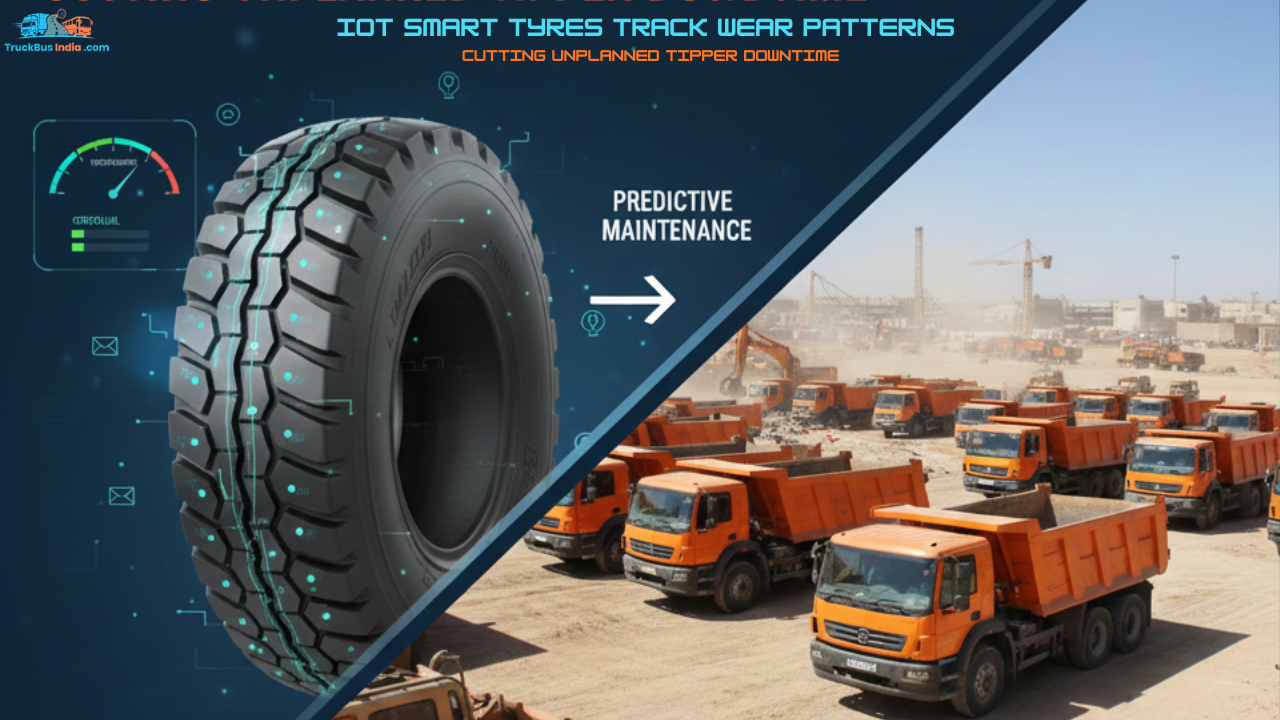
In tipper and construction fleets, tyres remain one of the most failure-prone components. Harsh operating conditions, uneven loads, sharp debris, and inconsistent pressure checks often lead to sudden tyre failures that bring vehicles to a halt. For site haulers and tippers working on tight delivery schedules, unplanned tyre downtime directly impacts productivity, fuel efficiency, and operating margins. This is where IoT smart tyres trucks are beginning to change fleet maintenance dynamics.
How IoT smart tyres work on tippers
IoT-enabled tyres use embedded sensors to continuously monitor pressure, temperature, tread depth, and wear patterns. This data is transmitted in real time to fleet dashboards or mobile applications, giving operators instant visibility into tyre health. For tipper tyre monitoring, this is particularly valuable as vehicles frequently move between highways, construction zones, and mining sites where tyre stress varies significantly.
By tracking wear trends instead of relying on periodic manual inspections, fleet managers can identify issues before they escalate into failures. Slow pressure leaks, abnormal heat build-up, or uneven tread wear can be flagged early, allowing planned intervention rather than roadside breakdowns.
Predictive maintenance replaces reactive fixes
The biggest advantage of connected rubber tech lies in predictive tyre maintenance. Instead of replacing tyres after a failure or following rigid kilometre-based schedules, fleets can now base decisions on actual tyre condition. This approach extends tyre life, reduces premature replacements, and cuts emergency repair costs.
For tipper fleets operating on thin margins, predictive maintenance also improves asset utilisation. Vehicles spend more time on the job and less time waiting for roadside assistance or workshop slots. Over large fleets, this translates into measurable gains in availability and revenue consistency.
Impact on fleet downtime and operating costs
Unplanned downtime is one of the most expensive disruptions for construction and mining fleets. A single immobilised tipper can stall material movement across an entire site. By enabling early warnings, IoT smart tyres trucks significantly reduce unexpected stoppages. Fleet downtime reduction becomes more predictable, allowing managers to schedule tyre changes during planned maintenance windows.
Additionally, maintaining optimal tyre pressure improves fuel efficiency and reduces uneven wear caused by underinflation or overinflation. Over time, fuel savings and extended tyre life help offset the initial investment in sensor-equipped tyres.
Data-driven insights for fleet optimisation
Beyond alerts, smart tyre systems generate long-term data that reveals usage patterns across routes, drivers, and operating conditions. Fleet operators can compare tyre performance across different sites, loads, and terrains to refine tyre selection and rotation strategies. This level of insight was previously unavailable in traditional tyre management models.
For large fleets, this data also strengthens negotiations with tyre suppliers by providing evidence-backed performance benchmarks rather than relying on generic warranty claims.
Adoption challenges and integration gaps
Despite the clear benefits, adoption is not without challenges. Initial costs, sensor durability in harsh environments, and integration with existing fleet management systems remain key considerations. Smaller operators may hesitate due to upfront expenses, even though long-term savings are compelling.
However, as connected rubber tech matures and OEMs partner with telematics providers, integration is becoming smoother. Scalable pricing models and retrofittable sensor solutions are also lowering entry barriers for mid-sized fleets.
Smart tyres gain traction in heavy-duty operations
As construction activity and infrastructure projects accelerate, the pressure on tipper fleets to deliver without disruptions will only increase. IoT smart tyres are moving from pilot projects to mainstream adoption, especially among operators focused on cost control and reliability. By turning tyres into data-generating assets, fleets are redefining maintenance from a reactive necessity into a strategic advantage.