
News List
Gadkari approves two key Himachal road upgrades for better truck access

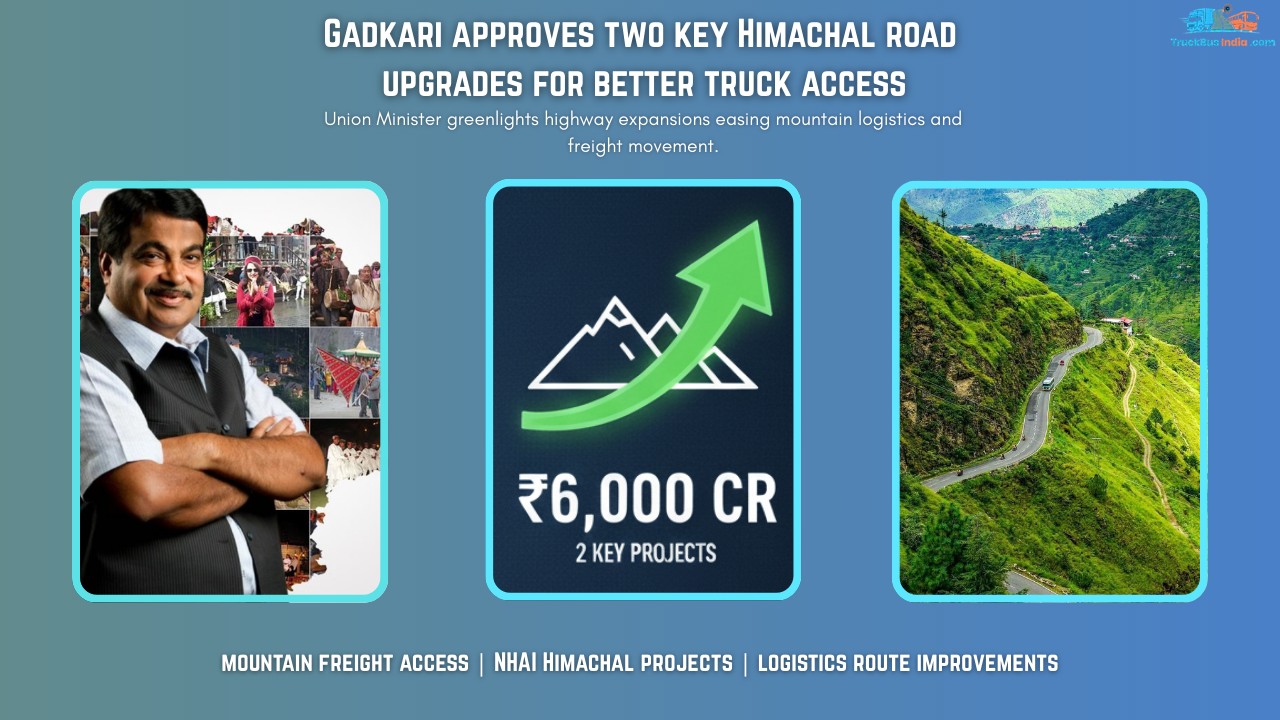
Union Minister for Road Transport and Highways, Nitin Gadkari, has recently approved two significant road upgrade projects in Himachal Pradesh, aimed at improving connectivity and freight movement across the hilly terrain. These decisions, made under the Central Road and Infrastructure Fund (CRIF), mark an important step toward better mountain logistics and safe transport access for trucks and commercial vehicles.
The approvals target vital link roads in Mandi and Una districts, strengthening regional connectivity and supporting the movement of goods, passengers, and essential services in remote areas.
Project details: enhancing critical freight routes
Under the latest approvals:
- Jajon Morh to Tahliwal Chowk via Bhai Ka Morh link road received Rs 48.69 crore for upgrading, strengthening, and widening. This road serves as a crucial connector between industrial pockets and main highways, facilitating smoother cargo traffic and quicker access toward major national routes.
- Mandi-Gagal-Chailchowk-Janjehli road, spanning about 83 km, has also been sanctioned upgrades to improve structural quality, travel safety, and year‑round accessibility. Enhanced capacity on this stretch will support heavier freight loads and reduce delays commonly caused by narrow, winding stretches.
These projects are part of the government’s broader effort to ensure that remote and hilly areas have robust road infrastructure capable of supporting commercial vehicle traffic and mountain supply chains.
Why these upgrades matter for truck access
Himachal Pradesh’s unique geography—with steep gradients and frequent climatic disruptions—has historically posed challenges for heavy truck movements. Poor road conditions can lead to longer travel times, increased fuel consumption, and higher maintenance costs for freight operators. Upgrading key freight routes will improve:
- Safety for trucks and heavy vehicles, particularly in sections prone to skidding and landslides.
- Travel efficiency, reducing delays for goods carriers operating between plains and hill markets.
- Economic linkages between agricultural hubs, industrial nodes, and logistics corridors.
Better connectivity also supports seasonal freight movements, such as agricultural produce from high‑altitude districts during harvest periods, which require dependable access without frequent shutdowns.
Linking Himachal to broader national highway networks
While the approved upgrades focus on local link roads, they complement ongoing highway expansion efforts that enhance connectivity between Himachal and major cargo routes. For example, initiatives under the National Highways Authority of India (NHAI) and the Ministry of Road Transport & Highways aim to elevate the quality of road networks across mountainous regions. Assigning central funds to state link roads ensures local connectors align with national freight strategies.
This integrated approach mirrors infrastructure upgrades in other parts of the country, where improved feeder roads boost the efficiency and reliability of long‑distance transport corridors, ultimately lowering logistic costs for interstate freight.
Economic and social impact in the region
Improved roads do more than just speed up trucks. They also catalyse economic opportunities:
- Local trade expansion: Farmers and small businesses benefit from quicker access to buyers in lower‑lying markets.
- Tourism support: Better roads bring tourists to scenic spots, enhancing travel comfort and reducing journey times.
- Safety and year‑round accessibility: Upgraded surfaces and engineering reinforcements help minimise road closures during monsoons and winters, a critical factor for Himachal’s logistics and daily life.
These changes contribute to more stable economic activity in mountainous districts that were previously harder to reach, fostering inclusive growth beyond urban centres.
Challenges and implementation outlook
Despite the approvals, mountain road construction often faces hurdles such as terrain complexity, weather disruptions, and land acquisition issues. Strategic planning and coordination with state authorities will be essential to ensure timely execution. Central and state governments have emphasised collaboration to maintain momentum and address on‑ground challenges efficiently.
However, the recent central nod from Gadkari signals strong government commitment to uplifting Himachal’s road infrastructure and improving logistical efficiency for freight carriers navigating challenging terrain. With proper execution, these upgrades will set the stage for safer, faster, and more reliable truck access across the Himalayan foothills, supporting both local communities and long‑distance freight movement.