
News List
Synthetic winter lubes extend drain intervals for northern haulers

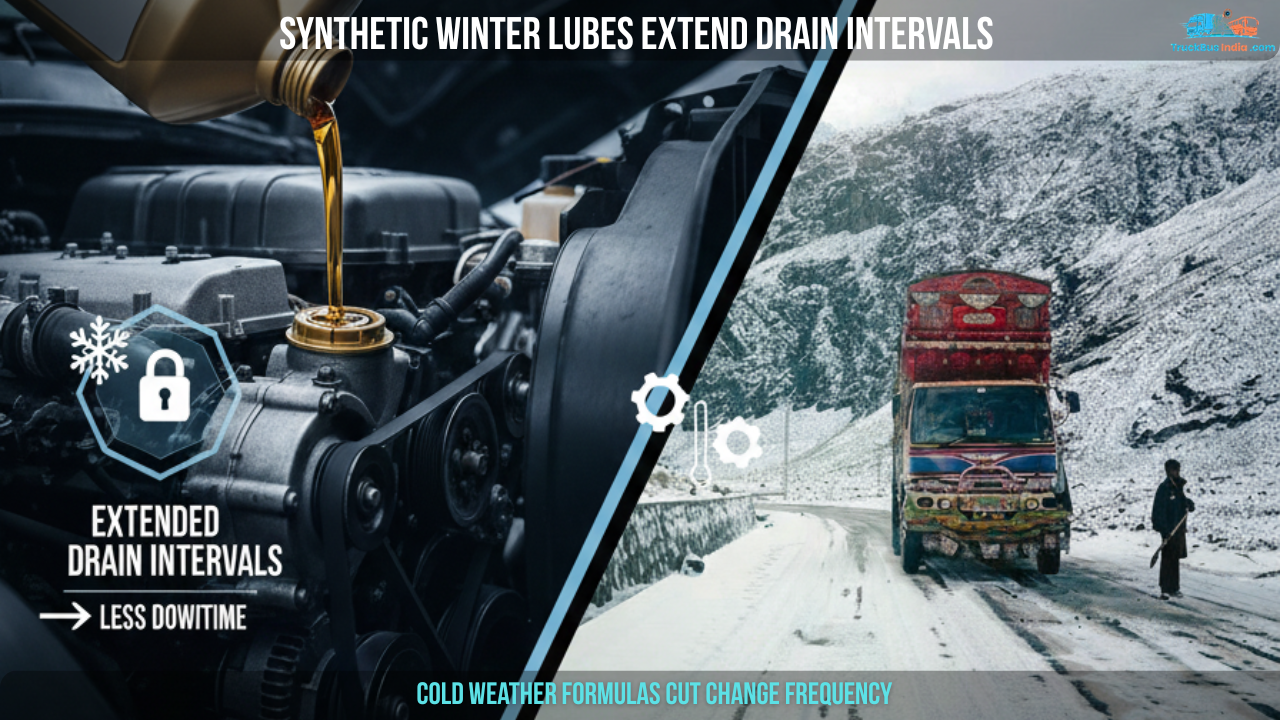
Northern India’s winter months present unique operating challenges for truck fleets. Sub-zero nights in hill states, cold mornings across the Indo-Gangetic plains and long idle hours during fog disruptions put added stress on engines. Conventional mineral oils tend to thicken at low temperatures, affecting cold starts and increasing wear during initial ignition cycles. For fleets running long-haul, refrigerated or overnight routes, winter performance of lubricants becomes critical to reliability.
These conditions have pushed operators to reassess lubricant choices as part of broader northern fleet maintenance planning.
Why synthetic lubes perform better in cold weather
Synthetic engine oils are engineered to maintain stable viscosity across a wider temperature range compared to conventional oils. In winter conditions, this allows faster oil circulation during cold starts, reducing metal-to-metal contact and early-stage engine wear. For heavy-duty diesel engines operating in northern climates, this characteristic directly supports smoother starts and more consistent performance.
As a result, winter truck lubes India increasingly feature synthetic or semi-synthetic formulations for fleets operating in colder regions.
Extended drain intervals reduce maintenance frequency
One of the most tangible benefits of synthetic oil use is the extension of oil drain intervals. Synthetic oil drain interval improvements are achieved through higher resistance to oxidation, better thermal stability and slower degradation under load. For fleets, this translates into fewer oil changes over a season, reducing workshop visits and maintenance downtime.
In winter, when scheduling maintenance is often complicated by weather and route disruptions, extended drain intervals help keep trucks operational for longer periods without compromising engine protection.
Cold starts and engine protection wintera focus
Cold starts are a major contributor to engine wear in winter operations. Synthetic lubes flow more easily at low temperatures, ensuring quicker lubrication of critical components such as crankshafts, camshafts and turbochargers. This enhanced engine protection wintera capability helps preserve engine life, especially for trucks that experience frequent stop-start cycles or prolonged idling during fog-related delays.
For fleets running refrigerated transport or cold chain operations, reliable cold-start performance is essential to prevent delivery delays and cargo spoilage.
Impact on fuel efficiency and uptime
Improved lubrication during winter conditions can also support marginal fuel efficiency gains. Reduced internal friction during cold operation helps engines reach optimal operating temperatures more quickly. While fuel savings may be incremental, they add value when combined with reduced maintenance interventions and higher vehicle availability.
Higher uptime is a key driver behind the shift towards synthetic winter lubes, particularly for northern fleets that cannot afford extended breakdowns during peak winter logistics demand.
Role in cold chain lube strategy
For operators managing temperature-sensitive cargo, lubricant selection forms part of a broader cold chain lube strategy. Refrigerated trucks often run auxiliary systems continuously, placing additional load on engines even during stationary periods. Synthetic oils are better suited to handle these sustained operating conditions without rapid breakdown.
This makes them a preferred choice for fleets supporting food distribution, pharmaceuticals and agricultural produce during winter months.
Cost considerations and total ownership view
While synthetic lubricants carry a higher upfront cost than mineral oils, fleet owners increasingly evaluate them through a total cost of ownership lens. Reduced oil consumption, longer service intervals, lower wear-related repairs and improved uptime often offset the initial price difference over a full operating cycle.
For northern fleet maintenance teams, predictable service schedules and fewer emergency interventions during winter justify the transition to higher-grade lubricants.
OEM recommendations and warranty alignment
Most commercial vehicle OEMs recognise the advantages of synthetic oils in extreme conditions and provide clear viscosity and performance grade recommendations for winter use. Aligning lubricant selection with OEM guidelines ensures warranty compliance while maximising performance benefits.
Fleet managers are advised to match oil specifications with engine requirements rather than focusing solely on brand or cost considerations.
Winter readiness extends beyond lubrication
While winter truck lubes India play a central role in cold-weather preparedness, they work best as part of a broader maintenance approach. Battery health, fuel quality, coolant concentration and tyre condition all interact with engine lubrication performance. Synthetic oils deliver optimal results when integrated into a comprehensive winter maintenance checklist.
A strategic shift for northern haulers
As winters continue to test fleet reliability, synthetic winter lubricants are becoming a strategic choice rather than a premium add-on. By extending drain intervals, supporting cold starts and protecting engines under harsh conditions, these formulations help northern haulers maintain schedules and control downtime.
For fleets balancing operational pressure with cost discipline, the move towards synthetic winter lubes reflects a practical response to the realities of cold-weather trucking in India.