
News List
Scrappage policy extension targets 2 lakh old trucks by the March deadline

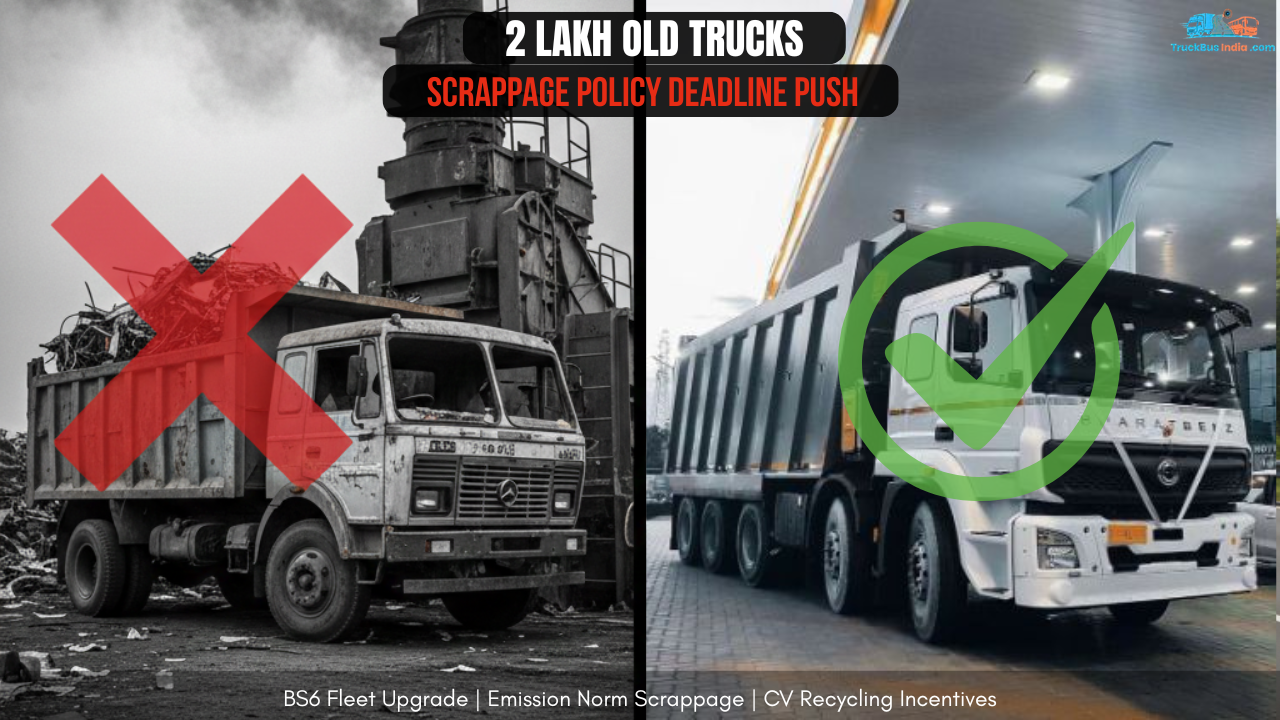
The government’s decision to extend timelines under the truck scrappage policy has renewed focus on accelerating the phase-out of ageing commercial vehicles. The extended window aims to facilitate the scrapping of up to 2 lakh old trucks by the March deadline, primarily targeting vehicles that no longer meet prevailing fitness and emission standards. The move is intended to clear bottlenecks that slowed progress earlier and give operators a final, time-bound push to comply.
Targeting end-of-life trucks first
Under the truck scrappage policy in India, the priority remains end-of-life vehicles that fail mandatory fitness tests or fall under older emission regimes. Many of these trucks are over 15–20 years old and impose higher operating and environmental costs. By focusing on this segment, the policy seeks to remove the most polluting vehicles from the road network while improving overall fleet efficiency.
Incentives encourage old truck replacement
To accelerate old truck replacement, the policy framework combines disincentives for non-compliant vehicles with incentives for scrapping. These include waiver of registration fees on new purchases, potential tax benefits and discounts offered by manufacturers in exchange for scrappage certificates. For fleet owners, these measures reduce the effective cost of upgrading, making replacement decisions more financially viable.
BS6 fleet upgrade gains momentum
The policy extension is expected to support a faster BS6 fleet upgrade across the commercial vehicle sector. BS6 trucks offer lower emissions, better fuel efficiency and improved reliability compared to older models. With tightening enforcement of fitness norms, operators increasingly view replacement not as an option but as a necessity to maintain route permits and contractual eligibility.
Emission norm scrappage aligns with policy goals
Emission norm scrappage is a central pillar of India’s broader clean mobility agenda. Phasing out older trucks contributes directly to lower particulate and NOx emissions, particularly along freight corridors and urban entry points. The March deadline reinforces regulatory intent, signalling that leniency for non-compliant vehicles will continue to shrink.
CV recycling infrastructure expands
The push to scrap 2 lakh trucks is also strengthening the CV recycling ecosystem. Authorised vehicle scrapping facilities are expanding capacity to handle higher volumes, ensuring environmentally compliant dismantling and material recovery. This supports circular economy goals by returning steel, aluminium and other materials back into the manufacturing supply chain.
Fleet planning enters a decisive phase
For fleet owners, the scrappage policy extension marks a decisive planning phase. Operators running mixed-age fleets must now balance near-term replacement costs with long-term compliance and operating savings. Many are aligning scrappage decisions with financing options and manufacturer offers to optimise transition timing.
As the March deadline approaches, the renewed policy push is set to reshape India’s truck parc. By clearing ageing vehicles and accelerating BS6 and EV adoption, the scrappage drive aims to modernise fleets, reduce emissions and improve the overall efficiency of commercial road transport.