
News List
FASTag glitch delays toll payments, fleet owners scramble for fixes

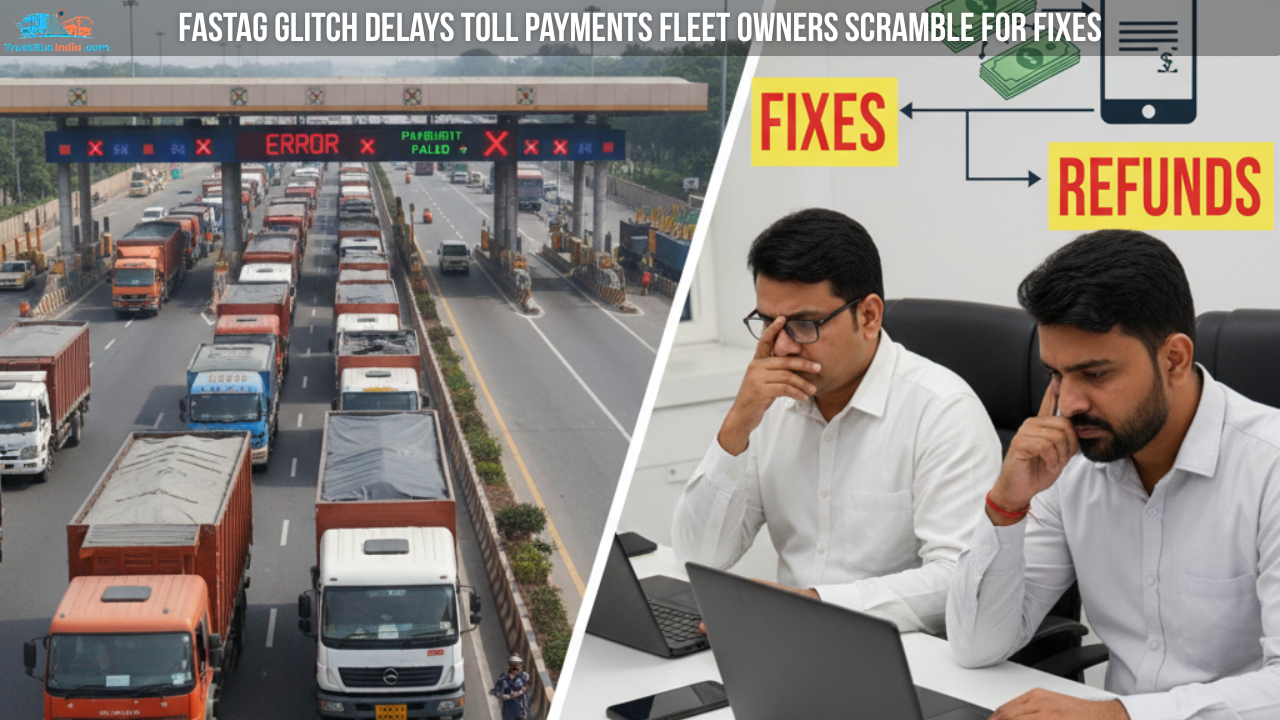
FASTag issues in December 2025 triggered widespread disruption across national highways, as electronic toll collection systems failed to process transactions smoothly at several plazas. Truck drivers reported delayed deductions, double debits and instances where FASTag scanners did not recognise valid tags. These glitches led to longer queues at toll booths, slowing freight movement and increasing turnaround times for commercial vehicles.
For fleet operators dependent on tight delivery schedules, the disruption came at a critical period when year-end cargo volumes typically rise.
Toll payment delays hit trucks hardest
Toll payment delays affected trucks more severely than private vehicles due to higher toll charges and frequent plaza crossings. In many cases, drivers were asked to wait while systems reset or were redirected to manual lanes, causing congestion and disputes. Some operators reported being forced to pay cash temporarily to avoid missing delivery windows, adding to administrative and reconciliation challenges later.
These delays translated into lost driving hours, higher fuel consumption from idling and missed delivery slots, directly impacting fleet productivity.
Highway toll glitch exposes system dependence
The highway toll glitch highlighted how deeply freight transport depends on uninterrupted digital tolling. FASTag has become mandatory across national highways, leaving drivers with limited alternatives during system failures. When backend systems or plaza-level hardware malfunction, the lack of seamless fallback mechanisms can quickly escalate into traffic bottlenecks.
For long-haul truckers, even short disruptions compound over multiple toll crossings, amplifying delays across entire routes.
Fleet toll management under pressure
Fleet toll management teams faced a surge in issues as transaction mismatches and failed deductions mounted. Reconciling FASTag statements with actual trips became more complex, especially for large fleets running hundreds of vehicles daily. Manual intervention was required to track affected trips, verify deductions and raise complaints with issuing banks or service providers.
Smaller fleet owners and owner-operators, who manage toll expenses directly, found it harder to track and recover disputed amounts, putting additional pressure on cash flows.
Transporters chase refunds and resolutions
As toll discrepancies accumulated, transporters began chasing refunds through FASTag customer care channels. While established procedures exist for dispute resolution, the volume of complaints during the glitch period slowed response times. Fleet owners reported that refunds, where approved, were credited after verification, but delays remained a concern.
The situation underscored the importance of maintaining accurate trip logs and transaction records, which are often required to support refund claims.
NHAI FASTag fix efforts come into focus
The National Highways Authority of India (NHAI), which oversees electronic tolling infrastructure, acknowledged system-related issues and coordinated with toll operators and technology vendors to restore normal operations. NHAI FASTag fix efforts focused on stabilising backend systems and ensuring toll plazas followed standard operating procedures during disruptions.
While services were gradually normalised, the episode raised questions about redundancy, real-time monitoring and communication protocols during nationwide glitches.
Operational costs rise amid delays
Beyond toll charges, the glitch had indirect cost implications for fleets. Extended wait times increased fuel burn, driver overtime and vehicle wear. For time-sensitive cargo, delays risked penalties or strained shipper relationships. These added costs came at a time when fleets were already facing pressure from fuel prices and financing expenses.
The incident demonstrated how digital infrastructure failures can quickly translate into tangible operating losses for transporters.
Lessons for fleet owners and operators
The FASTag issues December 2025 have prompted fleet owners to reassess contingency planning. Many operators are now emphasising driver training on handling toll disruptions, improving documentation practices and maintaining buffer time in schedules. Some fleets are also reviewing multi-wallet or interoperable FASTag solutions to reduce dependence on a single issuer.
Stronger coordination between toll authorities, banks and fleet operators is increasingly seen as essential to minimise disruption during future incidents.
Need for system resilience and communication
The toll payment delays trucks experienced during the glitch underline the need for more resilient digital tolling systems. Real-time alerts, clearer on-ground instructions and faster dispute resolution mechanisms could significantly reduce the impact on freight movement. For a logistics network that relies heavily on uninterrupted highway flow, system reliability is no longer just a convenience but a necessity.
As FASTag continues to anchor India’s tolling framework, ensuring stability and transparency will be critical to maintaining confidence among fleet owners and drivers alike.