
News List
Diesel prices rise again, fleets prepare for narrower trip margins

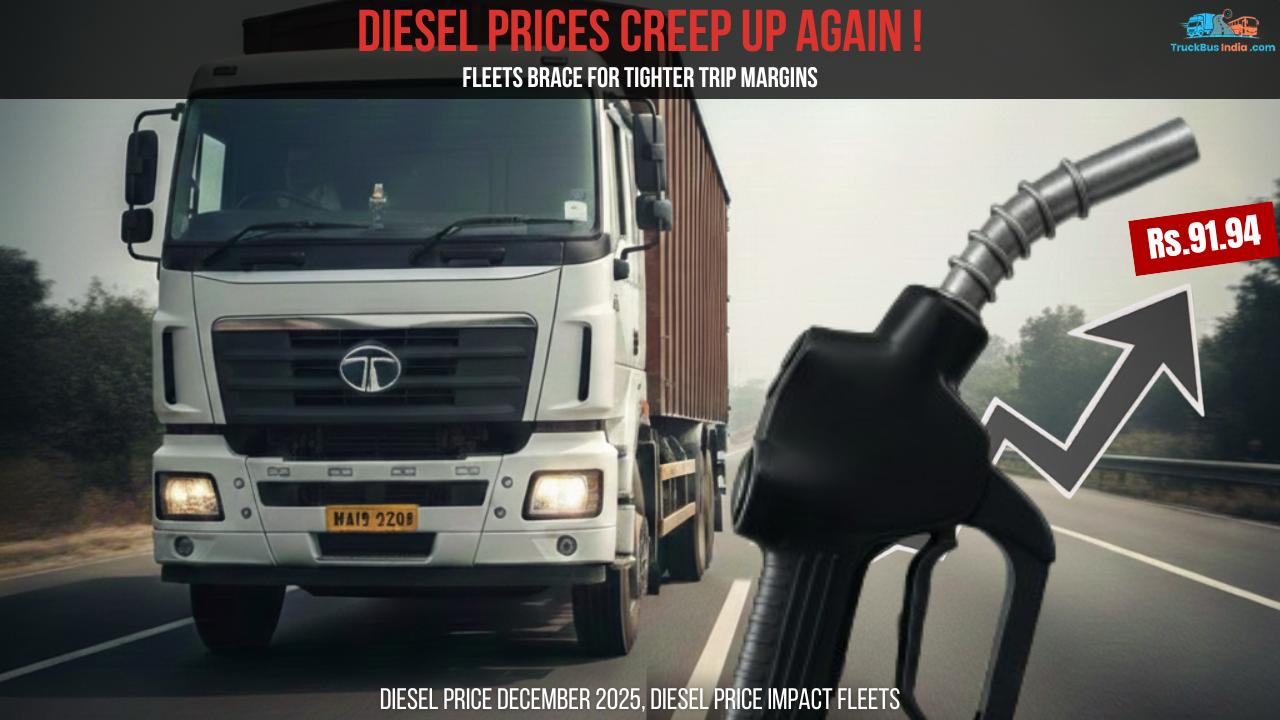
After an extended period of near-static retail pricing, diesel prices in India began to inch up again in December 2025. While the increase is marginal in absolute terms, it follows months where fleets had grown accustomed to predictable fuel costs. For operators running large truck fleets, this shift comes at a sensitive time when freight rates have not risen proportionately to input costs.
Diesel continues to be the single largest operating expense for most commercial vehicle operators. Any upward movement, even by a small margin, immediately reflects in per-kilometre running costs, making fuel price trends a key concern across the trucking ecosystem.
Impact on fleet margins and trip economics
The diesel price impact on fleets is most visible in long-haul operations, where vehicles clock high daily mileage. With fuel forming a major share of trip expenses, higher diesel prices directly compress margins on fixed-rate contracts. Many fleet owners report that the room to absorb additional costs has narrowed, particularly for routes with return-load uncertainty.
Smaller fleet operators and owner-drivers feel the pressure even more acutely. Unlike large logistics companies with negotiated fuel contracts or surcharge clauses, independent truckers often have to bear the immediate increase, leading to tighter cash flows and reduced take-home earnings per trip.
Diesel rate today in India and regional cost variations
The diesel rate today in India continues to vary slightly across states due to local taxes and levies. While headline national averages suggest modest increases, operators note that effective fuel costs can be higher on highways where fuel stations price in logistics and operating overheads. These regional variations add another layer of complexity for fleet planners managing pan-India routes.
As a result, transporters are increasingly factoring fuel price differences into route selection, opting for corridors that allow predictable refuelling and better control over fuel expenses.
Rising truck fuel cost pressure reshapes planning
Truck fuel cost pressure is forcing fleet managers to rethink operational efficiency. Idle time reduction, tighter driver monitoring, and preventive maintenance have become essential rather than optional. Even minor improvements in fuel efficiency can offset some of the impact of rising diesel prices over a full operating cycle.
Fleet owners are also becoming more selective about the freight they accept. Loads with low yields or high turnaround delays are being avoided as diesel costs rise, reinforcing a more disciplined approach to route and load optimisation.
Fleet route planning gains renewed importance
With diesel price levels in December 2025 trending upward, fleet route planning has moved to the centre of operational decision-making. Digital route optimisation tools, GPS-based tracking, and fuel analytics are increasingly used to minimise detours, congestion delays, and unnecessary idling.
Operators running scheduled line-haul services are reassessing trip timing to avoid peak traffic hours, which can significantly increase fuel consumption. Better route discipline is now viewed as one of the fastest ways to protect margins without passing costs directly to customers.
Limited short-term relief, strategic shifts ahead
In the short term, fleets have limited options to counter diesel price increases beyond efficiency gains and selective repricing. Freight rate revisions tend to lag fuel cost changes, creating temporary margin stress. Over the medium term, however, rising diesel costs are accelerating interest in more fuel-efficient trucks, alternative fuels, and mixed-fleet strategies.
For now, the latest diesel price uptick serves as a reminder that fuel volatility remains a structural challenge for Indian trucking. Fleets that actively manage fuel consumption and route economics are better positioned to withstand tighter trip margins in the months ahead.