
News List
TVS Supply Chain Acquires 100 EV Cargo Vans to Electrify Last-Mile

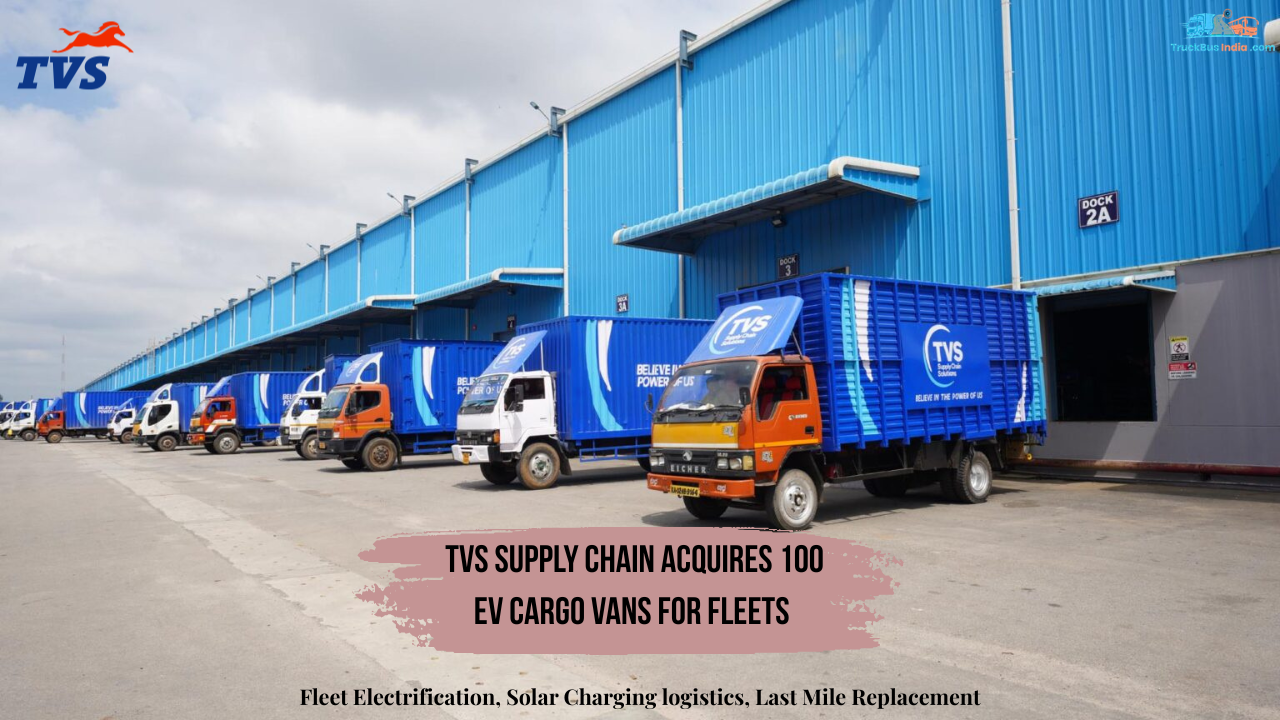
TVS Supply Chain, one of India’s leading logistics providers, has taken a major step toward sustainable operations by acquiring 100 electric cargo vans for its fleet. This investment is aimed at replacing diesel-powered last-mile delivery vehicles with zero-emission alternatives, reinforcing the company’s commitment to green logistics and operational efficiency.
Electrifying Last-Mile Deliveries
Last-mile delivery is a critical component of the supply chain, especially in urban areas where congestion, pollution, and regulatory pressure pose challenges for traditional diesel fleets. By deploying 100 EV cargo vans across 50 cities, TVS Supply Chain is addressing these challenges head-on. The move is expected to significantly reduce carbon emissions, noise pollution, and fuel dependency, creating a cleaner and more sustainable urban logistics ecosystem.
Integrated Solar Charging Infrastructure
To support its electric fleet, TVS Supply Chain is also installing solar-powered charging stations at key hubs. These stations are designed to provide reliable, renewable energy for vehicle charging, reducing operational costs and enhancing sustainability. By leveraging solar energy, the company minimizes its carbon footprint while ensuring consistent uptime for its cargo vans, which is crucial for meeting tight delivery schedules.
Fleet Electrification Benefits
The switch from diesel to electric vehicles offers multiple operational advantages. EV cargo vans provide lower running costs due to reduced fuel expenses, simplified maintenance, and longer vehicle lifespans. Additionally, the zero-emission nature of electric vehicles allows TVS Supply Chain to comply with increasingly stringent environmental regulations, particularly in metro areas with pollution control measures.
From a business perspective, the electrification initiative enhances reliability and predictability in last-mile operations. Electric vans can operate efficiently on short urban routes with frequent stops, delivering goods without range anxiety, while the solar charging network ensures minimal downtime between trips.
Industry Impact and Leadership
TVS Supply Chain’s initiative sets a benchmark for fleet electrification in the logistics industry. With growing regulatory focus on emission reduction and sustainable urban transport, other logistics operators are likely to follow suit. The deployment of 100 EV cargo vans demonstrates that large-scale electrification is not only technically feasible but also economically viable when supported by renewable energy infrastructure.
Strategic Vision for Sustainable Logistics
This investment aligns with the broader corporate vision of building a resilient, future-ready supply chain network. By integrating EV technology and renewable energy, TVS Supply Chain is reducing its environmental impact while enhancing operational efficiency. The initiative also positions the company favorably with environmentally conscious clients and partners who increasingly prioritize sustainability in supply chain decisions.
Looking Ahead
The successful rollout of these 100 electric cargo vans is likely to be the first phase of a larger electrification strategy. TVS Supply Chain may expand its EV fleet further, incorporating advanced telematics, route optimization software, and other digital tools to maximize efficiency. The company’s solar charging initiative may also be scaled to cover additional hubs and urban centers, ensuring long-term sustainability and uninterrupted service.
Conclusion
TVS Supply Chain’s acquisition of 100 EV cargo vans marks a significant milestone in India’s push toward sustainable logistics. By replacing diesel pickups with electric alternatives across 50 cities and supporting them with solar charging stations, the company is reducing emissions, cutting operational costs, and improving last-mile delivery efficiency. This move not only strengthens TVS Supply Chain’s leadership in the logistics sector but also underscores the potential of electrified fleets to transform urban transport networks across India.