
News List
NHAI Approves 20 EV Charging Stations on Delhi-Mumbai Corridor to Power Electric Truck Pilots

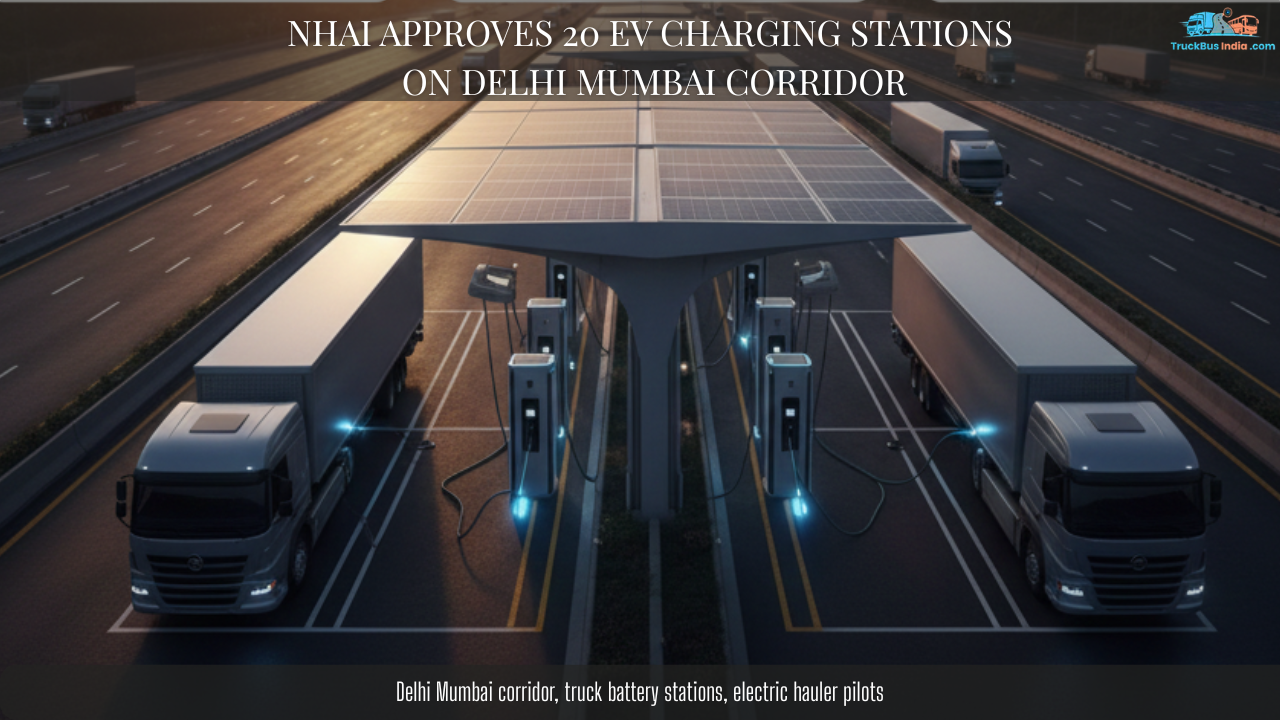
The National Highways Authority of India (NHAI) has taken a significant step towards promoting sustainable transport by approving 20 dedicated electric vehicle (EV) charging stations along the Delhi-Mumbai corridor. This move is set to accelerate the adoption of electric freight transport and support the country’s vision for greener highways.
The Delhi-Mumbai corridor, spanning over 1,400 kilometers and serving as a key logistics artery, has long been critical for goods movement across India. With the increasing focus on reducing carbon emissions and promoting energy-efficient transport, the corridor has been chosen to pilot electric hauler operations. These pilots are expected to demonstrate the viability of long-distance electric trucking in India.
Strategically Located Charging Stations
According to NHAI, the 20 EV charging stations will be spaced approximately every 60 kilometers. This strategic placement ensures that electric trucks can travel the corridor with minimal range anxiety, a common concern among operators transitioning from diesel-powered vehicles. Each station will be equipped with high-capacity battery swap points specifically designed for heavy-duty trucks, allowing for rapid charging and minimal downtime.
The deployment of these charging stations is expected to provide a robust ecosystem for electric logistics operators. Truck operators participating in the pilot project can cover a range of up to 300 kilometers per charge, making electric trucking increasingly practical for regional and long-haul transport. The stations will not only support trucks but are also likely to benefit other commercial EVs operating along the corridor.
Boosting Electric Hauler Pilots
The EV infrastructure initiative is a crucial part of NHAI’s plan to support electric hauler pilots. These pilots are being monitored closely to assess operational efficiency, energy consumption, and the economic viability of large-scale electric freight operations. By providing a network of reliable charging points, NHAI is directly addressing one of the biggest barriers to EV adoption in logistics — limited range and charging infrastructure.
Moreover, these pilots are aligned with India’s broader energy and environmental policies. The country aims to significantly cut greenhouse gas emissions from the transport sector, which contributes to nearly 14% of India’s total emissions. Transitioning freight transport to electric power not only reduces pollution but also lowers fuel costs and dependency on imported diesel, providing both environmental and economic benefits.
Industry Reactions and Future Plans
Industry experts have welcomed NHAI’s decision, calling it a “timely and critical step” in modernizing India’s logistics network. Electric hauler operators have expressed optimism about the reduced operational challenges and improved feasibility of running electric trucks on long routes.
Looking ahead, NHAI plans to evaluate the performance of these initial 20 charging stations and potentially expand the network across other high-traffic freight corridors in the country. The success of the Delhi-Mumbai pilot could serve as a blueprint for replicating the model in other regions, encouraging more private players to invest in electric logistics solutions.
Conclusion
The approval of 20 EV charging stations on the Delhi-Mumbai corridor marks a pivotal moment in India’s push towards sustainable logistics. By providing dedicated battery swap points every 60 kilometers, NHAI is not only enabling electric hauler pilots to operate efficiently but also paving the way for a future where long-haul trucking is greener, cost-effective, and technologically advanced. This initiative underscores the government’s commitment to fostering innovation in the transport sector while addressing environmental concerns, making India a front-runner in electric freight adoption.