
News List
What Fleet Owners Can Expect From the Next Wave of Green Ready Trucks in India

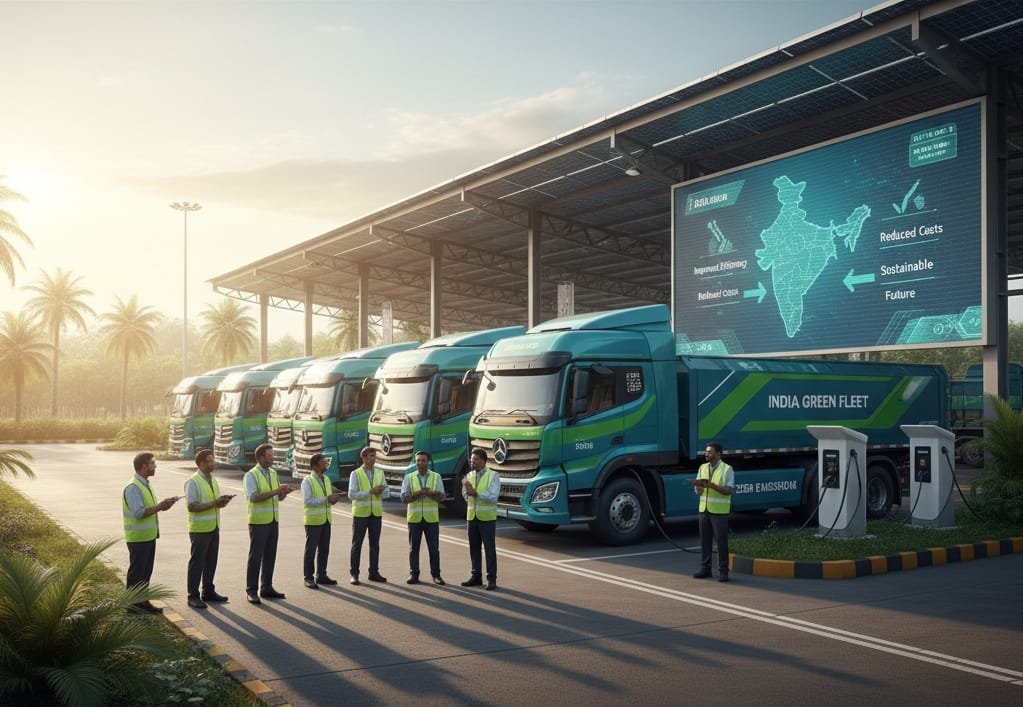
India’s freight and logistics industry is on the brink of a transformation. As business fleet owners and preparers of clean what’s to come in sustainable transportation, fleet owners must brace themselves for what’s coming. The next wave of green-ready trucks in India is no longer just a futuristic idea — it is becoming a practical reality. Below are key shifts and what fleet owners can expect.
Cleaner fuels, lower running costs
One of the main developments powering this change is the rise of trucks running on alternate fuels such as liquefied natural gas (LNG), compressed natural gas (CNG), and electricity — rather than traditional diesel. For instance, GreenLine Mobility Solutions is aggressively expanding its fleet of LNG-powered trucks, with plans to deploy thousands more over the next few years.
Using LNG instead of diesel offers multiple advantages. On long-haul runs, LNG trucks reportedly offer better mileage — potentially up to 20% more efficient than diesel equivalents — which lowers fuel costs per kilometre. Additionally, LNG reduces harmful emissions significantly: CO₂ emissions may drop by around 28–30%, with sharp drops in particulate matter, NOx, and SOx emissions too.
For fleet owners, this means reduced operational costs in fuel and maintenance, while also preparing for stricter environmental regulations that are likely to tighten over the coming years.
Electric trucks: zero tailpipe emissions + modern infrastructure
Beyond LNG and CNG, fully electric heavy-duty trucks are emerging, often with innovations like battery-swapping and rapid-charging infrastructure. Blue Energy Motors, for example, is working on e-trucks whose batteries can be swapped in a matter of minutes — bridging the gap between the convenience of diesel and the environmental advantage of electric vehicles.
Similarly, in specialised logistics segments like cold chain (for perishables, pharmaceuticals, food), companies such as Celcius Logistics are increasingly adding electric reefer trucks to their fleet — making the “green supply chain” more than a buzzword.
For fleet owners, EVs promise zero tailpipe emissions (helping meet corporate ESG goals), lower maintenance costs (fewer moving parts, less wear), and a future-proof fleet as policy and market demand shift toward sustainability.
Regulatory alignment and market demand
The push toward green-ready trucks isn’t purely voluntary. Growing environmental awareness, increasingly strict emission norms, and supply-chain sustainability requirements are creating pressure on fleet operators to adopt cleaner vehicles.
Moreover, as the overall demand for freight transport in India grows, fleet owners are also under increasing pressure to modernise ageing trucks. Analysts note that the medium and heavy commercial vehicle (M&HCV) fleet in India recently hit a 10-year high, and many of those vehicles are nearing retirement — presenting a prime opportunity for fleet renewal with eco-friendly models.
Adopting green-ready trucks now helps fleet owners stay ahead of regulatory changes — and also positions them as responsible, future-ready service providers for customers increasingly conscious about sustainability.
Business benefits: efficiency, brand value, and long-term viability
For fleet operators who invest in green trucks, the payoffs are not just ecological — they are economic and reputational. Lower fuel consumption and maintenance costs improve profitability. The ability to plan long-term — as fuel prices fluctuate — becomes stronger when operating on more stable fuels like LNG or electricity.
Also, with more customers — from FMCG to manufacturing to cold-chain logistics — demanding greener transport partners, having a “green-ready” fleet can become a differentiator. As leading names adopt LNG or EV trucks for their supply chains, fleet owners who invest early may gain a competitive edge.
Moreover, as companies ramp up their ESG (environment, social, governance) disclosures and net-zero commitments, being “green-compliant” will help fleet owners win long-term contracts and avoid forced retrofits.
Challenges ahead — and what to watch
The shift isn’t without hurdles. For LNG and CNG trucks, a key challenge remains fuel infrastructure: refuelling stations must be widespread for long-haul routes. Investment by players such as GreenLine to build a nationwide network may help, but full reach will take time.
For electric trucks, battery-swapping, charging-station network expansion, battery supply, and charging times still pose operational challenges, especially for long-distance or time-sensitive freight operations.
Also, the initial acquisition cost of green trucks — particularly EVs — remains higher than diesel trucks, and financing such purchases may require careful cost-benefit analysis, especially for smaller fleet operators.
What fleet owners should do now
- Evaluate and pilot LNG-powered trucks on long-haul routes where refuelling connectivity exists.
- For city-based or short-haul operations (e.g. distribution, last-mile delivery, cold chain), consider electric or CNG trucks to leverage zero emissions and lower running costs.
- Factor in the total cost of ownership (fuel savings, reduced maintenance, regulatory compliance) rather than only the upfront cost.
- Monitor upcoming fuel-infrastructure — LNG/CNG refuelling points or EV charging/battery-swap stations — especially along freight corridors relevant to your business.
- Position your fleet as “future-ready” to attract clients who value sustainability, ESG compliance, and long-term reliability.
The next wave of green-ready trucks in India is more than a trend — it is shaping up to be the new normal. For fleet owners, embracing this shift can mean not just cost savings, but improved operational resilience, better client relationships, and a place at the forefront of India’s logistic evolution. The trucks may be green — but the opportunities are real.