
News List
How Cement, Steel and Construction Sectors Are Driving Heavy Vehicle Orders in 2025

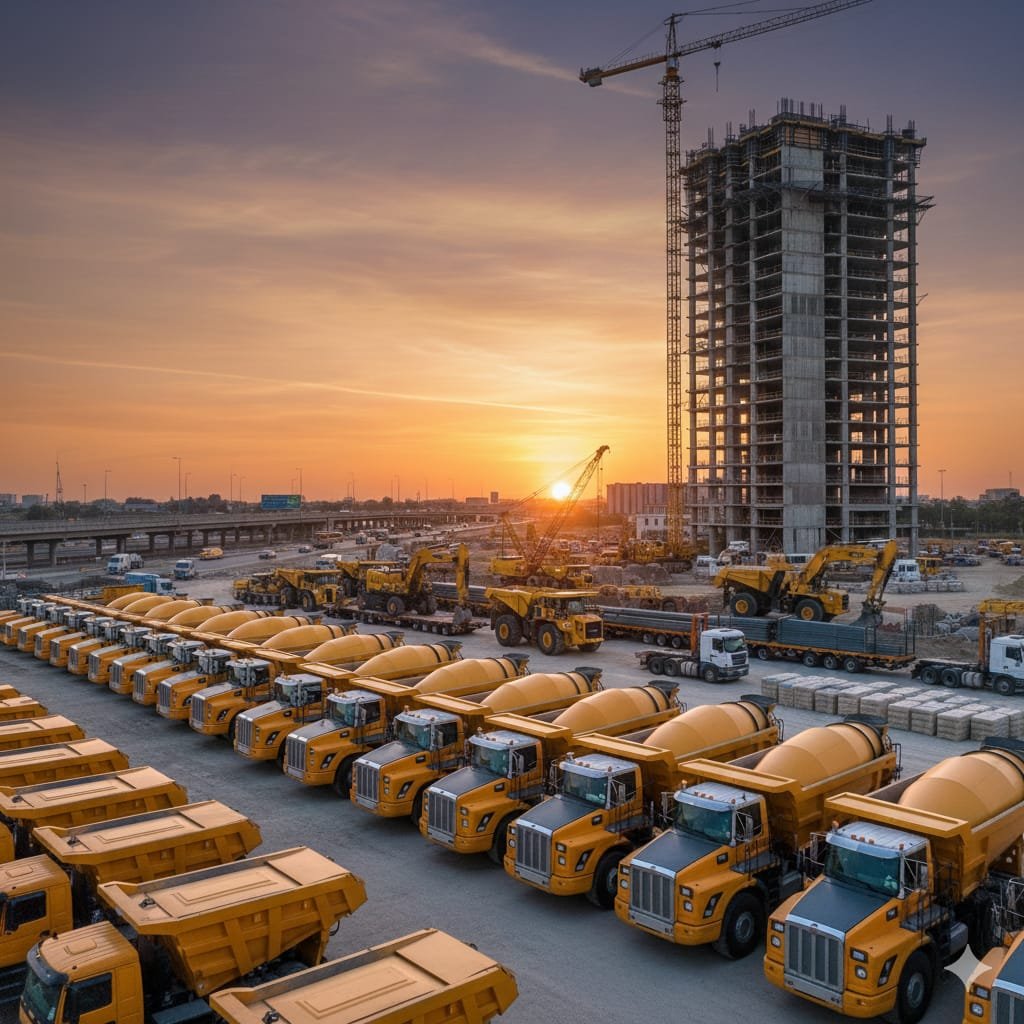
India’s heavy commercial vehicle (HCV) industry is entering a renewed growth cycle in 2025, fuelled largely by the resurgence of core sectors such as cement, steel and construction. These industries are the backbone of the nation’s infrastructure and, historically, their cycles have closely mirrored demand for heavy trucks. But the current surge is different — it is broader, faster and linked to structural shifts rather than short-term spikes.
With the government’s capital expenditure (capex) push, the revival of private investments, and a sustained pipeline of mega infrastructure projects, these sectors are placing unprecedented transportation demands on logistics operators. As a result, heavy vehicle orders are rising sharply, transforming the outlook for manufacturers, fleet owners and the broader commercial mobility ecosystem.
Cement: Infrastructure and housing revive bulk material movement
The cement industry has seen strong volume growth through FY24–25, supported by the Centre’s infra expansion under the PM Gati Shakti plan, expressway development, metro projects, and affordable housing schemes. Cement movement relies heavily on medium and heavy trucks, especially 25–55-tonne tippers, bulkers and RMC transit mixers.
Three factors are directly pushing heavy truck orders from cement companies and transporters:
- Higher cement consumption driven by capex
Road construction, new airports, bullet train corridors and large urban infrastructure works are consuming massive quantities of cement, creating sustained freight movement. - Shift toward bulk transportation
More cement companies are adopting bulk cement logistics over traditional bagged supply. This requires specialised bulkers and high-capacity trailers, encouraging fleet upgrades. - Regional capacity additions
New grinding units, greenfield plants and clinker lines planned across southern and eastern states are generating fresh demand for inbound raw-material transport and outbound dispatch.
With cement demand set to grow steadily, fleet operators aligned with this sector are expanding and modernising their heavy vehicle fleets to meet performance and turnaround expectations.
Steel: Manufacturing and infrastructure projects push long-haul freight
The steel sector is equally instrumental in boosting HCV demand. Large integrated steel players, secondary mills and fabrication units are transporting everything from iron ore and coal to finished steel coils, bars, plates and structural beams across the country.
In 2025, steel-related logistics needs are rising due to:
- Strong domestic steel demand from construction, automobiles, engineering goods and capital equipment
- Large brownfield and greenfield expansions by major steel producers
- Higher import-export movement as ports expand and global demand stabilises
- Growth in fabrication and pre-engineered building (PEB) industries
Steel logistics requires robust heavy trucks — multi-axle trailers, high-torque tractors and flatbeds with the ability to carry dense, heavy loads. Fleet owners servicing steel clusters in Odisha, Chhattisgarh, Jharkhand, Maharashtra and Gujarat are placing bulk orders to meet long-haul and short-haul freight requirements.
Because steel is moved year-round and is less seasonal, operators see this sector as a stable revenue source and therefore invest confidently in new heavy trucks.
Construction & infra: The biggest driver of tippers and HCVs
Construction is the single largest contributor to heavy truck demand in 2025. India’s infrastructure ecosystem is witnessing its most aggressive execution phase in decades. Key areas include:
- Highway and expressway construction
- Metro and rapid-rail networks
- Smart city projects
- River-linking and irrigation projects
- Real-estate and commercial building development
- Ports, logistics parks and multimodal transport hubs
These projects require continuous movement of aggregates, sand, soil, fly ash, cement, steel and heavy machinery — all of which depend on high-capacity tippers and multi-axle trucks.
Additionally, the rise of mining activity, particularly coal and iron ore, has pushed demand for powerful 6×4 and 8×4 tippers. Many operators working in mining belts are upgrading fleets for better uptime, fuel efficiency and safety compliance.
Why 2025 marks a turning point for heavy truck demand
Several broader market factors are amplifying the impact of cement, steel and construction growth:
• Increased project execution speed
Faster completion timelines demand more trips per day, pushing operators to buy reliable new trucks.
• Shift toward BS-VI & connected vehicles
Companies prefer modern trucks with better fuel efficiency, telematics, predictive diagnostics and compliance-ready systems.
• Financing support and better viability
NBFCs and banks are offering attractive loans as HCV repayment cycles are now supported by stronger freight demand.
• Higher utilisation and predictable earnings
With infra projects and core sectors running continuously, operators expect high fleet utilisation, making new-truck investments safer.
Conclusion
Cement, steel and construction sectors form the backbone of India’s growth story — and in 2025, they are collectively reshaping the heavy commercial vehicle market. As infrastructure accelerates and material movement expands, transporters and fleet owners are modernising their fleets at a rapid pace.
This demand surge is not temporary; it reflects deeper structural shifts in India’s production and infrastructure landscape. For heavy truck manufacturers and fleet operators alike, 2025 represents a defining moment — one where efficient, modern and high-capacity vehicles will drive the next era of India’s logistics and industrial expansion.