
News List
Electric Trucks vs Diesel Trucks: Which Wins for Fleet Owners in 2025?

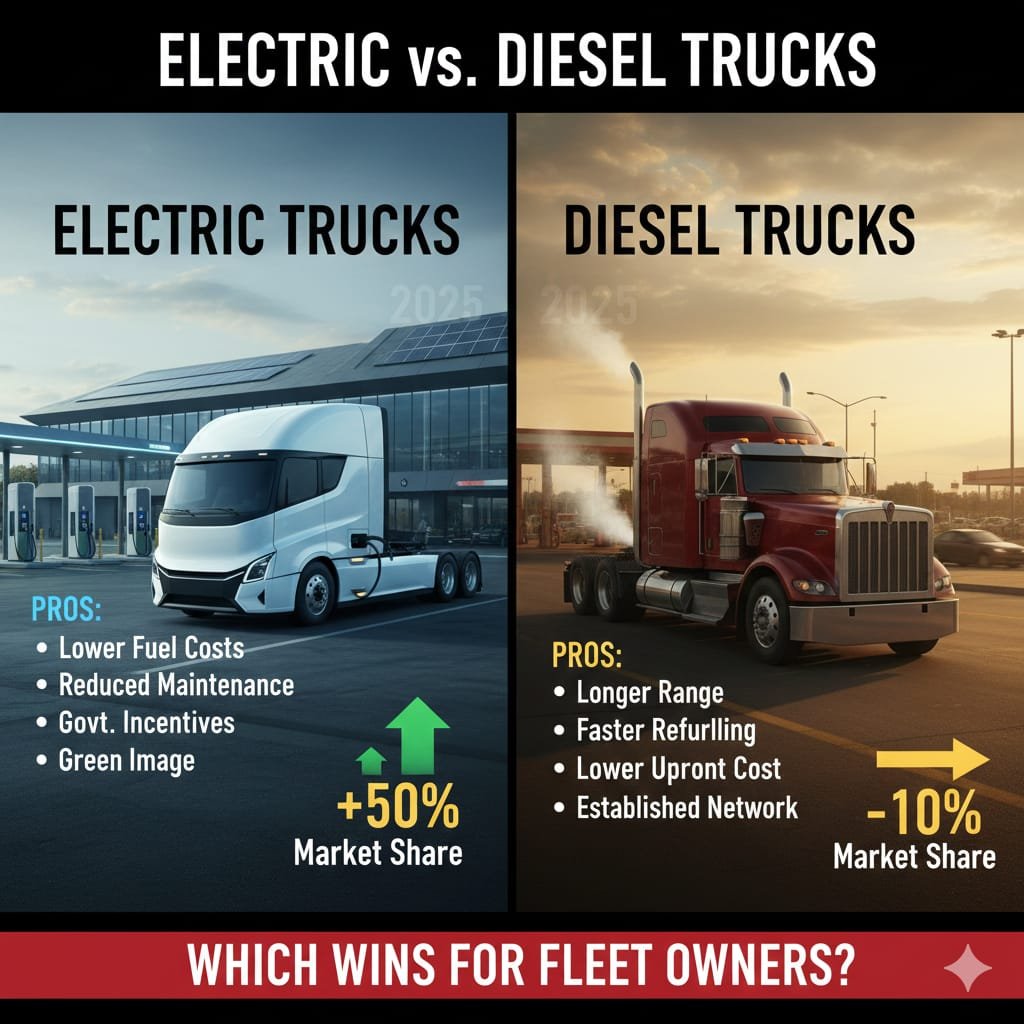
India’s fleet landscape is shifting fast in 2025. With new electric commercial vehicles (eCVs) entering the market—and diesel continuing to dominate long-haul logistics—fleet owners are asking a crucial question: Which truck actually makes better business sense today?
Here’s a practical, fleet-focused breakdown comparing electric and diesel trucks across cost, efficiency, performance, and long-term returns.
Running Cost: EVs Win Clearly
For daily logistics, the per-km running cost is the biggest deciding factor.
- Electric trucks: Running cost is often 60–70% lower than diesel due to cheaper electricity and fewer moving parts. Even with commercial charging tariffs, fleets save significantly on each trip.
- Diesel trucks: Fuel expenses remain the highest operational cost for fleets. Fluctuating diesel prices make long-term planning difficult.
Winner: Electric trucks for city, short-route, and fixed-route operations.
Maintenance: EVs Save Hundreds of Hours Annually
Electric trucks have simpler drivetrains—no engine oil, clutch, gearbox, or exhaust systems.
- EV maintenance is typically 40–50% cheaper and requires less downtime.
- Diesel trucks need regular servicing, oil changes, filter replacements, and engine upkeep, all of which add to cost.
For fleet operators, reduced downtime means more trips per day and better utilisation.
Winner: Electric trucks.
Payload & Performance: Diesel Still Leads for Heavy-Duty Work
While electric CV technology is improving, diesel trucks remain the backbone for heavy payloads and long distances.
- Diesel trucks offer higher torque, better hill performance, and stronger range for 12–55 tonne operations.
- Electric trucks excel in city logistics (2–7 tonnes) but still face payload limitations in higher tonnage.
Winner: Diesel trucks for heavy-duty, intercity, long-haul transport.
Range & Charging: The 2025 Reality
For fleet buyers, range and charging speed matter as much as cost.
- Electric trucks offer 120–300 km real-world range depending on tonnage. Good for last-mile, milk runs, FMCG, agri distribution, and urban logistics.
- Charging infrastructure is improving but still patchy outside metros.
- Diesel trucks can refuel anywhere, anytime, and run 500–800 km on a full tank—critical for interstate carriers.
Winner: Diesel for long-haul; EVs for fixed predictable routes.
Total Cost of Ownership (TCO): EVs Often Win in 2–4 Years
In 2025, TCO will be the most important financial metric for fleet owners.
Despite a higher upfront price, EVs often repay the difference through:
- Lower running cost
- Lower maintenance
- Fewer breakdowns
- Government incentives in some states
- Higher utilisation in city routes
Fleet owners operating high-frequency urban trips (100–150 km/day) see the EV break-even point within 24–36 months.
Winner: Electric trucks for predictable, repetitive routes.
Driver Experience & Regulations
- EVs offer smoother drive, silent cabins, and instant torque—drivers prefer them for city operations.
- Diesel trucks are better for rough terrain and rural routes.
- With emission norms tightening, diesel compliance costs may rise further.
Winner: EVs for comfort; diesel for versatility.
Final Verdict: Which Should Fleet Owners Choose in 2025?
Choose Electric Trucks if you:
- Operate last-mile or short-haul routes
- Run predictable city deliveries
- Want the lowest running and maintenance cost
- Aim for faster ROI and higher utilisation
- Have access to depot charging
Choose Diesel Trucks if you:
- Run long-distance, high-payload routes
- Operate on highways or rough terrain
- Need 24/7 refuelling convenience
- Require maximum payload and range
2025 takeaway:
Electric trucks are winning the urban logistics battle, while diesel continues to dominate long-haul and heavy freight. Smart fleet owners are increasingly adopting a mixed fleet strategy, using EVs where they save money and diesel where they remain indispensable.