
News List
After-Sales & Service Disruption: How the Bus & Truck Sector Needs to Evolve for the EV Era

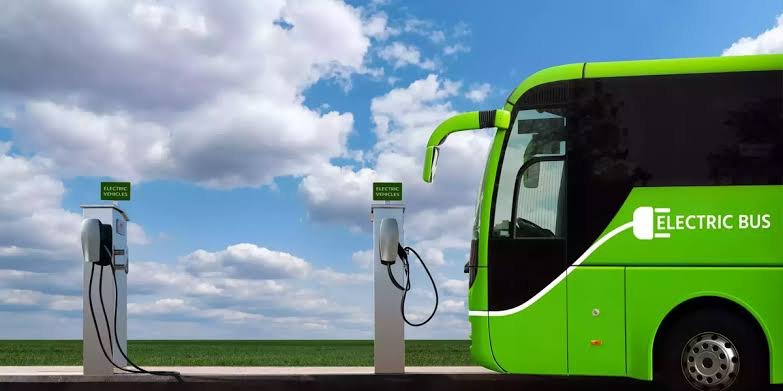
The electrification wave sweeping through India’s mobility sector is no longer limited to cars and two-wheelers. Buses and heavy-duty trucks — long considered the toughest segments to electrify — are now entering a decisive transition. As state transport undertakings (STUs), logistics companies, and private fleet operators begin adopting electric platforms, one reality is becoming clear: the EV era will disrupt after-sales and service more than anything else.
For OEMs, this shift is not just technological — it’s structural. The service ecosystem that supported diesel powertrains for decades can’t simply be “adapted” for EVs; it needs a ground-up redesign.
Here’s how the sector must evolve to stay competitive and ensure reliable, scalable EV fleets.
1. From Mechanical Repairs to Software-Led Diagnostics
Traditional trucks and buses depend heavily on mechanical expertise — engine overhauls, transmission repairs, and fuel system checks. EVs, however, operate on:
- High-voltage batteries
- Power electronics
- Electric motors
- Complex software stacks
This means service centres need fewer mechanics and more diagnosticians. Fleet uptime will depend less on spanners and more on laptops, firmware updates, and real-time telemetry.
OEMs must invest in:
- Cloud-based diagnostics
- Smart service dashboards
- OTA (over-the-air) update capability
- Remote fault detection
In many cases, 40–60% of EV issues can be resolved remotely — drastically cutting downtime if OEMs prepare the digital backbone.
2. High-Voltage Safety Training Is Non-Negotiable
EV buses and trucks operate on battery packs up to 650–800 volts. Working on them without adequate training is not only inefficient — it’s dangerous.
The service ecosystem must adopt:
- Mandatory high-voltage technician certification
- Proper insulated tools and PPE
- Standardised safety protocols
- Dedicated EV service bays
OEMs that build a national network of certified EV technicians will have a clear advantage in fleet contracts, especially state-level EV bus tenders.
3. Battery Care Becomes the Centre of After-Sales
In ICE vehicles, the engine is the heart.
In EVs, the battery is the business model.
OEMs must evolve their service offerings to include:
- Battery health monitoring
- Preventive thermal management checks
- Periodic software optimisation
- Battery life-cycle diagnostics
- Predictive replacement schedules
For fleet operators, battery uptime directly affects operational profitability. A transparent, tech-enabled service plan will become a key differentiator for OEMs.
4. Uptime Guarantees Will Replace Traditional Service Packages
The EV transition pushes OEMs towards service models built on guaranteed availability, not periodic maintenance.
In the coming years, expect:
- SLA-based contracts (e.g., 95–98% fleet uptime guarantees)
- Per-km or per-hour service billing
- Full lifecycle maintenance packages
- Real-time service monitoring
For EV buses under GCC (Gross Cost Contract) operation, uptime guarantees will be essential. OEMs must build service infrastructure strong enough to confidently promise — and deliver — consistent availability.
5. Charging Infrastructure Integration Will Be a Service Responsibility
In diesel fleets, OEMs rarely worry about fuel infrastructure.
In EV fleets, charging is part of the service ecosystem.
OEMs must work closely with energy companies and fleet operators to help manage:
- Charger maintenance
- Software integration between chargers and vehicles
- Load management
- Smart charging optimisation
Offering “vehicle + charger + maintenance” as a unified solution will give OEMs a competitive edge.
6. Spare Parts Strategy Must Shift
EVs have fewer moving parts, but they require a different parts ecosystem — power controllers, inverters, battery modules, sensors, wiring harnesses.
OEMs need to rethink parts management through:
- Regional high-voltage part depots
- Faster supply chains for electronic components
- Modular battery service exchange programs
- Refurbished parts policies (especially for motors and controllers)
The winners will be brands that build lean, tech-enabled spare parts networks.
Final Word
The EV era will not disrupt the bus and truck industry through vehicle design alone — the real battle will be fought in after-sales, service, and uptime management.
OEMs that pivot early, reskill aggressively, digitise deeply, and integrate charging infrastructure into their service DNA will lead the market. Those who cling to ICE-era service models risk losing relevance as fleets increasingly demand electric-ready, tech-driven support.
In the electric future of commercial mobility, service excellence will be just as important as product innovation — perhaps even more.