
News List
India’s Intercity Bus Sector Reports Strong 25% Growth

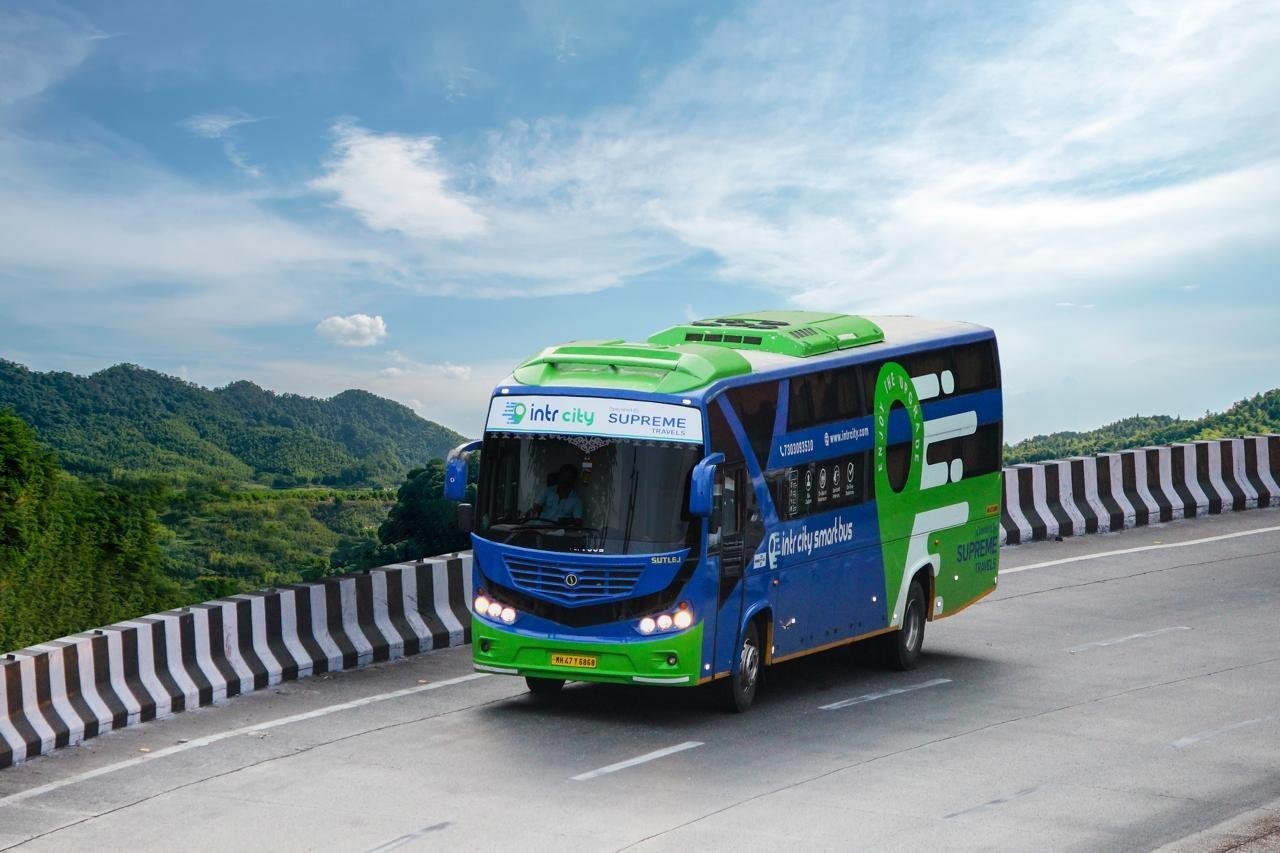
India’s intercity bus travel market witnessed a sharp surge in demand in the first half of the financial year, with new figures from redBus’ BusTrack Report revealing that the sector transported 140 million passengers between April and September 2025. This marks a 25% jump from the same period last year, reflecting a growing reliance on long-distance road travel as well as the rapid digitisation of bus operators across the country.
The ticketing value for the six-month period touched ₹132 billion, supported by more than 6,000 active private operators connected to redBus’ digital ecosystem. The platform’s consolidated industry-wide report indicates a clear shift in customer preferences, with sleeper and hybrid coaches making up 85% of all journeys during the period. Demand for air-conditioned travel also remained strong, representing 71% of all seats sold.
The network itself has expanded significantly. Over 670,000 unique routes facilitated connections to more than 11,000 towns, enabling greater cross-regional movement. Nearly two-thirds of these routes were above 250 kilometres, signalling a rise in longer intercity journeys. Seat occupancy remained healthy across the country at 76%, with Andhra Pradesh and Telangana emerging as the strongest markets at 84% occupancy. Madhya Pradesh and Chhattisgarh, meanwhile, showed comparatively lower utilisation at 63%.
A regional breakdown shows Maharashtra and Goa leading in overall seat bookings, accounting for 16% of the national share. Tamil Nadu followed with 15%, Andhra Pradesh and Telangana jointly contributed 12%, and Karnataka recorded 11%. Maharashtra also reported higher-than-average ticket prices at ₹1,066 per seat, with intrastate travel dominating 67% of total journeys. The state achieved a solid 79% seat fill rate during the period.
The report also highlighted clear demographic trends. Young travellers aged 18 to 36 years continued to be the most active users, representing almost two-thirds of all bookings. Men accounted for 65% of overall passengers. Notably, non-metro regions drove the bulk of the industry’s growth, contributing 61% of all bookings. India’s top six metros together accounted for 33%, while other state capitals added another 6%.
Commenting on the findings, redBus CEO Prakash Sangam said the dramatic leap from 112 million seats last year to 140 million this year reflects wider market momentum. He credited the growth to rising operator participation, digital inventory expansion and strong consumer preference for AC buses. Sangam also noted that this edition of BusTrack maps a combined analysis of a lower-activity quarter (April–June) and a higher-activity period (July–September), giving a broader view of sectoral performance.
redBus, founded in 2006, continues to remain the world’s largest online bus ticketing platform by volume, connecting nearly 10,000 towns across 420,000 unique routes. The company works with more than 4,500 private operators and 26 State Road Transport Corporations, and is part of the MakeMyTrip group with operations across Asia and Latin America.