
News List
Tesla Semi Gets Design Upgrade Ahead of 2026 Launch

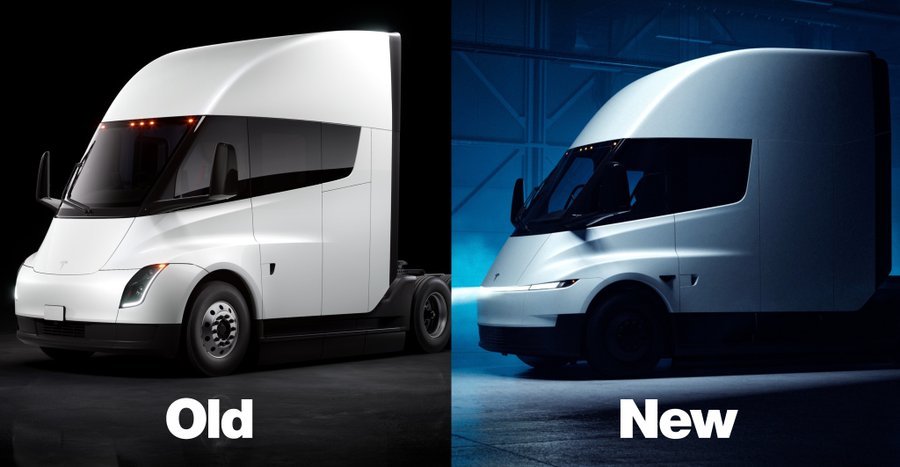
Tesla has quietly rolled out a major design update for its upcoming electric semi truck, the Tesla Semi, giving it a revamped chassis, reshaped headlights, and aerodynamic refinements. The upgraded model, according to Tesla, will be “more efficient,” support a higher payload, and is now “designed for autonomy.”
During the automaker’s annual shareholders meeting, CEO Elon Musk reiterated that volume production of the Semi is expected to begin next year, with full-scale manufacturing planned for the second half of 2026 at Tesla’s Nevada Gigafactory.
Key Design Changes: Smaller Windshield and New Front End
Tesla released a new image of the redesigned Semi, revealing several visual and functional changes. The once expansive, wraparound windshield has been scaled down to a more compact form, while the front bumper has been reshaped and the roof now features a smoother, rounded angle.
New headlights inspired by the refreshed Model 3 replace the older vertical setup, enhancing both aesthetics and visibility. These changes aim to improve aerodynamics, which Tesla claims contributes to better energy efficiency.
Efficiency Still Under Scrutiny
While Tesla describes the new Semi as “more efficient,” its own figures suggest minimal change from the previously quoted 1.7 kWh per mile. However, real-world fleet data has shown the Semi achieving between 1.55 and 1.73 kWh per mile, indicating that the company’s refinements are likely aimed at maintaining consistent performance under varied load conditions.
Dan Priestley, head of the Tesla Semi program, noted that next year’s production models would include “an immense number of improvements” drawn from feedback and operational data from Tesla’s pilot fleet.
Production Delayed to Late 2026
Earlier reports had hinted at further delays to the Semi’s rollout—a claim Priestley initially denied—but Tesla has now confirmed a revised production timeline. The electric truck will enter pilot manufacturing in mid-2026, followed by volume production later that year.
This marks another shift from Tesla’s original 2017 unveiling, which had promised deliveries as early as 2019.
Pricing and Market Position Remain Unclear
Perhaps the biggest mystery surrounding the Tesla Semi remains its price tag. Tesla had originally announced two variants—a 300-mile model priced at $150,000 and a 500-mile version at $180,000—but those figures date back to 2017. With inflation, battery cost changes, and new technology, analysts expect final prices to be significantly higher.
Despite delays, industry observers believe Tesla’s Semi could make major inroads in short-haul logistics, fleet yards, and dedicated delivery routes, where predictable travel distances align well with charging infrastructure.
A Step Closer to Electric Freight
The refreshed Tesla Semi signals the company’s continued ambition to electrify heavy transport. While long-haul trucking may take longer to transition, Tesla’s latest design update shows progress toward that future—one where the roads might finally see electric trucks that can haul big loads efficiently and autonomously.