
News List
Karnataka Transport Minister Flags 40% Higher Accident Rate in Electric Buses, Seeks Safety Audit

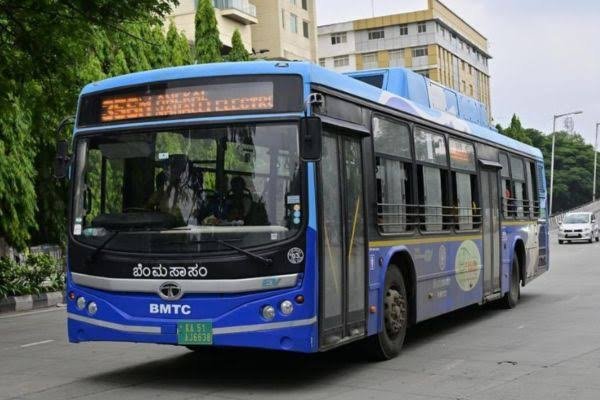
Bengaluru’s push toward greener public transport has hit a roadblock as Karnataka’s Transport Minister, Ramalinga Reddy, expressed serious safety concerns over the rising number of accidents involving electric buses. Citing official data, Reddy revealed that e-buses have recorded a 40% higher accident rate compared to their diesel counterparts, prompting him to urge the Union government for an immediate operational review of private electric bus operators.
In a letter to Union Heavy Industries Minister H.D. Kumaraswamy dated October 25, 2025, Reddy referenced data from the Bangalore Metropolitan Transport Corporation (BMTC) showing that diesel buses reported an accident rate of 0.05 per lakh kilometres, while electric buses registered 0.07 per lakh kilometres. Though the difference seems marginal, it translates into a significant 40% rise in incidents — with at least 35 fatalities reported between 2023 and mid-2025.
Operational and Maintenance Lapses Under Scrutiny
Reddy’s letter highlighted operational shortcomings among private firms managing the city’s electric fleets under the Gross Cost Contract (GCC) model. Companies like NTPC Vidyut Vyapar Nigam, Tata Motors, Switch Mobility, and OHM Global Mobility were identified as key operators. According to Reddy, issues such as inadequate driver training, poor maintenance schedules, and recurring battery-related breakdowns have raised serious reliability concerns.
Staffing shortages have further compounded the problem. Private operators, reportedly deploying only 1.9 to 2.0 personnel per bus instead of the required 2.3, have been accused of cost-cutting measures that compromise passenger safety. Additionally, electric buses have shown a higher rate of service cancellations — averaging 6.4%, compared to 1.7% among BMTC’s diesel fleet — undermining commuter confidence in the city’s electric mobility efforts.
Frequent driver strikes and technical breakdowns have also disrupted operations, suggesting growing dissatisfaction among employees and inefficiencies within the system.
Call for Nationwide Review of GCC Model
The minister’s warning comes at a time when India is aggressively expanding its electric public transport fleet. Under the PM e-Drive scheme announced earlier this year, 10,900 new electric buses are slated for deployment in five major cities — including 4,500 for Bengaluru alone.
While the GCC model was designed to ease financial burdens on state transport undertakings, Reddy’s intervention has revealed potential accountability gaps. He urged the Union Ministry to conduct a comprehensive performance audit of all GCC operators functioning under FAME II and CESL schemes. He also proposed introducing binding clauses for certified driver training and establishing a joint monitoring mechanism between the Centre and states to ensure safety compliance.
A Wake-Up Call for India’s E-Mobility Mission
Experts believe Karnataka’s move could encourage other states to reassess their electric bus operations, especially given the increasing reliance on private operators. As India pushes toward its 2030 electric mobility goals, Reddy’s warning underscores a critical reality — that technological progress must be backed by strong operational discipline, trained personnel, and strict safety oversight.
While electric buses promise cleaner air and lower emissions, Karnataka’s experience serves as a cautionary tale: sustainability must not come at the cost of passenger safety and service reliability.